

On this page
The English grammar section—whether in Class 10 board exams or competitive tests—tests your ability to apply rules in context, not just recite them from memory. Because the questions require active problem-solving, you cannot cram for it the night before. Preparing for this section requires a mix of targeted rule review and consistent application.
What are the common question types in the English grammar section?
Most English papers test grammar by asking you to fix or complete a paragraph. The three most common formats you will face are gap-filling, editing or omission tasks, and sentence transformation.
Gap-filling tasks require you to read a short passage with missing words and choose the right determiner, preposition or tense to complete the thought. Editing tasks present a paragraph where every line has one incorrect word; you must spot the error and supply the correction. This demands a sharp eye for subject-verb agreement and article usage. Finally, sentence transformation—often changing direct speech to reported speech—tests your ability to manipulate sentence structure, adjust tenses backwards in time, and swap pronouns correctly without altering the original meaning.
How to revise grammar rules quickly?
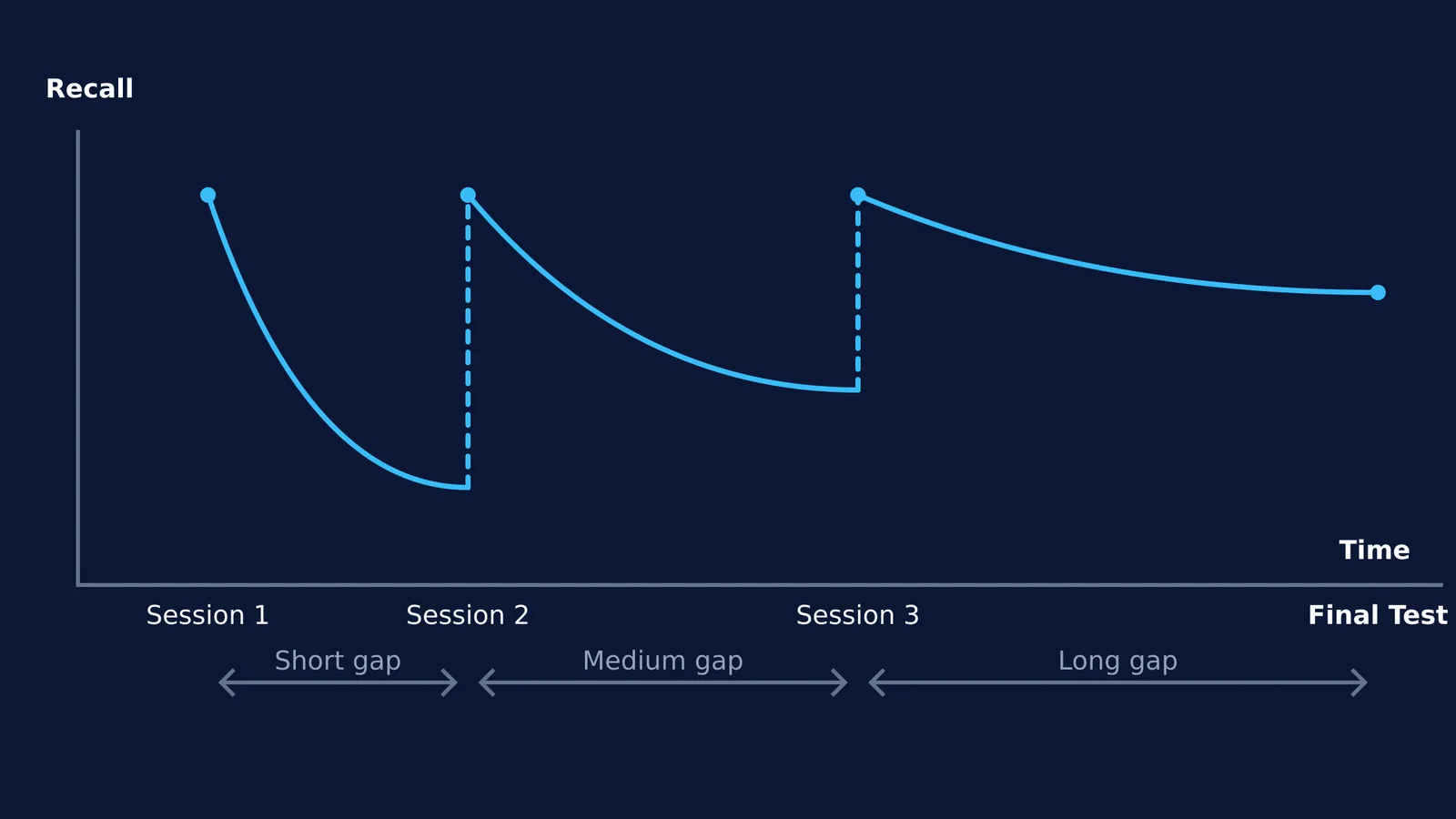
While grammar rules are finite, they fade quickly from memory if you do not review them regularly. This is where the spacing effect becomes your most powerful tool. Instead of studying all your grammar notes in one long weekend session, spread that same amount of study time across several weeks.
A 2006 meta-analysis of 317 experiments found that spacing out study sessions improved final recall, and that the optimal gap between sessions increased as the time to the final test increased.
To make these spaced sessions efficient, build a targeted rule revision checklist. Your list should include:
Subject-verb concord: Focus on collective nouns and phrases like "neither...nor" (e.g., remembering that "Neither of the boys is present" takes a singular verb).
Reported speech shifts: Memorise how tenses shift back (present continuous to past continuous) and how time markers change ("tomorrow" becomes "the next day").
Modal verbs: Know the exact difference between "must" (obligation), "should" (advice), and "could" (polite request or past ability).
Review this checklist briefly but repeatedly. You can read more about building efficient review schedules in our guide to Ten study techniques rated: inside the 2013 Dunlosky review.
How to practice gap filling and editing tasks?
Once the rules are fresh in your memory, shift entirely to timed practice. Set a timer for 15 minutes and attempt a full grammar section from a past paper. The time pressure forces you to quickly identify the rule being tested, replicating exam conditions.
When practicing editing tasks, read the entire paragraph first to understand the context and tense before hunting for line-by-line errors. A common mistake is correcting a past-tense verb to a present-tense one, only to realise the whole story is set in the past.
After practicing, compare your answers with official solutions. As explained in our guide on Using CBSE marking schemes to write answers that earn the marks, understanding how examiners award marks can save you from careless deductions. In the grammar section, there is typically no partial credit; an answer is either entirely right or entirely wrong.
How do you tackle a standard editing task?
To see how this looks in practice, consider a standard editing task where you must find the error and write the correction for each line.
Incorrect passage: The children was playing in the park. (a) One of the boy threw the ball too hard. (b) It hit a window and break the glass. (c)
How to solve it:
Read for context: The passage is a story set in the past.
Line (a): "The children was playing". "Children" is plural, so the verb must agree. The error is "was" and the correction is "were". This tests subject-verb concord.
Line (b): "One of the boy". The phrase "one of the" must always be followed by a plural noun because you are selecting one from a group. The error is "boy" and the correction is "boys".
Line (c): "and break the glass". The paragraph is in the past tense ("were playing", "threw", "hit"), so this verb must also be in the past tense. The error is "break" and the correction is "broke". This tests tense consistency.
Working through problems line by line like this builds your pattern recognition. Over time, spotting an incorrect preposition or a mismatched subject becomes second nature.
When you are balancing daily language practice with demanding STEM subjects, efficiency is vital. For those subjects, if you bring a problem set or a scanned assignment, Fermi works out what you already know, builds a plan for the session, and teaches through it—writing on a board and checking understanding as it goes. This leaves you with more time and energy to focus on mastering your grammar exceptions. Dedicate just 20 minutes every alternate day to targeted grammar practice, and you will see your accuracy and confidence rise steadily.


