

On this page
Engineering Physics (EP) is an interdisciplinary branch designed for students who want to build the future of technology rather than just use it. It bridges the gap between theoretical science and practical engineering (Wikipedia). Unlike traditional engineering disciplines that are often confined to a single industry or application, EP provides a comprehensive foundation for solving complex, cross-functional problems across various domains.
If you are curious about quantum computers, nanotechnology, or the physics inside a semiconductor, EP offers a rigorous path to those fields. It is devoted to creating and optimizing new engineering solutions through an integrated application of mathematical, scientific, and statistical principles.
What is the course content for engineering physics?
The curriculum is heavily focused on making you fluent in the language of modern physics and the tools of engineering. It starts with a demanding core foundation before branching into highly specialized elective areas.
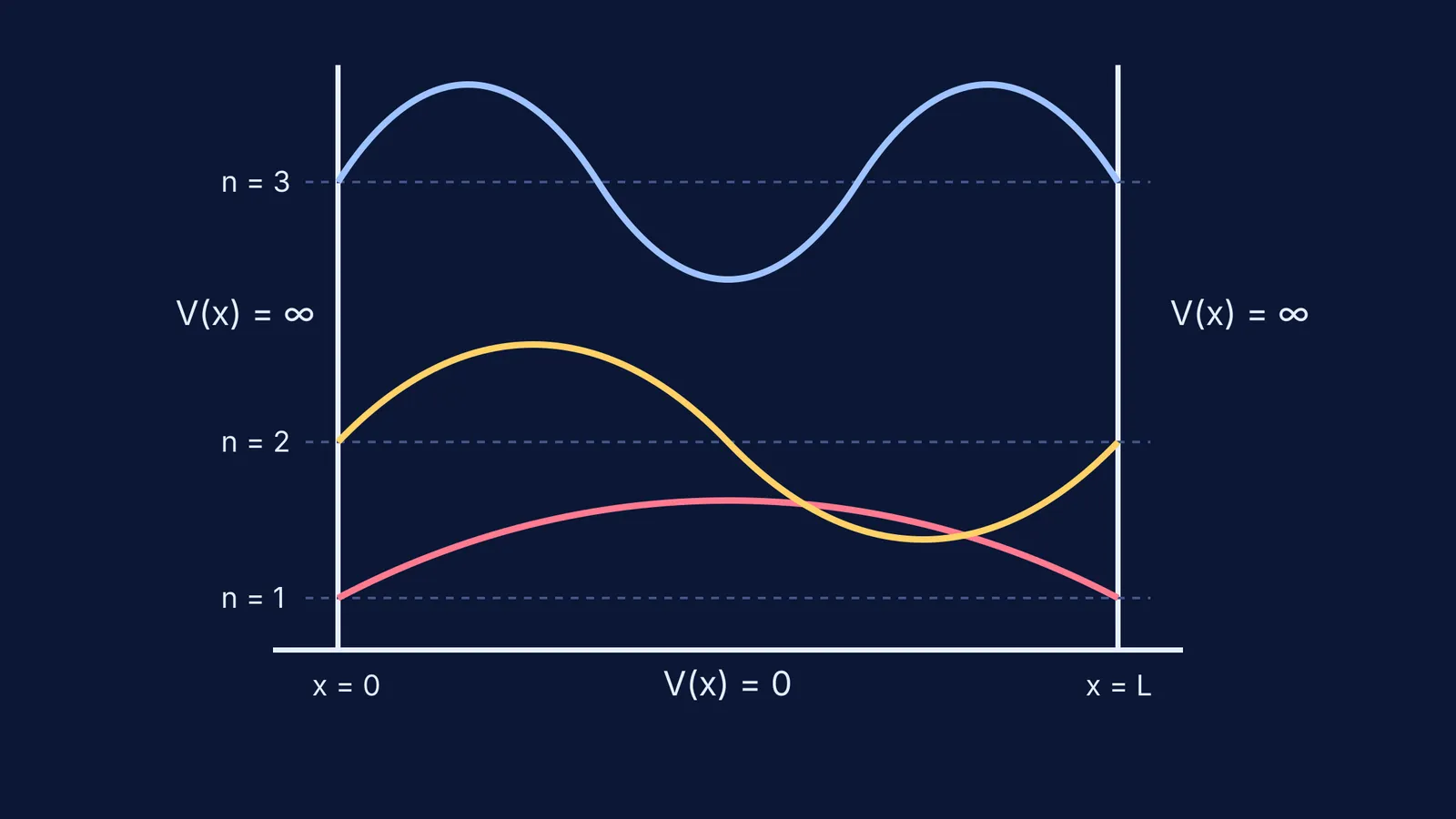
Core Physics: You will study classical mechanics, thermodynamics, electromagnetism, and quantum mechanics. Quantum mechanics is treated as an essential engineering tool to build real-world systems, not just a mathematical curiosity.
Engineering and Electronics: You will take courses in solid-state devices, fluid dynamics, and microelectronics (Wikipedia). The primary goal is to build devices that rely directly on advanced physical phenomena.
Mathematics: EP is a mathematically demanding branch. You will take advanced courses in linear algebra, differential equations, and complex analysis to support the physics and model dynamic systems accurately.
Interdisciplinary Electives: Later years often include topics like bioengineering, environmental engineering, and materials science, allowing students to tailor their degree to emerging tech sectors.
What are the career paths for engineering physics graduates?
Because the coursework is so broad and rigorous, graduates are well prepared for roles that require a deep understanding of physical laws. They typically split into three very distinct career paths:
Higher Studies and Research: A significant portion of an EP batch opts for higher studies. They pursue M.Sc. or Ph.D. programs at top global universities in fields like plasma physics, biophysics, or photonics (Wikipedia).
Core Engineering: Many join research and development roles in high-tech industries. Companies hire EP graduates to design the next generation of microchips, work in microfabrication, or advance nuclear and renewable energy (Wikipedia).
Data Science and Quantitative Finance: The intense mathematical training makes EP graduates highly sought after in non-core sectors. Quantitative finance firms value the ability to model complex systems (Wikipedia), much like finding the powers of a matrix by spotting the pattern.
If you are struggling to picture the abstract mathematics in quantum mechanics or solid-state physics, the Fermi Concept Library covers every concept in physics and mathematics, each with its own lesson and its place in the map.
Is engineering physics a good branch?
Engineering physics is an excellent branch if you have a genuine love for both theoretical physics and applied mathematics. It is an intellectually demanding course that focuses heavily on research and development, design, and continuous analysis (Wikipedia).
If your goal is to write software for a traditional tech company, a computer science degree is a much more direct route. Similarly, if you want to focus purely on building large mechanical structures, mechanical engineering might be a better fit. But if you want to understand the physical limits of computation, design entirely new materials, or pursue fundamental research, EP provides the perfect foundation.
A framework for choosing
Before you lock in your choice during admissions, ask yourself these three critical questions:
Do I enjoy the "why" as much as the "how"? EP is for students who want to derive the equations and understand the fundamental laws, not just plug numbers into them.
Am I comfortable with abstract maths? You will spend a lot of time manipulating complex variables, statistical models, and advanced differential equations.
Do I want to keep my options open? EP leaves the door open to hardcore physics research, electrical engineering, and even quantitative finance, giving you the flexibility to pivot as the technology industry evolves.


