

On this page
When choosing optional subjects in Class 11, many science students wonder if the CBSE Engineering Graphics syllabus is a better choice than Computer Science or Physical Education. The answer depends heavily on your engineering goals and the specific entrance exams you plan to target. Unlike subjects that rely entirely on theoretical memorization, Engineering Graphics demands a mix of spatial reasoning and manual precision.
What does the Class 11 Engineering Graphics syllabus cover?
The CBSE Class 11 Engineering Graphics syllabus is split into a 70-mark theory paper and a 30-mark practical assessment (Source: CBSE). The theory portion focuses on plane geometry, solid geometry, and machine drawing.
In the plane geometry section, you start with the basics of engineering drawing. This includes learning standard dimensioning systems, printing alphabets and numerals, and constructing polygons like pentagons and hexagons. You will also learn how to draw tangents and inscribe or circumscribe circles within these polygons.
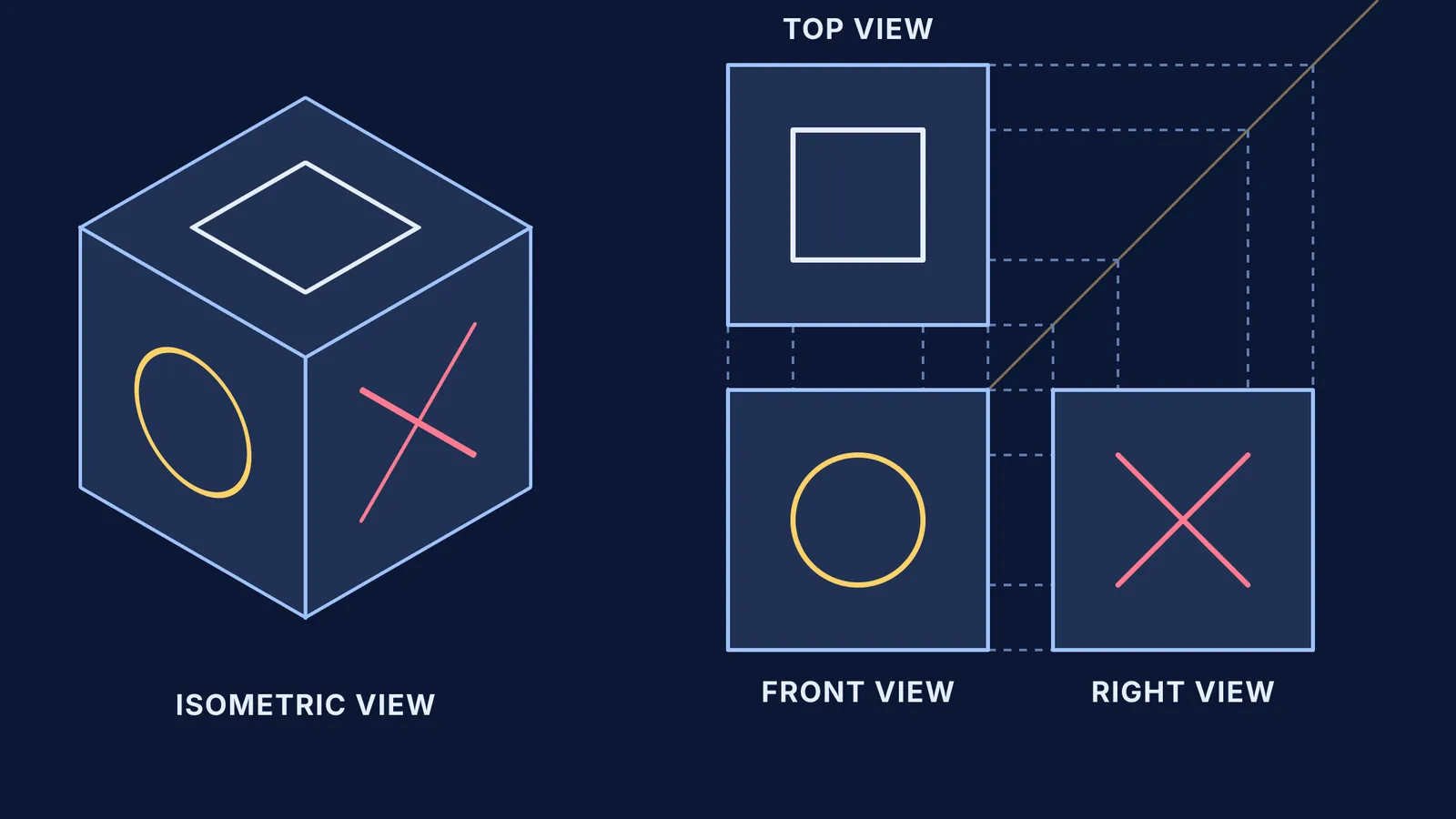
Solid geometry introduces you to orthographic projections. You will learn to project points, lines, and right regular solids such as cubes, prisms, pyramids, cones, cylinders, and spheres in various orientations relative to the reference planes. Machine drawing then takes these concepts further by having you draw orthographic projections of simple machine blocks and isometric projections of basic plane figures.
The practical assessment includes 15 drawings or activities, such as creating physical 3D models of prisms and pyramids from cardboard and using CAD (Computer-Aided Design) software to draft designs. You will also practice drawing engineering curves like ellipses using standard methods and prepare sections of solids using clay or wax.
Is Engineering Graphics worth it for JEE?
If you are planning to take JEE Main Paper 2 (B.Arch or B.Planning), Engineering Graphics is exceptionally valuable. The drawing section of Paper 2 carries 100 marks out of the total 400 marks (Source: Shiksha). This section tests your 3D perception, scale, proportion, and ability to draw 2D and 3D compositions—skills that form the core of the Class 11 syllabus. A strong foundation here can significantly boost your overall score.
For JEE Main Paper 1 (B.E./B.Tech), Engineering Graphics is not directly tested, as the paper consists entirely of Physics, Chemistry, and Mathematics. However, the visualization skills you develop will indirectly help you grasp complex vectors and section formulas in 3D. If you ever struggle to picture how 3D shapes intersect, the Fermi Simulation Lab provides interactive simulations for the ideas that are easier to see than to read, allowing you to rotate geometric models dynamically.
Does it help in the first year of a B.Tech degree?
Yes. Regardless of whether you choose Mechanical, Civil, Electrical, or Computer Science engineering, almost every B.Tech program includes a mandatory engineering drawing or graphics course in the first year.
University-level drafting courses move quickly. Students who take this subject in Class 11 find the first-year college curriculum much easier to manage. They already know how to read standard projections, visualize objects from multiple angles, and use drafting tools like mini-drafters and set squares. This saves them hours of stress while adjusting to university life.
If you decide to take the subject and find yourself stuck on a tricky projection homework or an intersecting planes problem in college, Fermi's AI tutor works out what you already know, builds a plan for the session, and explains the reasoning rather than printing an answer.
How to study Engineering Graphics effectively?
Practice daily: Drafting requires muscle memory. A small error in your initial baseline can throw off an entire ray tracing diagram or projection. Set aside time each week strictly for board work.
Master the rules of projection: Understand the difference between first-angle and third-angle projection early on. Knowing which quadrant your object sits in is critical for drawing the views correctly.
Keep your tools sharp: Use different pencil grades effectively. Use H or 2H pencils for light construction lines and HB pencils for final, visible outlines. This contrast makes your drawings readable and professional.
Keep your sheet clean: Smudges from dragging your instruments across the paper will cost you marks. Wipe your scales regularly and avoid resting your hands directly on the drawing sheet.
Ultimately, if you are aiming for architecture or want a practical subject that prepares you for engineering college, Engineering Graphics is well worth your time.


