

On this page
Every time a new drug or vaccine is tested, a clinical research coordinator (CRC) is on the ground making sure the trial runs safely and accurately. As of late 2026, ClinicalTrials.gov lists exactly 608,415 registered studies worldwide. CRCs are the professionals who bridge the gap between principal investigators, patients, and regulatory bodies, translating complex scientific protocols into daily practice.
What does a clinical research coordinator do?
The CRC manages the daily operations of a clinical trial. They recruit participants, ensure informed consent, collect data, and make sure the study follows strict ethical guidelines. In India, for example, trials must adhere to the New Drugs and Clinical Trials Rules (2019). Registration with the Clinical Trials Registry - India (CTRI) has been mandatory since June 15, 2009. The coordinator often handles this documentation, making sure no participant is enrolled before the trial is officially logged and approved.
You are the central point of contact. When a patient reports a side effect, you record it. When a sponsor wants an update on enrollment, you provide the data. When an auditor from the Institutional Ethics Committee arrives, you present the regulatory binders.
What qualifications do you need for clinical research?
The role requires a strong foundation in human biology, pharmacology, and medical ethics. Most entry-level CRC positions require a bachelor's degree in life sciences (such as microbiology, biochemistry, or biotechnology), pharmacy (B.Pharm or M.Pharm), or nursing. In some cases, candidates with public health degrees are also hired.
Building this scientific background starts early and requires a solid grasp of molecular biology. Understanding processes like getting DNA into cells or making human insulin by rDNA gives coordinators the necessary vocabulary to understand complex study protocols and explain them to participants in plain language. If a trial involves a new hormone therapy, a CRC must understand concepts such as the hormones behind birth and milk to accurately report side effects.
If you are studying human biology, the Fermi Concept Library explains every concept in physics, chemistry, biology, mathematics and computing, each with its own lesson and its place in the map, helping you grasp the cellular mechanisms you will later encounter in clinical protocols.
How do you become a clinical research coordinator?
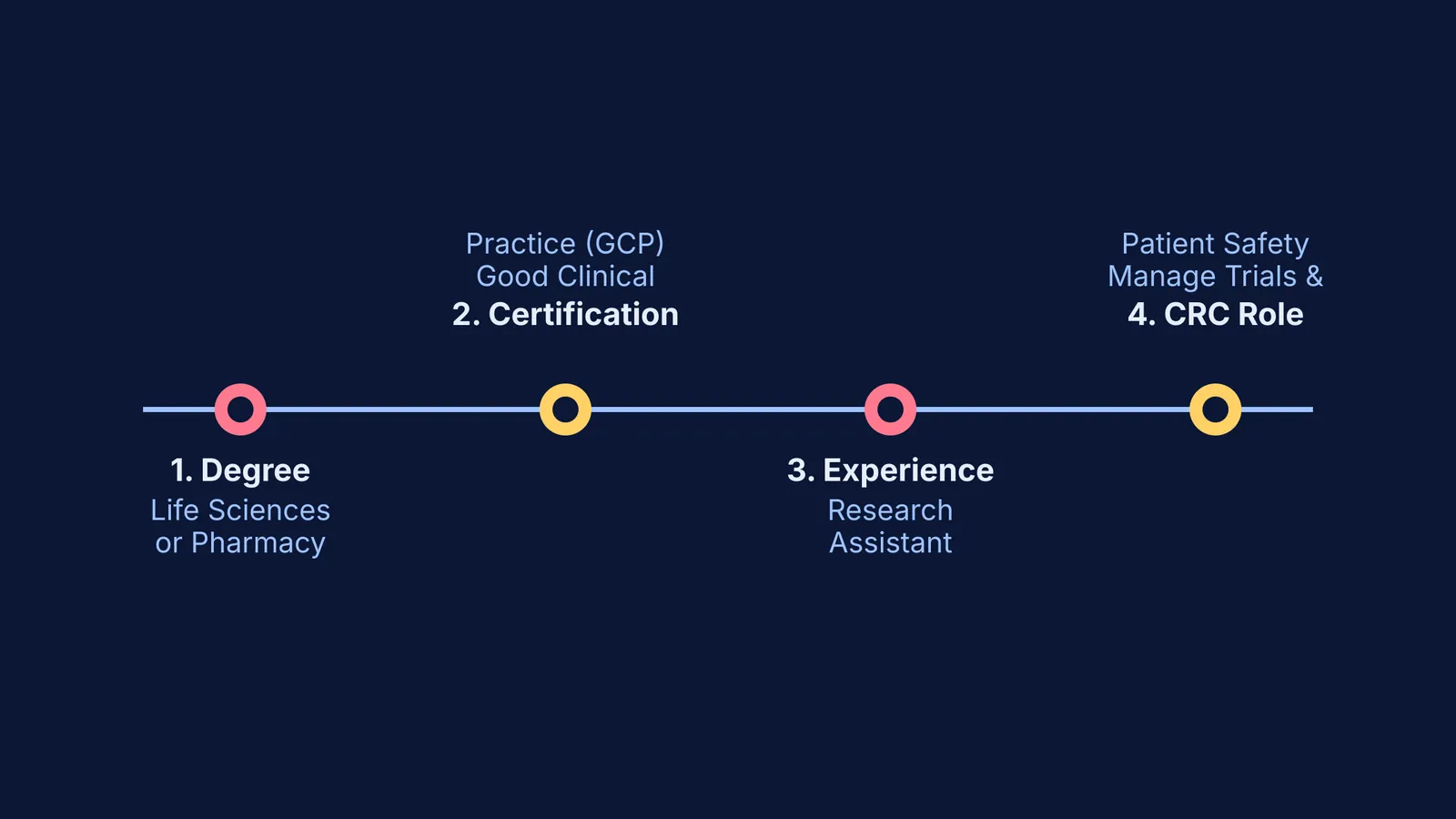
The path into clinical research is generally linear, moving from education to entry-level experience, followed by certification.
Earn a relevant degree: A B.Sc., B.Pharm, or nursing degree provides the vocabulary and scientific understanding. A master's degree can help accelerate your path into trial management.
Complete a diploma or certification: Many candidates pursue a Post Graduate Diploma in Clinical Research. This covers Good Clinical Practice (GCP) guidelines, pharmacovigilance, and data management.
Gain entry-level experience: Look for roles as a clinical research assistant or data entry specialist at hospitals, research institutes, or Contract Research Organisations (CROs). This is where you learn how to handle Electronic Data Capture (EDC) systems.
Get certified: As you gain hours of experience, formal professional certifications can advance your career and signal your expertise to global employers.
What is the day-to-day work like?
A CRC's schedule is split between patient interaction and meticulous data management. In a single day, a coordinator might transition from a laboratory setting to an office desk.
Patient screening and consent: You explain a trial's risks and benefits to a potential participant and guide them through the informed consent form.
Clinical procedures: Depending on your specific medical qualifications, you might collect biological samples, measure vital signs, or coordinate with the laboratory to process blood tests.
Data management: You enter patient data into secure systems, ensuring every data point exactly matches the source documents. This data integrity is what ultimately allows a drug to be approved.
Compliance checks: You prepare for monitoring visits by trial sponsors, ensuring that every protocol deviation is documented and reported.
The CRC's daily checklist
To stay organised during an active trial, experienced coordinators often rely on daily frameworks. Here is a typical workflow checklist for a patient visit day:
Pre-visit prep: Review the trial protocol for the specific visit day. Print out the necessary Case Report Forms (CRFs) and check that lab kits are stocked and within their expiry dates.
Patient arrival: Verify the participant's identity. Ask open-ended questions about their health since the last visit to capture any adverse events.
Vitals and samples: Measure blood pressure, heart rate, and temperature. Ensure blood or urine samples are collected at the exact time intervals specified in the protocol.
Study drug dispensing: Coordinate with the research pharmacy to provide the participant with the correct dosage of the investigational product. Count and log any returned pills from the previous visit to track compliance.
Post-visit documentation: Transcribe the day's clinical notes into the EDC system before the end of the day. Double-check that all entries match the physical source documents.
This is a job that demands both deep scientific knowledge and extreme organisational skills. When preparing for the rigorous study required in life sciences, Fermi's AI tutor can work out what you already know and build a plan for the session, so you sit down to a clear next step instead of feeling overwhelmed.
Working as a CRC is not just an administrative job; it is the frontline of medical science. By keeping trials rigorous and patients safe, coordinators ensure that the data used to approve new life-saving treatments is both accurate and ethically gathered.


