

On this page
The move to college brings a major choice: do you move into a hostel, or stay at home and commute daily?
For many families, the decision comes down to cost and convenience. But your living arrangement also shapes how much time you have to study, your access to academic help, and your focus. Here is what the evidence says about the impact of hostels and commuting on your academic performance.
Does commuting hurt your grades?
The biggest drawback to living at home is the time lost to travel. A 2026 Toronto Metropolitan University study that analysed 750,000 student records found a direct link between long commutes and lower academic performance. The researchers found that students who commute 10 hours or more per week see a drop of about three percentage points in their grades compared to those living closer.
This drop happens because long commutes cut into study time and sleep. The study also noted that first-year students are particularly vulnerable to a drop in academic performance, and living on campus helps them recover from this initial dip. Commuters also often leave campus right after classes to beat traffic, which means they miss out on study groups, professor office hours, and the campus library. The researchers stressed that long commutes negatively correlate with overall educational satisfaction, making affordable on-campus housing critical for academic engagement.
Are college hostels too distracting?
While living on campus saves time, it brings its own challenges. A hostel surrounds you with friends and activities, which can make it hard to focus on habits of study.
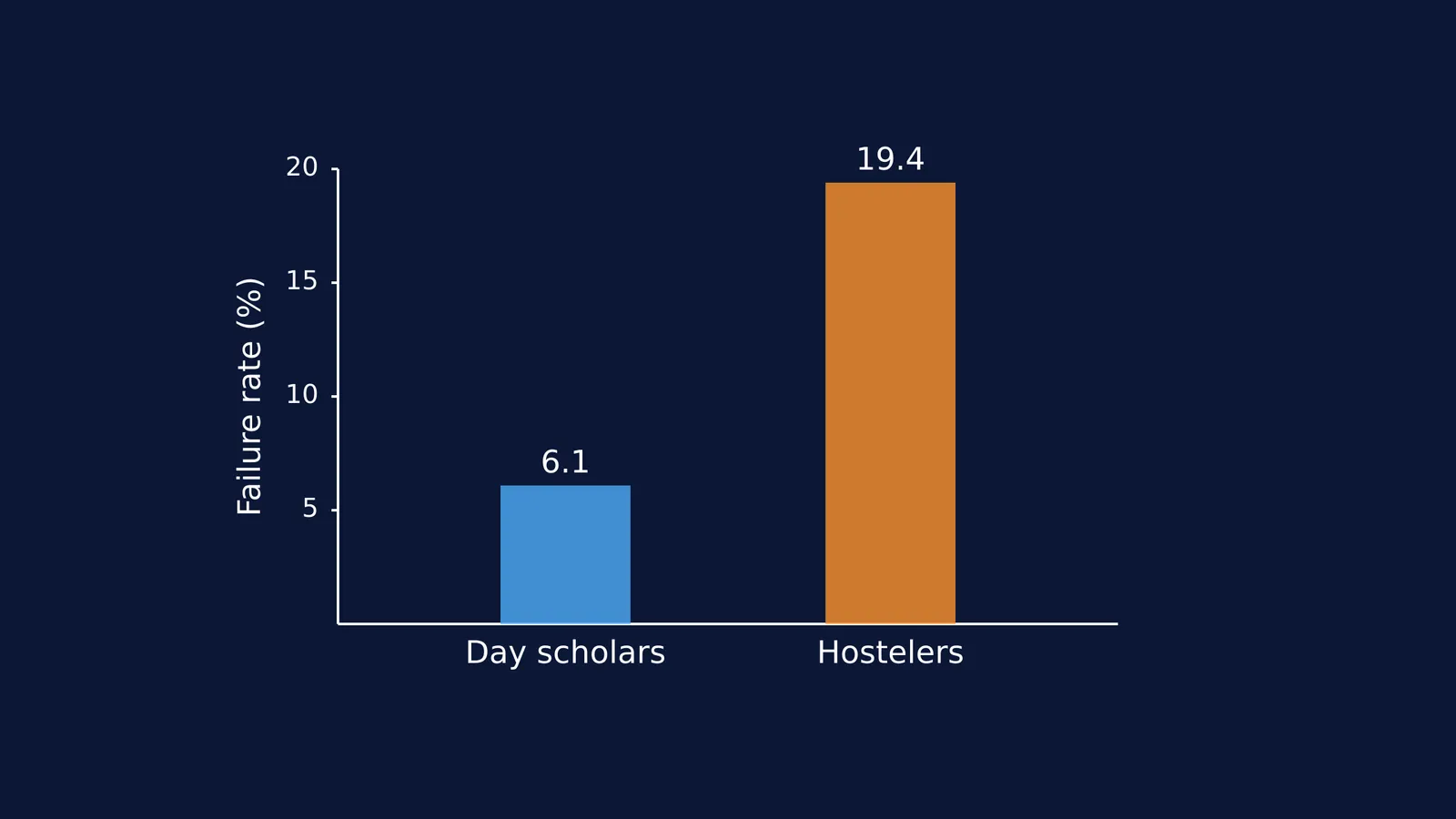
However, a competitive environment can also push you to study harder. Some studies in India show mixed results. For example, a 2023 study published in the International Journal of Life Science and Pharma Research tracking 149 MBBS students at Saveetha Medical College found that day scholars actually performed better in theory exams. The data showed that only 6.09% of day scholars failed to reach the 50% mark, compared to 19.4% of hostelers.
This academic advantage was also evident in their practical examinations, where only 4.9% of day scholars failed to reach the 50% mark, compared to 19.4% of hostelers. The researchers suggested that the emotional support, quiet study space, and better nutrition provided by living at home helped the day scholars excel. Without parental supervision, hostelers might face greater distractions and varied food quality, which can impact their focus and health.
How does living at home affect cost and social life?
Hostel fees and meal plans add significantly to the cost of a degree. Staying at home avoids these fees, but it can make it harder to build a social network. Hostel students often report higher participation in extracurricular activities and stronger peer bonds because they are on campus all day.
Day scholars need to make an active effort to join clubs, attend social events, or stay on campus between classes to build those same connections. Without the built-in community of a residence hall, creating a supportive peer group requires more planning.
How can you build a study plan wherever you live?
Whether you are in a bustling hostel room or studying at a quiet desk at home, you need a structured routine to succeed. Commuters often feel they sit down to study tired and unsure where to start.
A student brings a topic, a course, a problem set or a scanned assignment. Fermi works out what they already know, builds a plan for the session, and teaches through it — writing on a board, drawing the figure, running the simulation, and checking understanding as it goes.
Similarly, hostel students can often ask a friend down the hall when they are stuck on a numerical. If you are studying at home and hit a wall without peers nearby, the Fermi Problem Library has worked problems with a step-by-step solver that explains the reasoning rather than printing an answer.
In the end, neither option is universally better. If your commute is short and your home is quiet, being a day scholar is an excellent choice. If you live far away or need access to campus resources late at night, a hostel might be worth the investment. To learn more about effective studying regardless of where you live, read how ten study techniques rated in research.


