

On this page
Preparing for JEE Main feels like trying to remember a vast dictionary of facts. Preparing for JEE Advanced feels like writing a novel with those words. The syllabus might look similar on paper, but the depth of understanding required is entirely different.
If you are transitioning your preparation to focus on the Advanced paper, you need a targeted strategy. Data from the 2023 exam shows exactly how steep this climb is: of the 1,80,372 candidates who appeared, only 43,773 qualified (Times of India). That level of competition means surface-level knowledge is not enough. You must shift from a breadth-first approach to a depth-first mastery of concepts.
Here is how deep you need to go in each branch of chemistry.
How deep to study organic chemistry?
Organic chemistry in JEE Advanced is mechanism-centric. It is the section where memorising the NCERT textbook will help you the least.
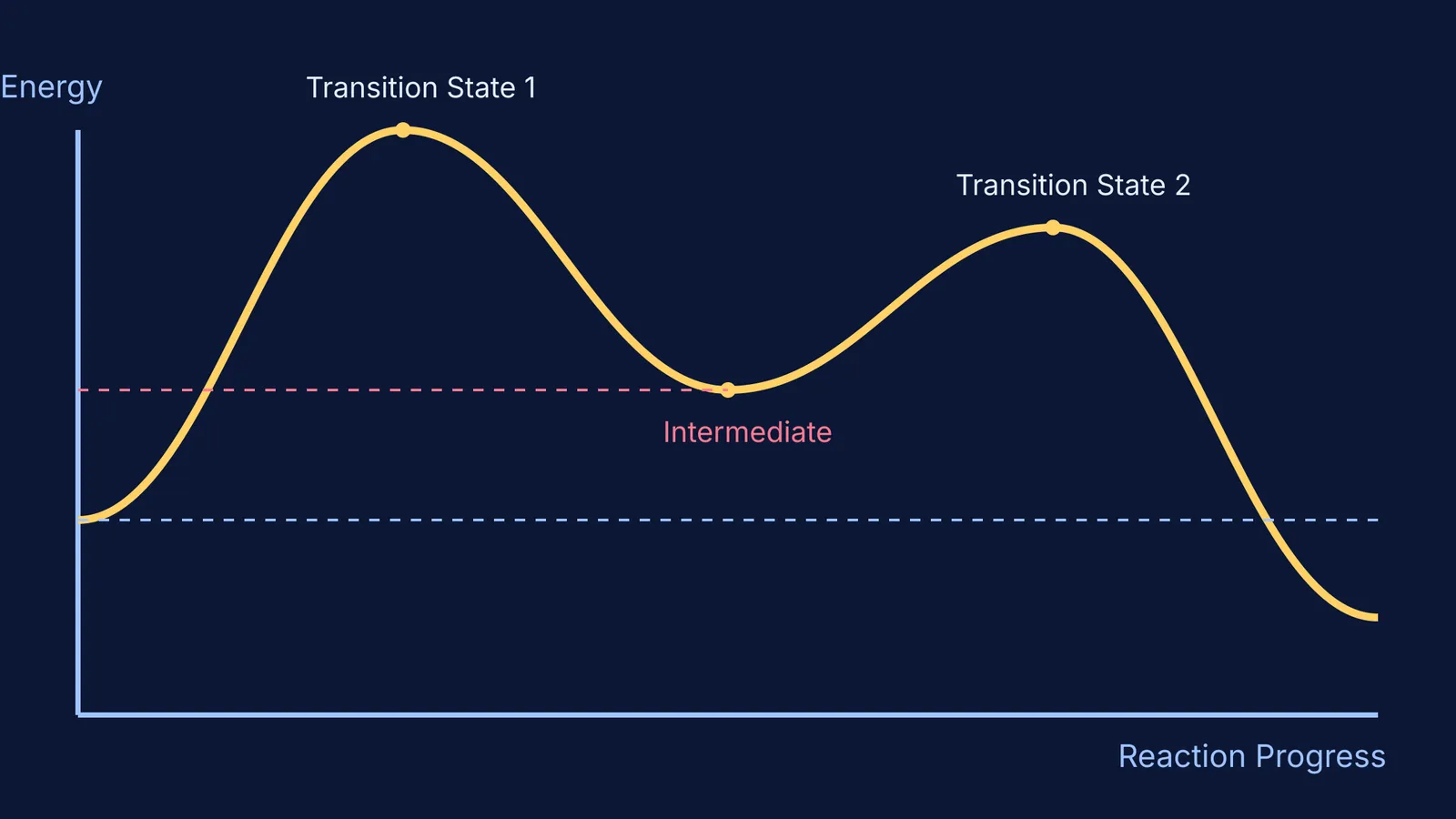
You cannot just know that reactant A turns into product B. You must know the exact electron movement, the stability of intermediates, and the transition states. The exam frequently asks "Roadmap" questions, where one reagent leads to a product, which reacts again under different conditions. A single missed detail—like whether a reaction undergoes carbocation rearrangements or hydride shifts—will derail the entire sequence.
Stereochemistry is another crucial layer of depth. Advanced questions often hinge on 3D molecular structures, requiring you to determine whether an addition is *syn* or *anti*, and how the R/S configuration changes along the way.
If you are stuck on why a reaction took an unexpected path, the Fermi Problem Library has worked problems with a step-by-step solver that explains the reasoning behind the mechanism, rather than just printing the final product.
What is the right depth for physical chemistry?
Depth in physical chemistry means moving beyond plugging numbers into formulas. You need to understand the fundamental conditions and derivations behind the mathematics.
For instance, memorising the formula for the integrated rate law is enough for Mains. But for Advanced, you must know how to read integrated rate law graphs to deduce the reaction order from experimental straight-line plots.
Furthermore, JEE Advanced loves to blend concepts. You will rarely see a standalone stoichiometry question. Instead, you might face a problem that requires calculating an equilibrium constant (K), using it in the Nernst equation for electrochemistry, and then applying thermodynamics to find the Gibbs free energy change (ΔG). You need to be comfortable carrying units and significant figures through lengthy, multi-step calculations without losing precision.
Is NCERT enough for inorganic chemistry?
Inorganic chemistry is the most fact-centric branch, and here, NCERT is your foundation. Nearly all the facts you need—from periodic trends to metallurgy—are hidden in its lines, tables, and footnotes.
However, the depth for Advanced lies in the exceptions. You must understand the logic behind why elements behave oddly. Instead of just remembering a trend break, you need to understand the underlying cause, such as the inert pair effect or lanthanide contraction. Questions will often ask you to deduce the oxidation numbers from a complex structure like CrO₅, which requires knowing its exact bonding arrangement.
Because so much of inorganic chemistry relies on picturing orbitals and 3D geometries (like VSEPR and coordination compounds), visualising the molecules is key. The Fermi Simulation Lab provides interactive simulations for ideas that are easier to see than read, helping you rotate and inspect these complex structures.
How to use past papers to calibrate your depth?
The ultimate test of whether you have studied deeply enough is the archive of past papers. The JEE Advanced exam consists of two mandatory papers (Paper 1 and Paper 2), both designed to test your ability to sustain focus on complex problems under time pressure (JEE Advanced Archive).
Start by attempting previous year questions (PYQs) from 2016 onwards. If you find yourself consistently stuck on the second or third step of a multi-part question, it is a sign that your conceptual depth needs work. Do not just look at the solution and move on.
Dissect the problem to find exactly which underlying concept you missed, go back to your reference books, and rebuild that foundation.


