

On this page
Choosing between chemical and mechanical engineering is one of the biggest decisions you will make after the JEE. While both branches share a foundation in advanced mathematics and physics, their curriculums diverge into two very different ways of thinking: process thinking and design thinking.
What is the difference in course content?
According to the AICTE model curriculum, both branches study the core physical principles of transport phenomena, but they apply them differently.
Mechanical engineering focuses heavily on heat transfer, power cycles (like the Otto and Diesel cycles), and converting energy into work. Core subjects include the theory of machines, engineering mechanics, and manufacturing processes. You learn how to design the physical structure of a system, calculating forces and material fatigue.
Chemical engineering focuses on mass transfer operations (like distillation), phase equilibrium, and reaction kinetics. Core subjects include process calculations, fluid mechanics, and chemical reaction engineering. You learn how to optimize the substances flowing through a system, ensuring reactions happen safely and efficiently.
If you struggle to picture abstract fluid flows or need help with types of chemical reactions, the Fermi Concept Library has every concept in physics, chemistry, biology, mathematics and computing, each with its own lesson and its place in the map.
Should you work on a plant or a product?
The choice often comes down to the scale and focus of your daily work.
Chemical engineers design the process. They typically work in plants—such as oil refineries, pharmaceutical factories, or specialty chemical facilities—ensuring that raw materials transform efficiently and safely. A chemical engineer calculates the required temperature, pressure, and flow rates to optimize product yield at a massive scale, dealing with complex thermodynamics.
Mechanical engineers build the system. They focus on designing the physical structure of a product or machine. A mechanical engineer selects materials that will not crack under pressure, designs rotating equipment like pumps and turbines, and manages vibration. They might spend their time in CAD software and prototyping labs, perfecting individual components.
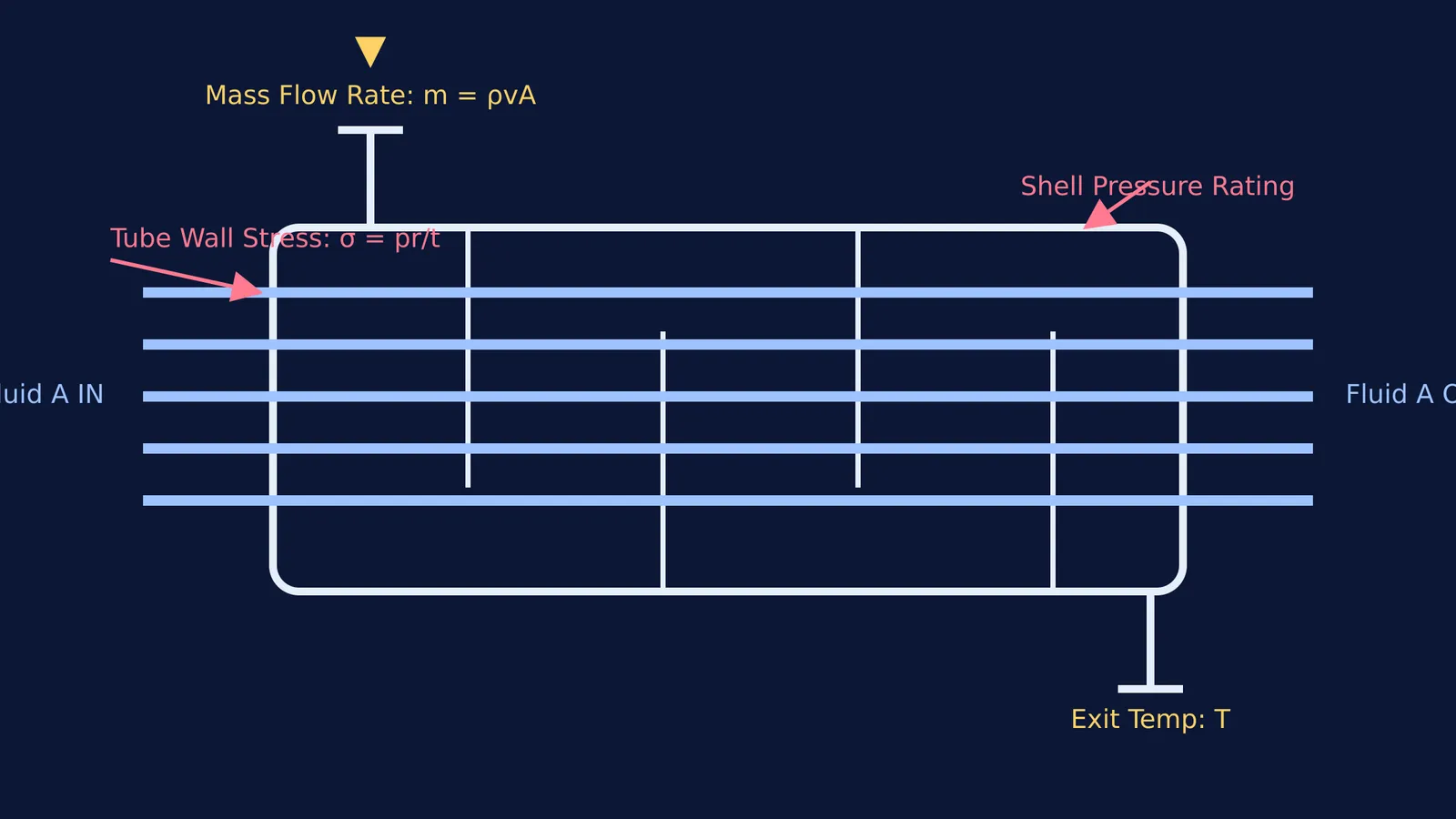
Think of a factory's heat exchanger: a chemical engineer calculates the flow rate and surface area needed for the reaction, while a mechanical engineer ensures the shell and tubes are thick enough to withstand the pressure without failing. If you get stuck calculating the stresses or the heat conduction and thermal resistance in your coursework, the Fermi Problem Library has worked problems with a step-by-step solver that explains the reasoning rather than printing an answer.
What are the career options in India?
Both branches offer strong career prospects, but they serve different industries. According to the *Unstop Talent Report 2025*, 83% of 2024 engineering graduates had no job or internship offer at graduation (Unstop), underscoring the need to build real skills in whichever branch you choose. A degree alone is no longer enough to guarantee placement in a competitive market; practical internships, hands-on projects, and software proficiency are absolutely essential.
India's chemical sector is valued at over 220 billion dollars and is projected to reach 300 billion dollars by 2030 (Manipal Academy). This massive growth creates sustained demand for chemical engineers in petrochemicals, fertilizers, and emerging fields like green hydrogen and electric vehicle (EV) battery materials. The shift towards sustainable manufacturing is also pushing companies to hire engineers who can redesign older, energy-intensive processes to be more environmentally friendly.
Mechanical engineering remains one of the broadest fields available. The automotive and manufacturing sectors are the largest employers, with emerging opportunities in aerospace, robotics, and automation. A mechanical engineer who learns new-school skills like CAD design, finite element analysis, and industrial automation will consistently find more opportunities than one relying only on traditional mechanics. The transition to electric vehicles, for instance, requires mechanical engineers to design lightweight chassis components and highly efficient thermal management systems for large battery packs.
The decision checklist
Before locking in your choice, ask yourself these three critical questions:
Do you prefer chemistry or physics? If organic and physical chemistry exhaust you, avoid chemical engineering. If you dislike rigid body mechanics and dynamics, avoid mechanical engineering.
Where do you want to work? Chemical engineers often work on-site at large continuous-operation plants, while mechanical engineers frequently work in design offices, prototyping labs, or discrete manufacturing floors.
What is your scale? Do you want to optimize a massive invisible process, or design a physical product you can hold in your hand and test on a bench?


