

On this page
Choosing the right undergraduate program can be daunting, especially when trying to balance academic theory with practical job skills. For students who want hands-on training without sacrificing the opportunities of a full bachelor's degree, the Bachelor of Vocation (B.Voc) is a strong choice.
Introduced by the University Grants Commission (UGC) in 2014, the B.Voc degree bridges the gap between the classroom and the workplace. But what exactly does it involve, and is it worth it?
What is a BVoc degree?
A B.Voc is a three-year undergraduate degree designed to make students job-ready by aligning their education with industry requirements. According to the UGC B.Voc guidelines, the curriculum is divided into a skill component (approximately 60% of the course) and general education (approximately 40%).
This means that instead of spending all your time in lecture halls, a majority of your learning involves hands-on practicals, laboratory work, and on-the-job training. If you ever struggle with the foundational mathematics or science behind these practicals, the Fermi Concept Library explains every concept in physics, chemistry, biology, mathematics and computing, each with its own lesson and its place in the map.
Unlike traditional degrees, the B.Voc program is mapped to the National Skills Qualifications Framework (NSQF). It offers programs in highly specialized fields, ranging from software development and healthcare to retail management and automobile technology.
What are the advantages of multiple exit points?
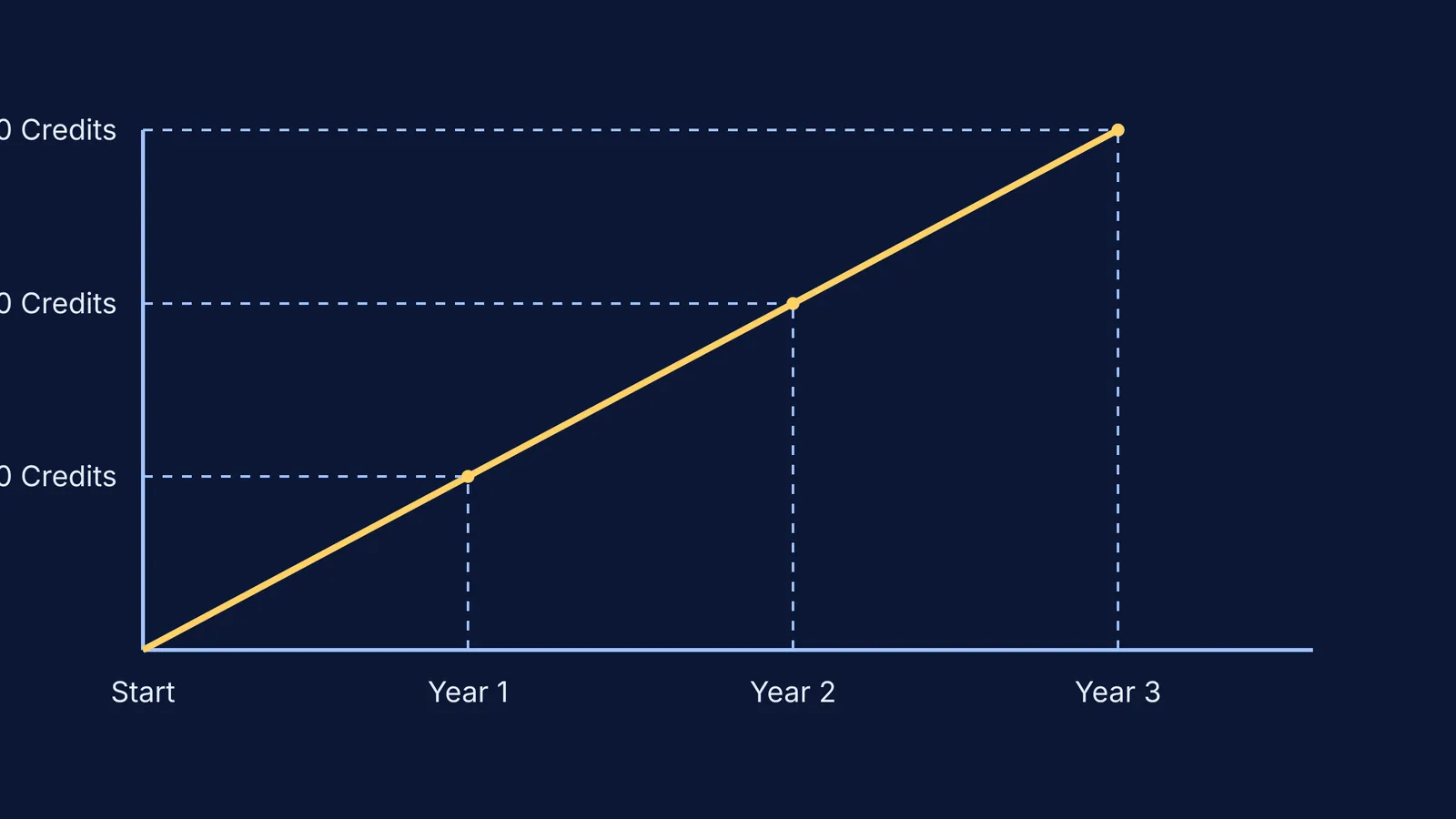
One of the most practical features of the B.Voc program is its flexibility. Life is unpredictable, and not every student can commit to a continuous three-year academic stretch. The UGC structured the B.Voc with pre-defined multiple entry and exit points:
1 Year: If you leave after successfully completing the first year (60 credits), you are awarded a Diploma.
2 Years: Completing the second year (120 credits) earns you an Advanced Diploma.
3 Years: Finishing the full six semesters (180 credits) awards you the complete B.Voc degree.
This structure ensures that if you need to step away from your studies to start working early, you still leave with a recognized qualification.
Is a BVoc degree worth it for government jobs?
A common question among students is whether a B.Voc holds the same weight as a traditional bachelor's degree when applying for competitive exams. The answer is yes.
In its August 2016 circular (D.O. No. F. 2-7/2014), the UGC explicitly stated that the B.Voc degree is recognized at par with other bachelor-level degrees. This means you are fully eligible to appear for major competitive exams where the baseline requirement is a bachelor’s degree in any discipline.
You can confidently apply for:
Union Public Service Commission (UPSC) Civil Services
Staff Selection Commission (SSC) exams
Banking exams (IBPS, SBI)
State Public Service Commission exams
While some highly technical government posts may specifically demand a B.Tech, the B.Voc opens the door to the vast majority of general graduate-level careers. Often these exams include aptitude tests with numerical sections; for instance, you might encounter Quadratic word problems in Class 10: speed, age and area or need to know With and without replacement: probability problems compared as part of your preparation.
What about higher education and the private sector?
A B.Voc degree does not limit you to starting work immediately. Graduates have vertical mobility and can pursue further education, including an M.Voc (Master of Vocation), an MBA, an MCA, or a conventional master’s degree.
In the private sector, employers increasingly value candidates who require less initial training. Because 60% of a B.Voc curriculum is focused on skill development, graduates frequently transition into the workplace more smoothly than those from theory-heavy programs.
However, the value of the degree in the private sector depends on the institution you attend. When evaluating B.Voc programs, look closely at the college's industry partnerships and the track record of its placement cell to ensure you get the most out of your three years.


