

On this page
Board exam morning is the wrong time to find out that your gel pen skips or there is a formula scribbled inside your pencil box lid. Here is what to pack, built around the rules CBSE has published.
Which pen should you use in a board exam?
CBSE's list of permitted items allows a Blue/Royal Blue Ink/Ball Point/Gel Pen, so the colour is fixed but the type is your choice (CBSE circular on examination ethics, 20 January 2025). The same circular lists "use of any other ink or pencil for writing answers in the answer book" as unfair means, so leave black and other colours at home unless your admit card says otherwise.
Pick the type by how you write, not by what looks nicest in the shop:
Ballpoint: dries quickly and rarely smudges. A sensible default, especially if you are left-handed and your hand drags across fresh lines.
Gel: smoother and darker, which can ease a tired hand, but it smudges more easily and some refills run out fast.
Ink pen: fine if it is what you always write with; otherwise it adds leaks and refilling to a busy morning.
Whichever you choose, use that exact model for your last few weeks of mock papers, so you know how it behaves in the second hour before the board paper does.
How many spare pens should you carry?
Carry three of the same model: one in your hand and two spares. A pen rarely warns you before it fails, and switching to an identical one means your handwriting looks the same on every page.
What does CBSE allow in the exam hall?
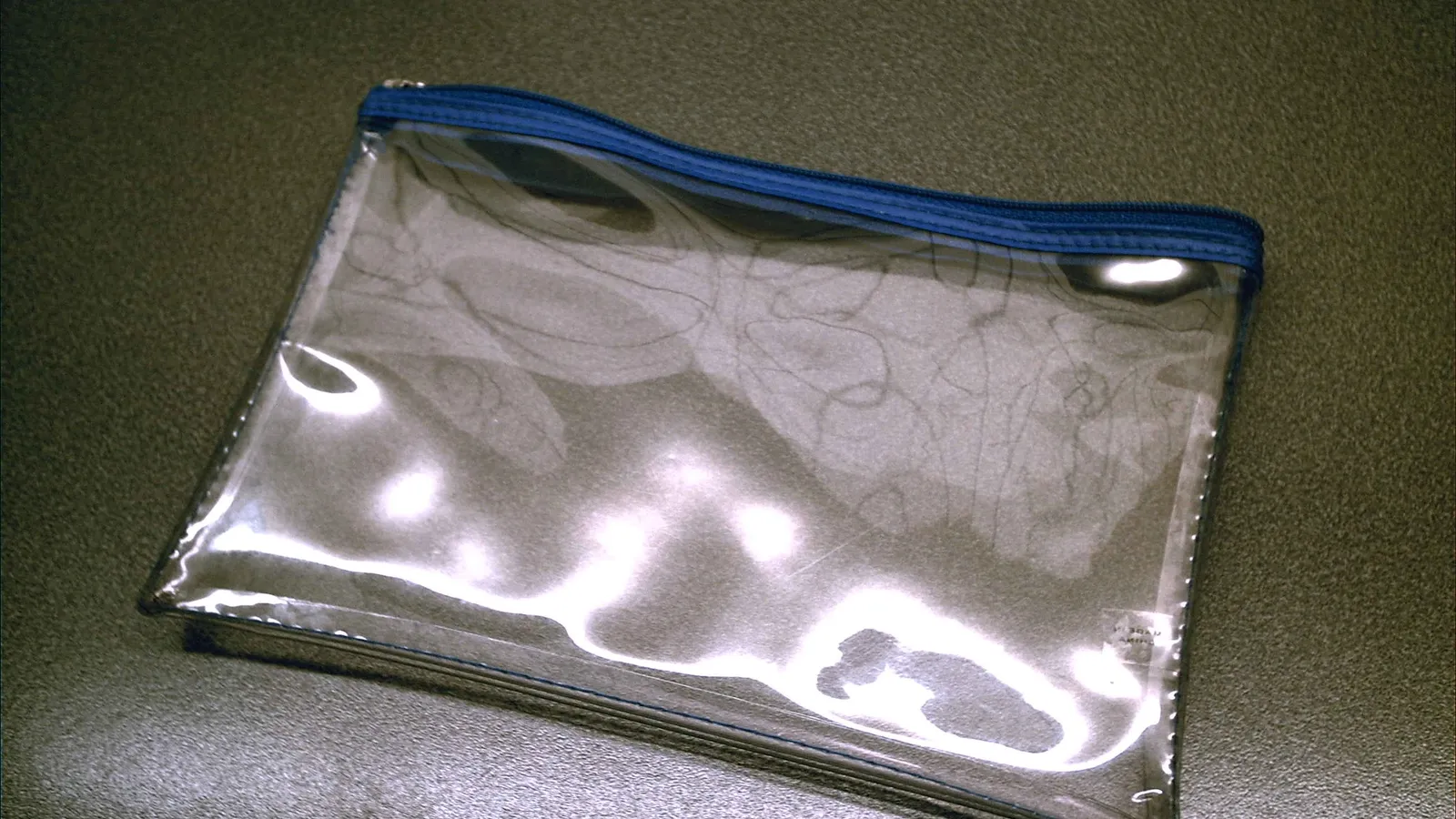
The same circular lists permitted stationery as a transparent pouch, a geometry/pencil box, blue or royal blue pens, a scale, a writing pad and an eraser (CBSE, permitted and barred items). It also permits the admit card with your school identity card, an analogue watch and a transparent water bottle, and warns that students will be physically frisked before entering the centre.
Barred items include:
any printed or written material, including bits of paper
calculators and log tables (centres provide log tables; students with dyscalculia may use a calculator provided by the centre)
pen drives and electronic pens or scanners
any communication device, including mobile phones, earphones, smart watches and health bands
wallets, goggles, handbags and other pouches
The stakes are high. Under CBSE's unfair-means rules, possessing an electronic device that can be used for communication after entering the centre can lead to cancellation of the current and the next year's examination in all subjects (CBSE circular). Rules are revised from year to year, so treat the instructions on your own admit card as final. If you sit ICSE, ISC or a state board, your own board's instructions apply.
What goes in the geometry box, and should diagrams be in pencil?
The permitted list names a Geometry/Pencil Box rather than single instruments, so keep everything small inside it: two sharpened pencils, a sharpener, an eraser, a compass with a firm hinge, a protractor and set squares. Check the inside of the lid for old notes.
The CBSE list does not say diagrams must be in pencil, but written answers must not be in pencil. Drawing diagrams in pencil and labelling in pen is the usual school practice, because you can fix a wrong curve without a messy overwrite; if your teacher has told you something different for a subject, follow that. Draw label lines with the scale so they do not cross, as in our guide to CBSE Class 10 science diagrams worth practising.
If a diagram keeps going wrong because you cannot picture the idea behind it, such as how rays bend through a lens, the Fermi Simulation Lab has interactive simulations for ideas that are easier to see than to read. Practise there, then draw it by hand.
A packing checklist for the night before
Pack the evening before and lay everything out once against this list:
Admit card and school identity card.
Transparent pouch with nothing written on it.
Three blue or royal blue pens of the model you practised with, each test-scribbled at home.
Geometry box: two sharpened pencils, sharpener, eraser, scale, compass, protractor and set squares, checked inside and out for writing.
Writing pad, blank on both sides.
Analogue watch, set to the correct time.
Transparent water bottle.
Phone, smart watch, fitness band and calculator taken out of the bag before you leave.
Once the kit is sorted, the next small gains come from how you use the paper itself: a tidy layout from neat working that cuts errors in maths and physics, and a plan for checking your answers in the last 10 minutes.


