

On this page
Sending a child to their first overnight school camp is a major milestone. It marks a leap in independence, but the days leading up to departure are often fraught with anxiety for both students and parents. You might find yourself tempted to pack their bag in secret to ensure nothing is forgotten, or nervously promising to bring them home if they feel sad.
However, actively involving your child in the preparation process is the most effective way to build their confidence. By turning packing into a shared project and talking openly about the emotions they might feel, you can turn a stressful separation into an opportunity for growth.
Why do children get homesick?
It is entirely normal for children to feel distress when separated from familiar surroundings and caregivers. A 2007 clinical report published in *Pediatrics* by the American Academy of Pediatrics found that almost all children who spend time away from home experience some degree of homesickness. It is not a sign of weakness; it is a natural reaction to a change in routine.
The most intense feelings usually peak within the first two days before rapidly subsiding as the child engages with camp activities. The same report noted that structured pre-camp preparation—which includes packing together and discussing coping strategies—can aid in prevention. Anticipating the feeling, rather than ignoring it, is the first step to managing it.
How does packing build independence?
When you pack for your child, you guarantee a perfect suitcase, but you rob them of a valuable cognitive workout. Packing requires planning, sequencing, and remembering multiple instructions simultaneously—all core components of executive function.
A 2022 study by La Trobe University, published in the *Australian Occupational Therapy Journal*, found that children aged 5 to 13 who regularly engage in self-care and family-care chores show significantly better working memory and inhibition. Packing for camp is essentially a high-stakes chore.
To support them without taking over:
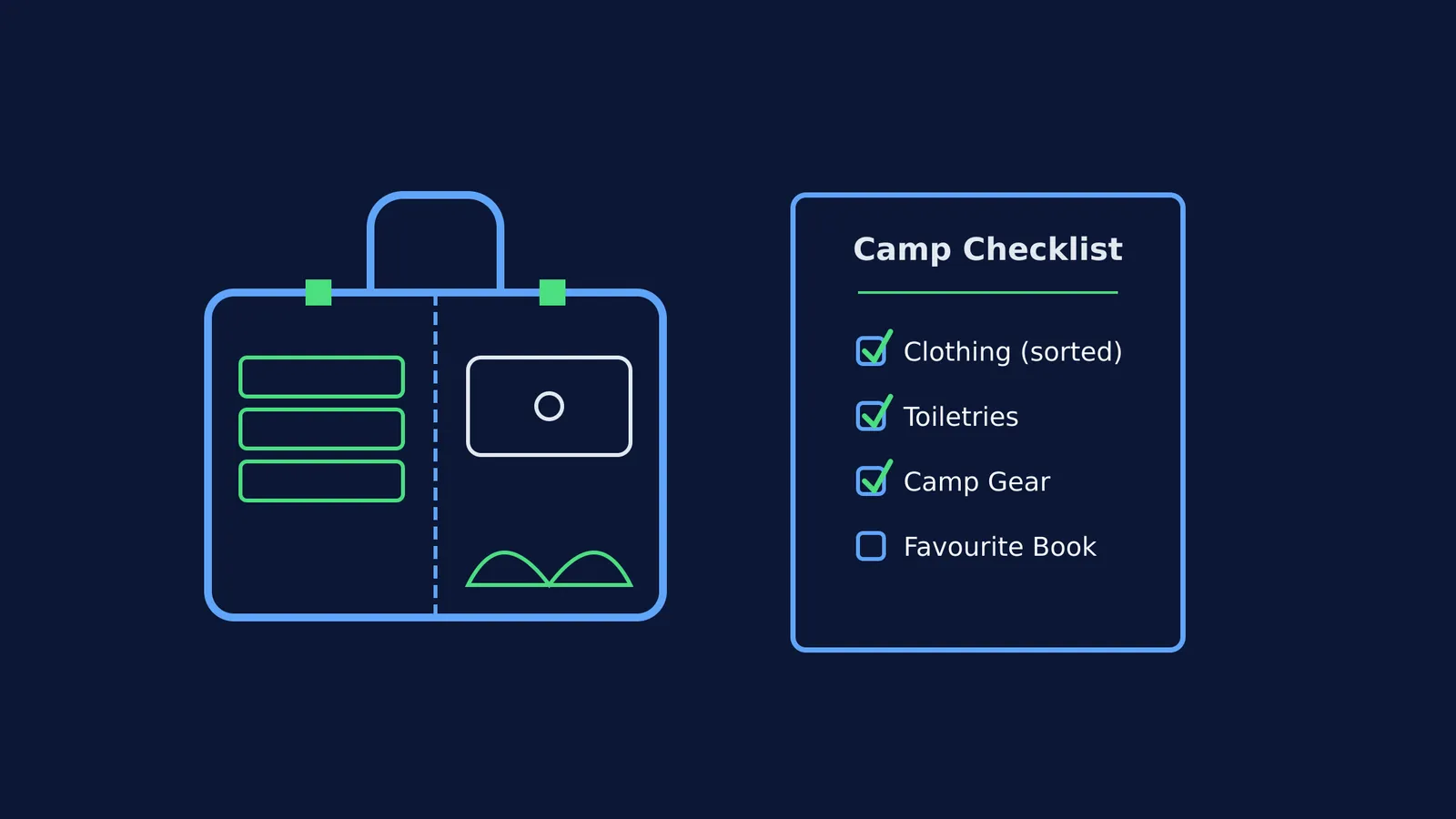
Create a visual checklist: Write down everything they need.
Sort by category: Have them gather all clothing first, then toiletries, then gear.
Check together: Let them pack the bag, then review the checklist side-by-side to catch missing items.
This scaffolding externalises the cognitive load. When learning complex new routines, breaking them into steps removes the panic. Just as Fermi's AI tutor works out what a student knows and builds a plan for the session so they sit down to a clear next step, you can build a step-by-step packing plan with your child to prevent them from feeling overwhelmed.
How do you handle camp worries?
Children often express their anxiety as somatic complaints (a stomach ache) or last-minute resistance. As a parent, your instinct is to protect them, which often leads to the "pick-up deal"—promising to collect them if they are unhappy.
Psychologists warn that the pick-up deal is a trap. It signals to the child that you do not believe they can cope, and it guarantees they will focus on feeling sad until you arrive. Instead, validate their feelings and provide a coping script.
If they are worried about missing their studies while away—whether they are concerned about keeping up with the human skeleton in biology or tackling projectile motion in physics—reassure them that a few days of active, outdoor learning is just as valuable, and they will have plenty of time to catch up upon their return.
How can you stay in touch without hovering?
The digital age makes it tempting to stay in constant contact, but constant messaging interrupts the immersion of camp. Many excursions have strict rules about phones for this exact reason. If your child is allowed to bring a device, establish clear communication boundaries before they leave.
Agree on a specific check-in time, such as a single text after dinner.
Frame messages around their experience, not your absence. Ask, "What was the best activity today?" rather than "I miss you so much."
Trust the camp staff. They are trained to handle homesickness and will contact you if a genuine problem arises.
By equipping your child with a packed bag they understand and a realistic expectation of their own emotions, you give them the tools to thrive independently.


