On this page
For many Indian families, the long summer holiday brings the same worry every year: will my child forget half of what they learned? Researchers have studied this "summer learning loss" for decades, mostly in the United States. The findings are real but more mixed than the phrase suggests. This post explains what the studies found, what they could not settle, and a light plan you can use at home without turning the break into a second school term.
What did the classic research on summer learning loss find?
The study most people quote is a review by Cooper, Nye, Charlton and Lindsay (1996). They looked at 39 studies and combined the 13 most recent ones in a meta-analysis. On average, test scores fell over the summer by about one month on a grade-level scale, or one tenth of a standard deviation.
Three details matter more than the average:
Maths suffered more than reading. The loss was largest for maths computation and spelling.
Facts and procedures faded faster than ideas. The authors suggested that knowledge based on facts and steps is more easily forgotten than conceptual understanding, and that children get more chances to practise reading than maths over a holiday.
Family income mattered for reading. Middle-income children tended to gain on some reading tests over summer, while lower-income children lost ground.
Is summer slide as large as people say?
Not always. Later work found that some of the classic results were distorted by how tests were built and scored. von Hippel and Hamrock (2019) showed that gaps can appear to grow simply because test scales spread out with age, or because children take a different test form in spring and in autumn. After correcting for these problems, they found that evidence on whether gaps grow faster in summer or during school was inconsistent.
What the newer data do show is how differently children respond to a break. Using test data from 3.4 million students, Megan Kuhfeld (2019) reported that summer slide is common but not inevitable, and that the students who lost the most were often those who had gained the most during the school year. A large study by Atteberry and McEachin (2021) found dramatic variability: some students kept learning at their school-year rate while others lost nearly all of their school-year progress, and the same students tended to lose ground summer after summer.
These studies come from the US, where the break is longer than in most Indian schools, and similar research in India is scarce. The mechanism is general, though: skills that are not used for weeks get rusty.
Which holiday activities actually help?
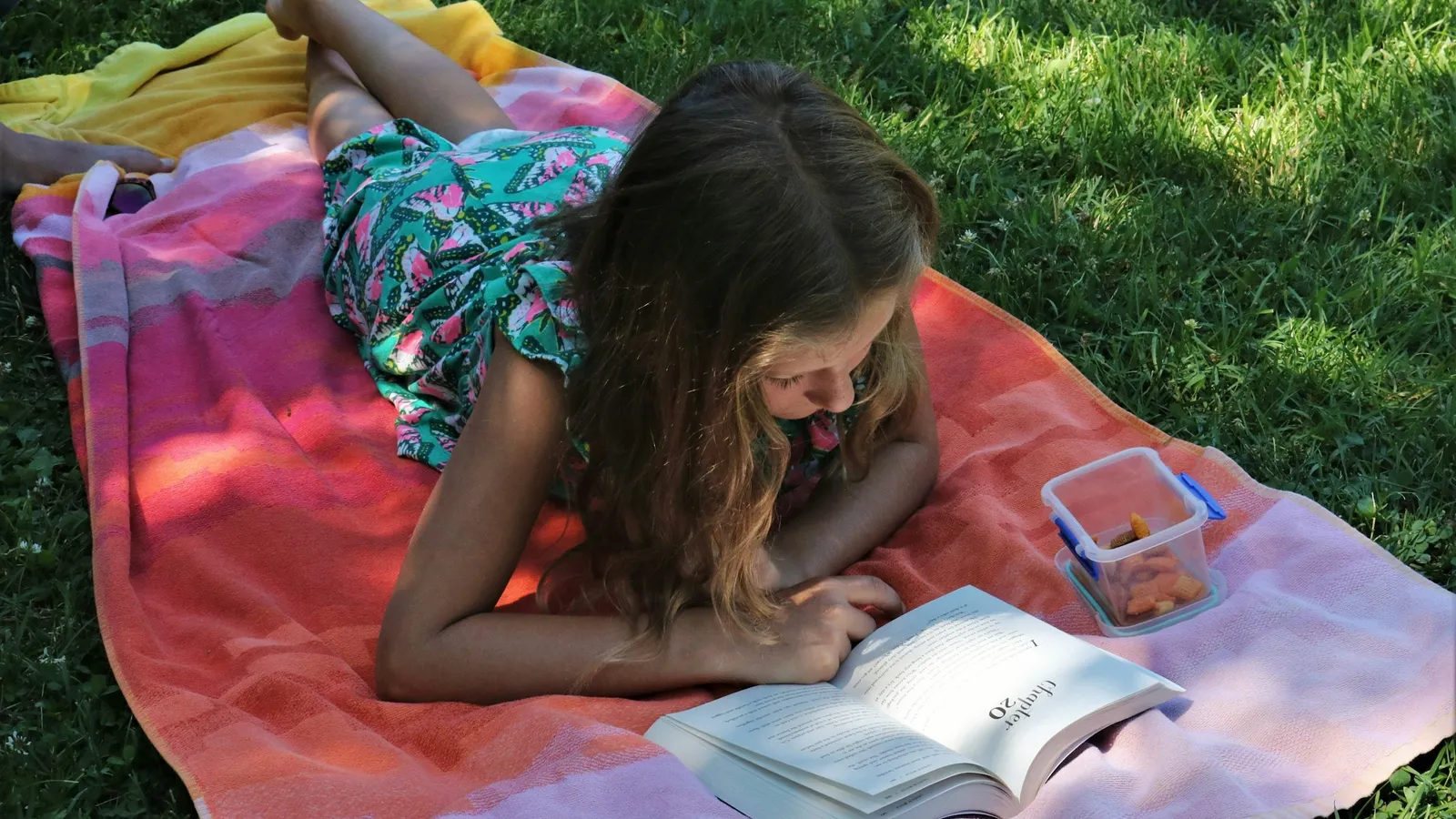
Reading books your child chooses. A meta-analysis by Kim and Quinn (2013) combined 41 summer reading programmes for children from kindergarten to Grade 8. Both classroom programmes and home programmes built on child-initiated book reading improved reading outcomes, and the gains were larger for children from low-income families. Library cards and a shelf of comics, stories and science books count. Our post on reading for pleasure has ideas for getting reluctant readers started.
Short recall, not long revision. Pulling something out of memory strengthens it more than reading it again. In Roediger and Karpicke's (2006) experiments, students who practised recalling a passage remembered more after two days and a week than students who simply restudied it. For a child, that can be five maths questions from memory, not an hour with the textbook.
Mixing in maths on purpose. Because maths gets fewer natural chances for practice over a holiday, it needs a small, deliberate slot.
A simple plan for the break
This plan aims to keep skills warm, not to get ahead. Adjust it for your child's age.
Five days a week, 15 minutes of maths recall. Pick five questions from last year's chapters, mixed, not all from one topic. Let your child try them before looking anything up.
Daily reading of the child's own choice, in any language. Ask one question at dinner: "What happened in your book today?"
Once a week, "teach me". Your child explains one idea from last year to you, such as fractions, photosynthesis or how a circuit works. Wherever they get stuck is the topic for next week's recall questions.
One hands-on project. Cooking, measuring, a small garden or a kitchen experiment gives maths and science a real use.
The last two weeks: a gentle preview. Look at the first chapter of next year's textbook together, just to see the new words.
Older students preparing for boards or entrance exams need a different structure; our holiday study plan for students covers that.
What if my child has already forgotten a lot?
Do not panic, and do not try to fix everything at once. Find the one or two ideas the new year's chapters depend on, and rebuild those first. When a forgotten idea needs a fresh explanation, the Fermi Concept Library has every concept in physics, chemistry, biology and mathematics with its own lesson, so your child can revisit one topic without rereading a whole book.
Rest and play matter too. A holiday that leaves your child curious and well rested is a good start to the new year.
This week, ask your child to explain one thing they learned last year in five minutes, and note where they hesitate.