

On this page
The start of the academic year is a clean slate. Students have fresh notebooks, crisp schedules, and a renewed sense of motivation. However, without a clear direction, this initial energy often fades by the time the first round of exams arrives.
A 2022 meta-analysis of 54 studies found that parental expectations are a strong predictor of a student's academic achievement (Jeynes, 2022). Sitting down together to translate those expectations into concrete, actionable habits provides the framework students need to maintain momentum.
Why is setting study goals with your child for the new year important?
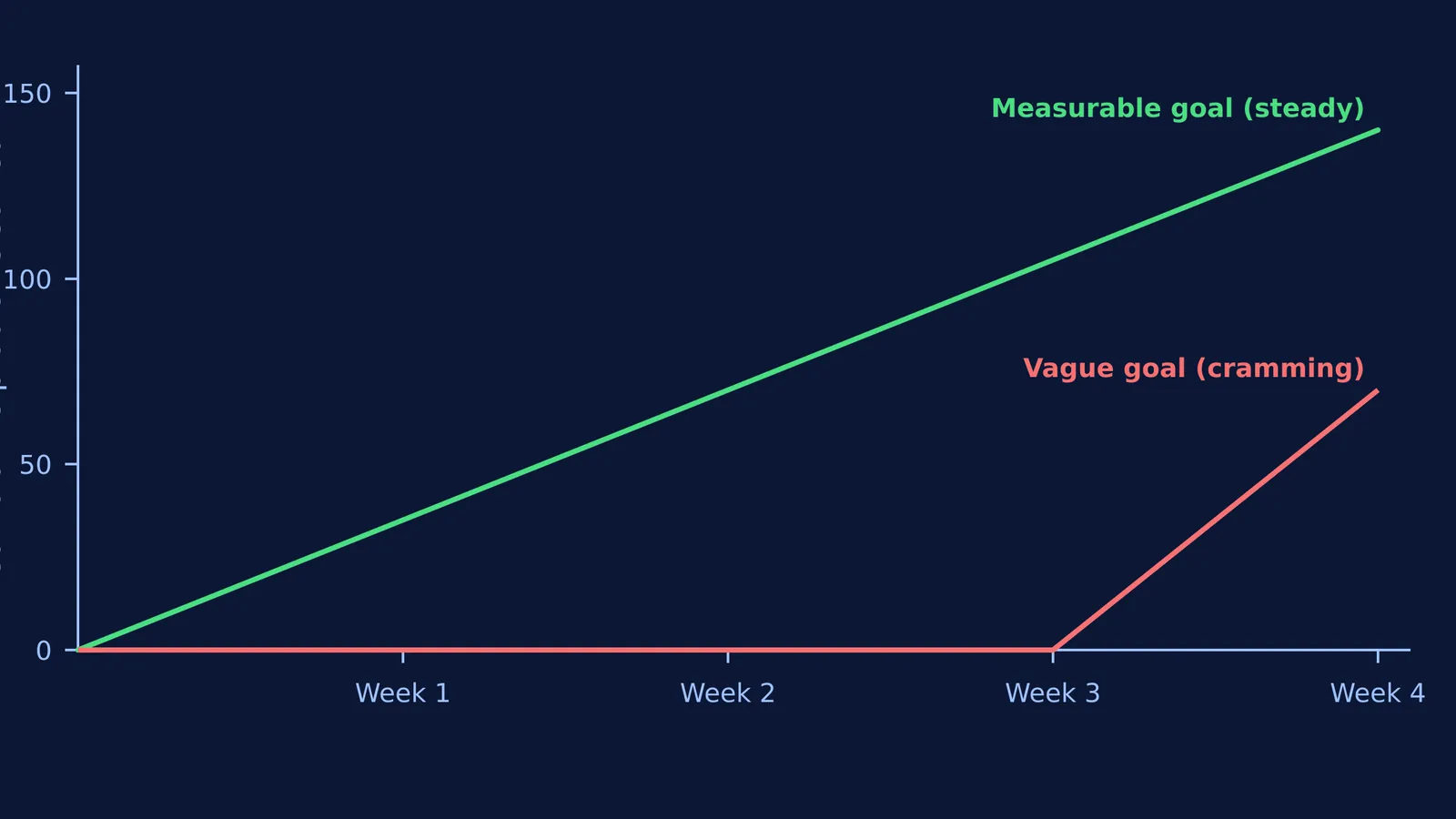
Decades of research in organisational psychology and education show that the type of goal you set heavily influences the outcome. A 35-year review found that setting specific, hard goals leads to a consistently higher level of performance than setting vague goals (Locke & Latham, 2002).
When a student aims broadly to "study physics," they cannot easily measure if they have succeeded on a given Tuesday evening. This ambiguity naturally breeds procrastination. A specific goal, such as solving five kinematics numericals daily, provides a clear target and an immediate sense of accomplishment when finished. Consistent, small daily inputs always beat inconsistent cramming sessions before an exam. If you are looking for evidence-based habits to build those inputs, we recommend reading about the ten study techniques rated in the 2013 Dunlosky review.
What makes a study goal measurable?
A measurable goal replaces subjective feelings with objective numbers. You can count it, track it, and know definitively whether it is complete at the end of the week.
Consider the difference between these two approaches:
Vague: "I will get better at maths this term."
Measurable: "I will solve 15 mathematics problems every week using the Fermi Problem Library, checking the step-by-step reasoning for any I get wrong."
The second goal leaves no room for debate. For students who frequently face analysis paralysis—knowing they need to study but not knowing where to begin—a measurable target acts as a reliable anchor. If they still struggle with getting started, Fermi's AI tutor can work out what they already know and build a plan for the session, so they sit down to a clear next step.
How do you set three realistic goals together?
Setting too many goals at once is a recipe for burnout. Limit yourselves to exactly three targets for the term to keep the focus sharp. Choose one goal from each of the following categories to build a balanced, resilient routine:
An Input Goal: This defines the daily or weekly habit that drives long-term learning. For instance, "I will spend 20 minutes reading the Concept Library before starting my school homework."
An Output Goal: This defines a specific milestone to measure progress. For example, "I will complete one full-length mock test every second Sunday morning."
A Process Goal: This defines how to behave when things get difficult, removing the panic from hard subjects. For example, "When I cannot solve a problem, I will write down the knowns and unknowns before asking for help."
If your child asks why they need to go to such lengths for subjects they may not enjoy, it can help to connect the daily work to their broader ambitions. You can read about a trial that helped parents explain why maths and science matter for practical ideas on framing this conversation effectively.
What should you say during the goal-setting conversation?
If you want to sit down and start this conversation this weekend, try using this simple, four-step structure to guide the discussion without it feeling like a lecture:
Start with their vision: "What is one subject you want to feel more confident in this term?"
Identify the friction: "What usually gets in the way of studying that subject when you sit down at your desk?"
Define the goals: "Let's write down three specific, measurable things you can do each week to make it easier."
Agree on the review: "We will put this list on the fridge and look at it together on the first day of every month to see what is working."
By focusing on measurable inputs and supportive processes rather than just final grades, you help your child build the resilience and independent habits they need to thrive throughout the entire academic year.


