

On this page
Having an older child help a younger one with homework sounds like an ideal arrangement. The younger sibling gets one-to-one attention, and the older one reinforces their own knowledge by explaining it. But in practice, sibling study sessions often end in tears, slammed doors, and resentment.
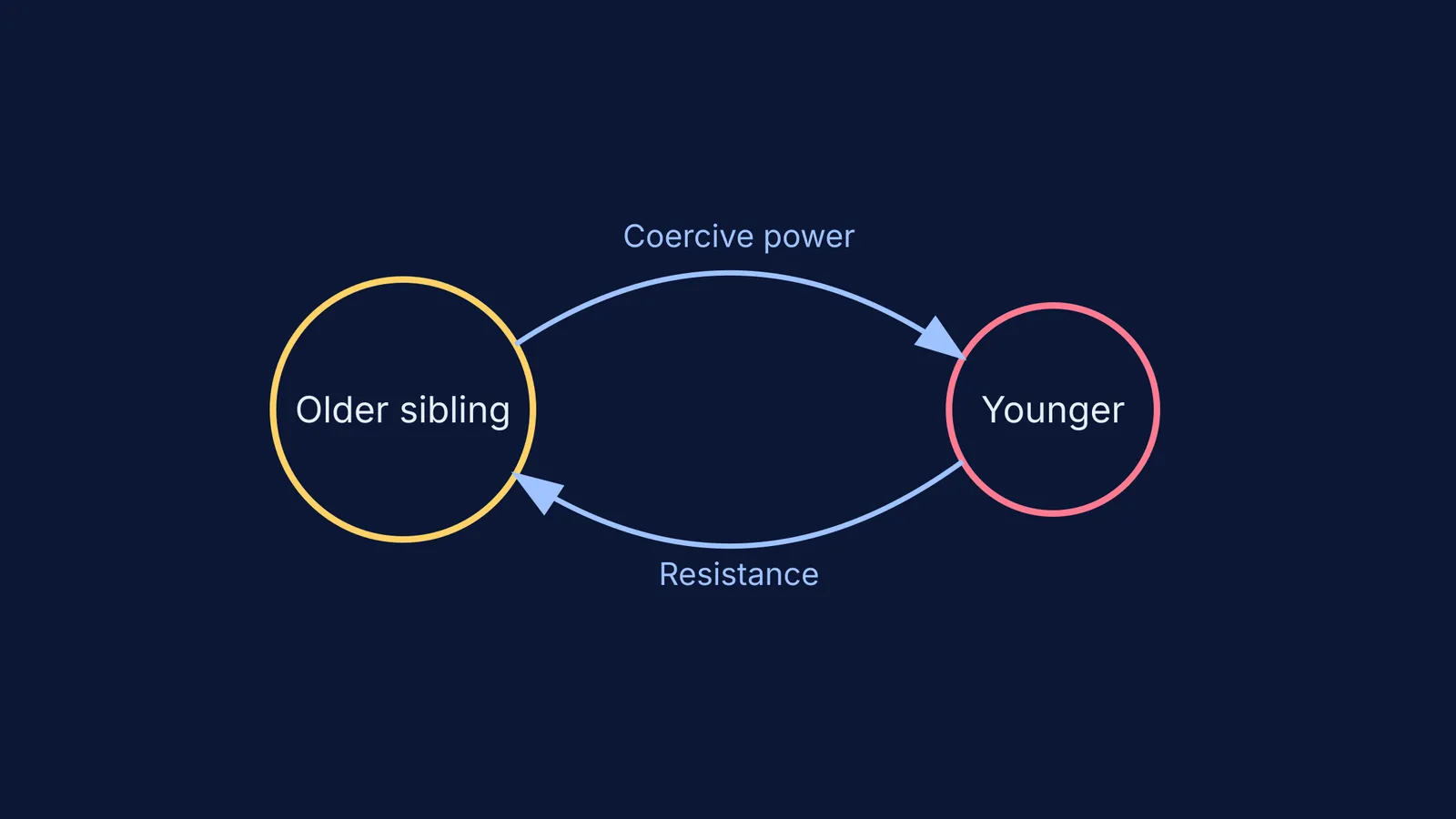
The problem is rarely the academic material itself. Instead, it is the social dynamic. Siblings are used to a peer relationship, but tutoring requires a hierarchy. When an older sibling takes on the role of a teacher, they can quickly slide into being bossy, and the younger sibling will instinctively push back.
What happens when an older sibling is teaching a younger one badly?
When children teach each other, they do not have the professional restraint of an adult tutor. If a younger sibling is struggling to understand a concept, the older sibling may lose patience and resort to force.
A 2013 study of 66 sibling pairs published in *Social Development* found that siblings primarily use coercive power to resolve object-related disputes, and older siblings specifically rely on it to force a win/lose outcome. In a tutoring session, this looks like the older child snatching the pencil, raising their voice, or saying, "Just write this down, it is the right answer."
This coercion degrades the younger sibling's confidence. Instead of learning the material, they learn that they are slow or inadequate. It also damages the sibling bond. The younger child feels policed, while the older child feels burdened by the responsibility of acting like a parent. Understanding when to help with homework is difficult enough for parents; expecting a teenager to navigate that boundary is often unrealistic.
Does the relationship dynamic matter for sibling tutoring?
The existing relationship between siblings changes how effectively they can work together. If the children are highly competitive, the artificial hierarchy of tutoring can feel unfair.
A classic 1972 study in *Child Development* measured the effect of sibling relationships on concept learning. It found that older sisters were particularly effective teachers for their younger siblings, and that being taught by a sibling produced different learning outcomes than being taught by an unrelated peer. The interaction between the child-teacher and the learner played a major role, showing that the pre-existing family dynamic directly affects how well the younger child absorbs the material.
If the relationship is already strained, adding homework to the mix will only escalate tensions. Furthermore, parents must be careful to avoid sibling comparison. Praising the older sibling for being "so smart" while they teach can make the younger one feel inherently less capable.
How can parents set limits on bossiness?
If you want your children to study together, you have to define the rules of engagement. Left to their own devices, older siblings will default to telling the younger one what to do, and younger siblings will default to whining or shutting down.
Define the role: Tell the older sibling that their job is to be a guide, not a teacher. They are not there to grade the work or give answers. Their job is to read the question aloud, ask the younger sibling what they think the first step is, and offer a hint if they get stuck.
Keep it short: Frustration builds over time. Limit sibling study sessions to 15 or 20 minutes. If the homework takes longer, the parent should take over for the remainder, or the child should take a break.
Praise the process, not the older sibling: When the session goes well, praise the younger child for their focus and the older child for their patience. Do not praise the older child for knowing the material, as this reinforces the power imbalance.
When should you bring in outside help for homework?
If sibling tutoring consistently ends in arguments, it is time to stop forcing it. The emotional cost to the family is not worth the academic benefit.
Instead of relying on an older sibling, you can use structured tools that guide the student without the emotional baggage. Fermi's AI tutor teaches rather than just answering. It holds a line of reasoning across a whole session, notices where a student is stuck, and decides whether to explain, ask, or show. Because it is a patient system rather than a tired sibling, it lets the younger child work through their mistakes without feeling judged, preserving the peace at home.


