

On this page
A report card comes home with a note: the school thinks your child may need to repeat the class. Another year sounds like time to catch up, but the research suggests slowing down first. Repeating a year can help some children, but on its own it rarely fixes the reason a child fell behind.
What does the research say about repeating a class?
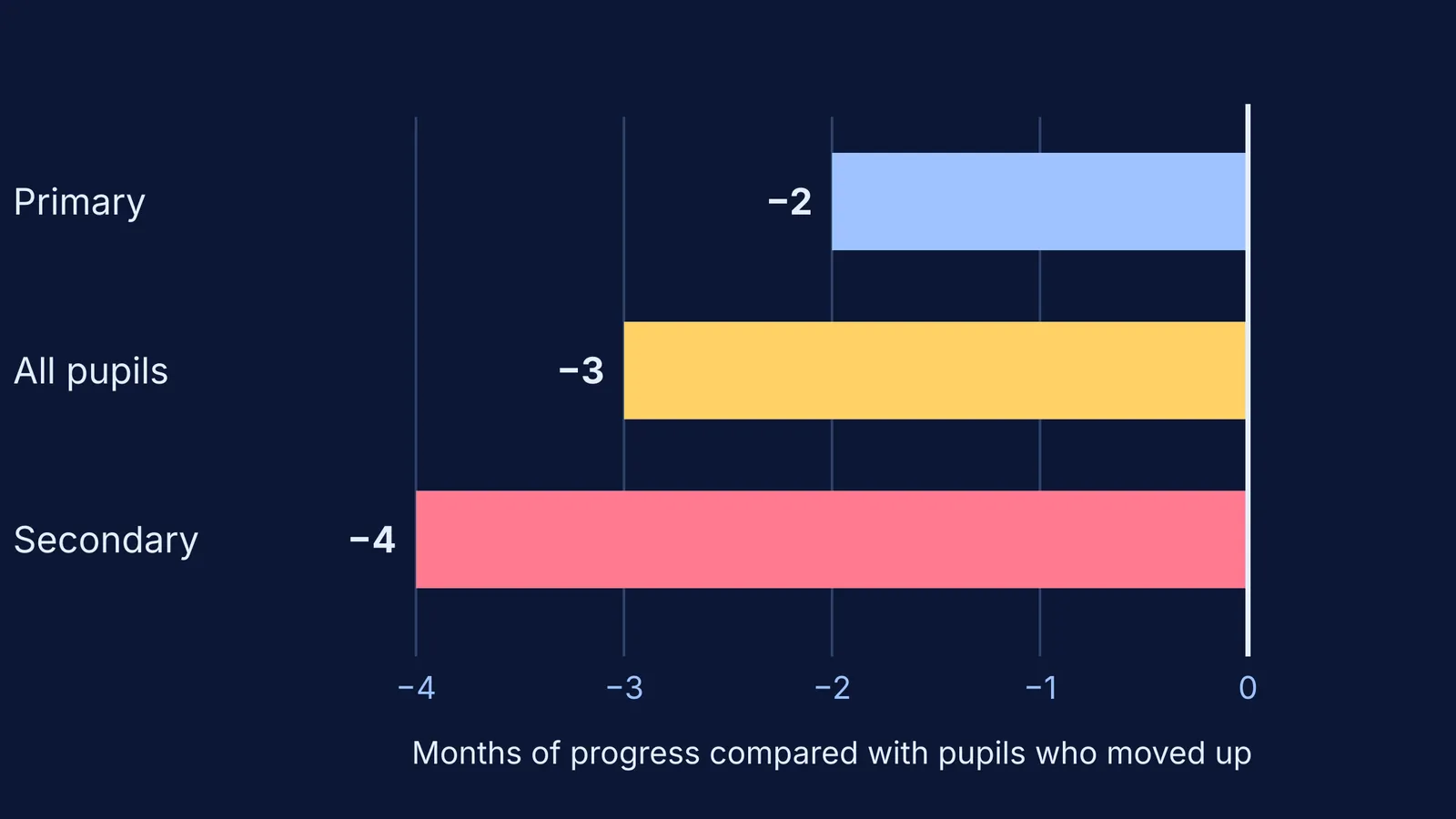
The Education Endowment Foundation (EEF), a UK charity that summarises school research, found across 71 studies that pupils who repeat a year make about three months' less progress, on average, than similar pupils who move up (EEF Teaching and Learning Toolkit, Australian edition by Evidence for Learning). The same review puts the loss at about 2 months in primary school and 4 months in secondary school. It rates the evidence as low security and finds bigger losses for disadvantaged pupils, pupils from ethnic minorities and children who are young for their year.
A 2021 meta-analysis of 84 studies from many countries found an average effect of zero: children who repeated and similar children who were promoted developed about the same (Goos, Pipa and Peixoto, Educational Research Review). Results looked better for short-run and psychosocial outcomes, and worse against same-age peers.
The US National Association of School Psychologists puts the practical point plainly in its 2011 position statement: repeating the same grade with the same instruction will yield no improvement for a child who attended school regularly. It rejects simple promotion too, calling instead for an intensive, individualised plan with frequent progress checks.
What are the rules on holding a child back in India?
On 23 December 2024 the Ministry of Education announced a revised detention policy for Classes 5 and 8 in schools run by the central government or by Union Territory administrations without a legislature (PIB press release). A child who does not meet the promotion criteria after the annual exam gets additional instruction and a re-examination within two months of the result. Only if they still fall short do they stay in the same class, with the class teacher working with the child and parents on the gaps. No child can be expelled before finishing elementary education.
Other schools follow their state's rules, so ask which apply. Our guide to the no-detention policy for Classes 5 to 8 explains the background.
What questions should you ask the teacher before holding a child back?
Take these questions to the meeting.
Which subjects and which specific skills is my child behind in? Can you show me examples from their work?
When did the difficulty start?
What extra help has already been tried, for how long, and what happened?
If my child repeats, what will be taught differently next year, and by whom?
How will we know by the middle of next year whether it is working?
Could attendance, eyesight, hearing, health or a learning difficulty be part of the picture? Who can assess that?
How do you expect my child to feel about moving away from their friends?
If the teacher uses a label like "slow", our piece on what to do when a teacher says your child is a slow learner helps you turn it into specifics.
What should you try before repeating a year?
The EEF review suggests that intensive support, such as one-to-one tuition, may make repeating a year unnecessary. A simple six-week plan:
Weeks 1 to 2: agree with the teacher on the two or three skills that matter most, such as fractions or reading longer texts.
Weeks 3 to 6: daily 20 to 30 minutes of practice on just those skills, plus any school support (how to ask the school for extra help).
End of week 6: a short check with the teacher. Is the gap closing?
If the gaps are in maths or science topics, Fermi's AI tutor can work out what your child already knows and build a plan for the session, so practice starts at the right step.
NASP makes a rare exception for children who have missed a large number of school days. If you choose it, build the plan above into the extra year.
How do you tell your child they are repeating a class?
If repeating is chosen, tell your child yourself, calmly, before friends or classmates do. You might say:
"Your teachers and we have decided you'll do Class 6 again next year. This isn't a punishment, and it doesn't mean you aren't clever. This year gives you time to really get some topics. Here is what will be different. What worries you most?"
Then listen. Plan together what to say if someone asks, and through the year praise effort and specific progress, not just marks.
Start with the teacher meeting. The answers to those seven questions will tell you more than the report card did.


