

On this page
The dinner table is one of the most effective places to build a habit of scientific thinking. Rather than just asking what happened at school today, bringing a simple science question to the table encourages children to observe their surroundings, hypothesise, and explain their reasoning in a low-pressure environment.
When families use mealtime to explore how the physical world works, they build critical communication skills that translate directly into better academic performance later in life.
Why is the dinner table a good place for science?
A study led by John Gabrieli at MIT found that the number of back-and-forth conversational turns is the strongest predictor of brain development in language regions, regardless of a family's income (MIT News, 2018). The researchers equipped children aged 4 to 6 with language recorders for two days to track every word spoken. They discovered that it is not simply the total number of words parents speak that matters, but the active exchange of ideas that physically stimulates the brain.
Mealtime provides a natural, daily setting for this kind of extended discourse. Researchers Catherine Snow and Diane Beals found that preschool children learn about 1,000 rare words from dinner table conversations, compared to just 143 words from listening to storybooks (The Family Dinner Project). Because "table talk" frequently involves explaining past events or reasoning through abstract ideas, it naturally exposes children to the complex vocabulary they will need for formal study in the sciences.
What are good science questions to ask kids at dinner?
Good questions start with something familiar that is already sitting on the table and ask "why" or "what if". This forces the brain to retrieve facts, connect concepts, and build a logical argument, which is the foundation of active learning.
Here are a few questions to start a dinner table conversation, and the concepts they introduce:
"Why does the ice in this glass melt faster when we stir it?" (Explores heat transfer and how moving the liquid brings warmth to the ice surface more quickly).
"If we leave this hot soup on the table, why does it eventually stop cooling down?" (Introduces thermal equilibrium and the idea of room temperature).
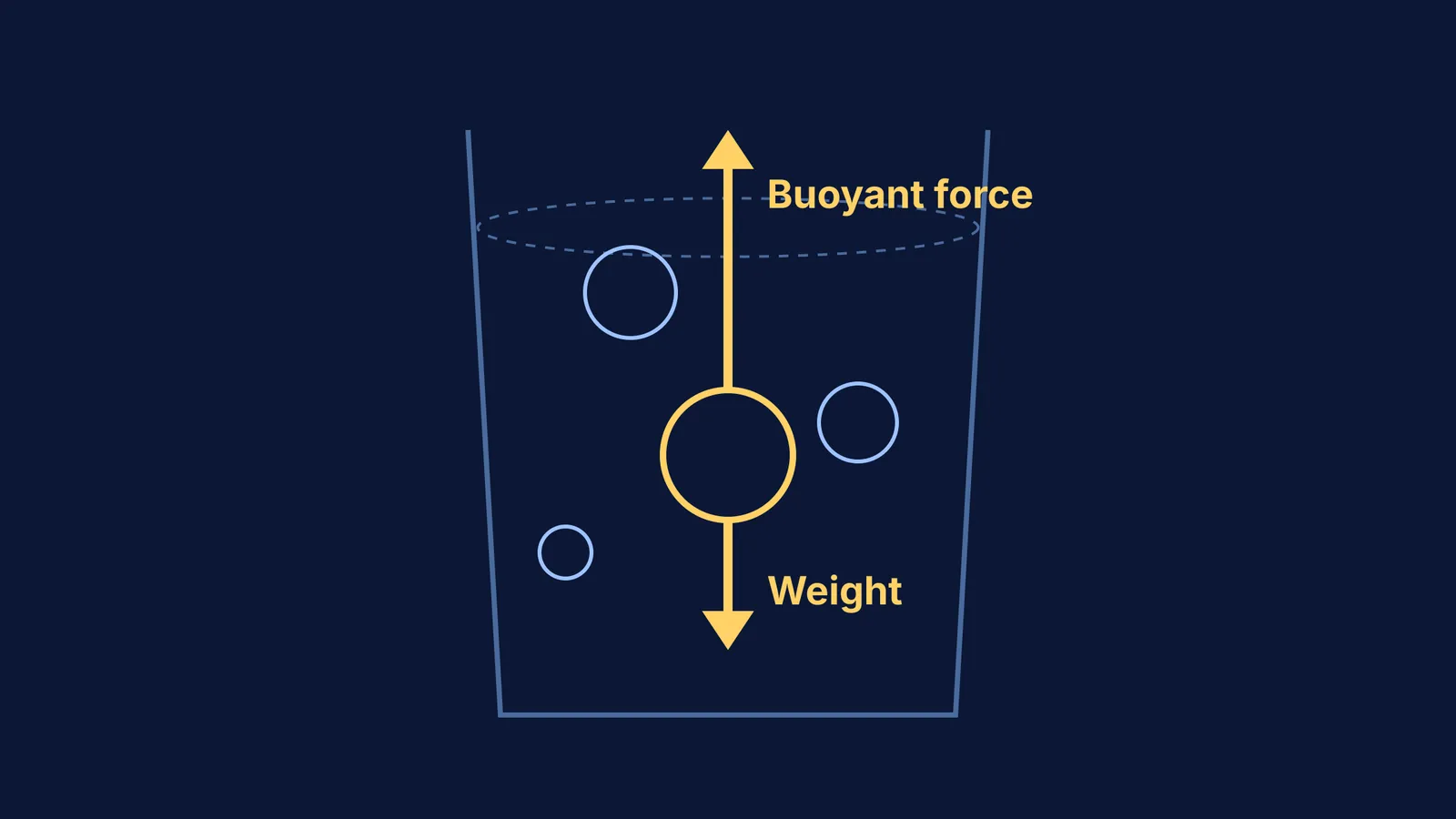
"Why do the bubbles in a fizzy drink always float to the top instead of sinking?" (Touches on density, gases, and buoyancy).
"If I drop a heavy spoon and a light fork from the same height, which hits the floor first?" (A classic test of gravity and air resistance that you can test immediately).
You do not need to limit these questions to older students. You can start everyday number conversations with young children by asking them to estimate how many grains of rice are in a spoon, or predict what will happen to bread when it goes into the toaster.
How do you explore the answers together?
Parents often avoid asking science questions because they worry they will not know the exact answer. However, saying "I do not know" is an excellent way to model how a scientist approaches a new problem.
You can use a simple "Ask, Guess, Test" framework at the table:
Ask: Pose the question and give them plenty of time to think. Silence is part of the process.
Guess: Ask them to propose a hypothesis before you look anything up. Say, "What do you think is happening here?" Emphasise that all guesses are welcome; the goal is to practice proposing a mechanism.
Test: Decide how to find the real answer. You might look up the physics concept together, or design a quick experiment to run after the meal.
If your child's hypothesis gets stuck, or if the conversation moves into a complex physics topic, you can guide them to a reliable learning tool. When a question requires more than a quick guess, Fermi's AI tutor works out what they already know, builds a plan for the session, and teaches through it — writing on a board, drawing the figure, running the simulation, and checking understanding as it goes.
How does table talk build better study habits?
When you regularly ask children to explain their reasoning over a meal, they learn to stop taking facts for granted. This mindset translates directly to their study desk. A student who is used to debating the physics of a melting ice cube is much more likely to ask 'why is this true?' while studying their school textbooks.
If a dinner conversation reveals a gap in their formal understanding, they can review the wider context. The Fermi Concept Library contains every concept in physics, chemistry, biology, mathematics and computing, each with its own lesson and its place in the map.
By bringing science to the dinner table, you turn everyday curiosity into a shared family habit that builds a stronger foundation for lifelong learning.


