

On this page
Exam week often brings a sudden shift in habits, with teenagers pulling late nights, skipping meals and studying for hours on end. However, throwing out a steady routine to squeeze in more revision does not help the brain retain what it just learned. Instead of pushing for maximum hours, keeping sleep, meals and short breaks consistent gives your child a much better chance to recall facts and understand difficult concepts.
Why does cramming at night backfire?
It is a common belief that staying up until 2 a.m. to review one more chapter will lead to better marks. But research shows the opposite is true. A UCLA study of 535 high school students, published in *Child Development*, tracked study and sleep habits across several years 1. The researchers found a clear pattern: regardless of how much a student usually studies each day, if they sacrifice sleep time to study more than usual, they are more likely to have trouble understanding material in class and struggle on a test the following day.
During sleep, the brain actively consolidates the facts and procedures it encountered during the day. When sleep is cut short, that memory consolidation is interrupted. If your child is struggling to hold onto a concept or cannot see where to start a problem, Fermi's AI tutor can help by working out what they already know and building a plan for the session, so they sit down to a clear next step instead of staring at a blank page.
How much sleep do children and teenagers need?
To keep the brain ready to learn and recall, sleep must remain steady, even the night before a big paper. According to the Centers for Disease Control and Prevention (CDC), school-age children (6 to 12 years old) need 9 to 12 hours of sleep per 24 hours, while teenagers (13 to 18 years old) need 8 to 10 hours 2.
During exam week, encourage your child to go to bed and wake up at their usual time. Pushing bedtime back just because they want to finish a mock paper disrupts their internal clock and leaves them fatigued. To improve sleep quality, the CDC recommends turning off electronic devices like phones and computers at least 30 minutes before bedtime, as well as keeping the bedroom quiet and cool. Following these habits ensures the time spent in bed actually restores their energy for the next morning.
How often should a child take study breaks?
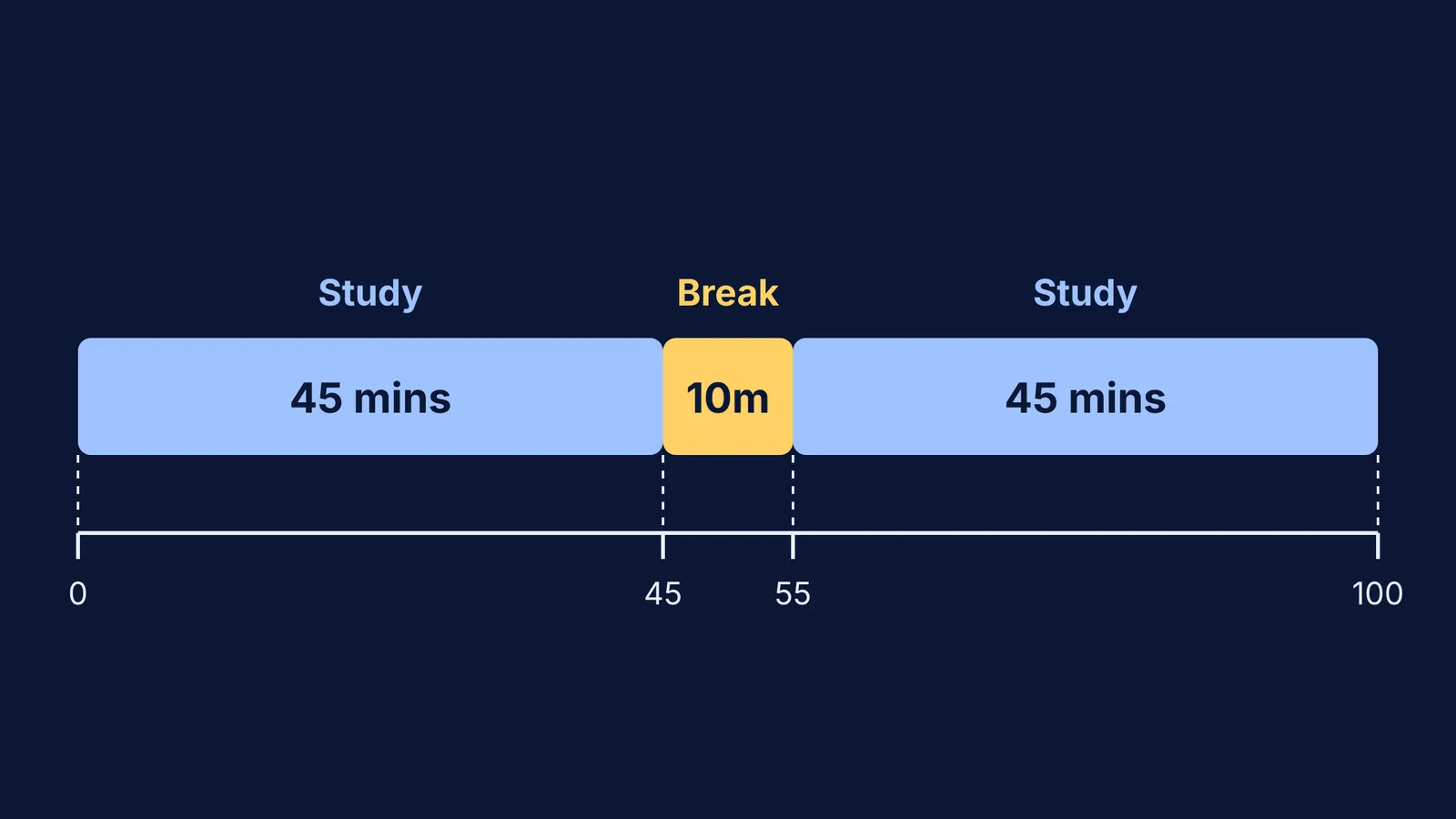
Studying for hours straight is a recipe for cognitive fatigue. The brain processes information best in short, focused blocks separated by true breaks. For teenagers preparing for exams, spaced practice is much more effective than a single marathon session. Short bursts of focused study followed by a rest period help maintain concentration without overwhelming the student.
During a break, the child should step away from their desk and avoid screens entirely. A quick walk, a stretch, or getting a glass of water helps reset their attention. If they are stuck on difficult maths or physics questions during their study block—such as solving Quadratic word problems in Class 10: speed, age and area or revising Tracing a ray through a glass slab: the Class 10 practical—the Fermi Problem Library has worked problems with a step-by-step solver that explains the reasoning rather than printing an answer, making the study time more efficient.
What about meals during exam week?
Fueling the body properly is just as important as resting it. Skipping meals, especially breakfast, leads to drops in blood sugar that cause irritability and poor concentration. While teenagers might feel too nervous or rushed to eat before a morning exam, sending them in on an empty stomach makes it harder for them to focus on complex questions and retrieve facts from memory.
Keep meals balanced and predictable. A breakfast with protein and complex carbohydrates, such as eggs on whole-grain toast or a bowl of oats, provides steady energy throughout a long morning of testing. Avoid heavy, sugar-laden foods that cause a quick spike followed by a mid-morning crash. Offering a healthy snack during their study breaks can also help keep their energy levels consistent throughout the afternoon.
By maintaining a familiar structure, you help remove the panic from exam week, letting your child focus on what they know.


