

On this page
The Ministry of Education has issued guidelines to regulate coaching centres, a move designed to curb early academic stress. Yet, for older students preparing for JEE and NEET, the pressure remains high. A major driver isn't just academic ambition, but peer influence.
Is the fear of missing out driving the choice?
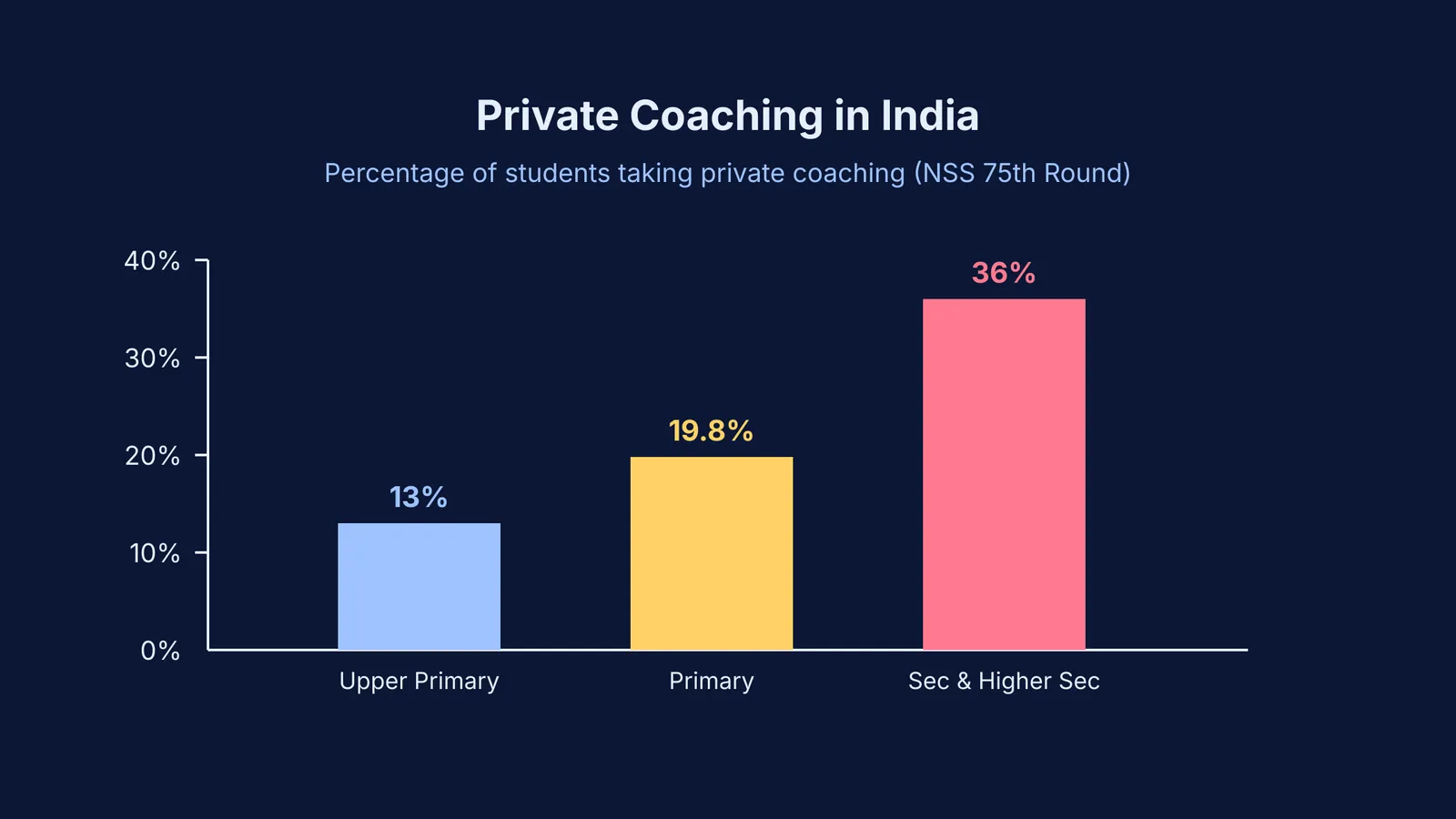
It is natural for teenagers to want to stay with their peer group. When the majority of a friend circle signs up for a specific "star" coaching institute, the remaining students often feel an intense fear of missing out. They worry that their friends might learn secret exam strategies they will miss. This pressure is so widespread that according to the National Sample Survey's 75th Round report, around 36 per cent of Indian students at the secondary and higher secondary levels attend private coaching.
These advertisements and trends often feature local top rankers, creating an implicit promise that enrolling in the same classroom will yield the same result. Consequently, teenagers feel that stepping away from the herd means missing out on a crucial advantage. They worry that choosing a different path might leave them isolated during the stressful months of preparation, even if the teaching style does not suit their individual needs.
Parents, too, can feel this pressure. Enrolling a child in a reputed institute sometimes feels like a safe, default choice because "everyone else is doing it." If you are wondering how to evaluate a coaching institute before you pay the fee, looking at its teaching method is just as important as its brand.
Why might the popular choice not fit?
While following friends feels safe, it overlooks a critical fact: every student learns at a different pace.
In a large, crowded coaching batch, the teacher must teach to the average. If your child grasps a concept quickly, they might be bored; if they need an extra ten minutes on rotational mechanics, the class will move on without them. The illusion of safety in numbers often masks passive learning, where students simply copy notes without testing their understanding.
Learning science backs this up. A major meta-analysis published in the Proceedings of the National Academy of Sciences (PNAS) found that students in traditional lecture classes are 1.5 times more likely to fail than those using active learning. Sitting in a room with friends does not guarantee active engagement.
What to ask your child?
Before paying the fee, sit down with your child and ask a few probing questions. Instead of accepting a simple "yes" or "no", try this script to uncover their real motivations and help children learn without adding pressure:
"What specifically do you like about the way this institute teaches, apart from who is going?"
"If your best friend decided to study at home instead, would you still want to join this class?"
"When the teacher moves too fast for you to understand, what is your plan for clearing doubts?"
Finding the right method
If your child struggles with passive lectures, they need a tool that works with them, not past them. If they are studying late and need help, they need a resource that builds understanding rather than simply providing answers.
This is where an adaptive approach makes a difference. Fermi's AI tutor can work out what you already know and build a plan for the session, so you sit down to a clear next step. It teaches rather than just providing answers, helping them build a study routine that lasts longer than a week.
If they get stuck on a tricky physics numerical, they can use the Fermi Problem Library. It features a step-by-step solver that explains the reasoning rather than printing an answer, writing on a board and checking understanding as it goes.
Ultimately, the best preparation method is the one that forces your child to think, not the one with the most familiar faces in the room.


