

On this page
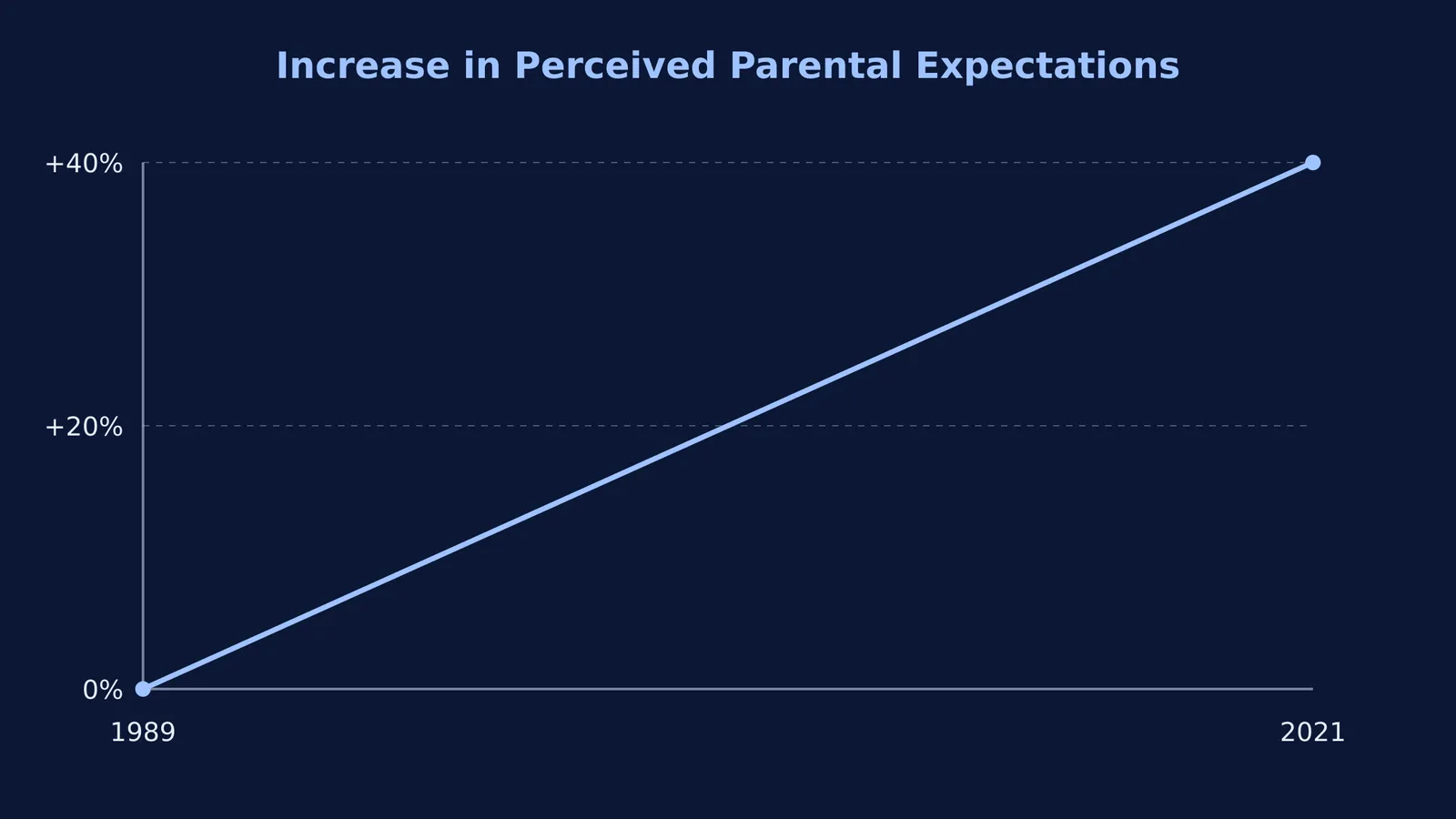
"When I was your age, I studied more with fewer resources." It is a classic parenting trope, especially common during intense exam preparation like JEE or NEET. But instead of inspiring diligence, research shows this specific type of comparison is rapidly eroding student motivation. A 32-year meta-analysis found that young people's perceptions of parental expectations have increased by 40% since 1989. This sharp increase is directly linked to a rise in socially prescribed perfectionism—the damaging belief that others hold unrealistic standards for one's performance. As competition in education and the labor market has intensified, parents have become more demanding in an effort to ensure their children succeed. However, this pressure often backfires, creating a constant fear of failure.
Why does "when I was your age" increase academic stress?
Psychologists refer to this form of comparison as "generational invalidation." Highlighting a parent's past achievements or hardships often minimizes the student's current struggles. The academic landscape has fundamentally changed over the past three decades, and today's students face a significantly higher volume of coursework and intense competition for college admissions. When parents compare their historical experience to the present, teenagers often view it as proof that their parents do not understand the modern academic environment, leading them to stop seeking parental support altogether.
This pressure has measurable and severe consequences on mental health. A 2024 cross-sectional study found that 38.30% of adolescents experienced depression. The researchers confirmed that academic stress acts as a direct mediator between parental academic pressure and the student's mental health. Furthermore, the study highlighted that high academic expectations create significant emotional strain, which can exacerbate negative impacts on students if not balanced with healthy learning environments and effective support systems.
The emotional burden is even more pronounced for students facing high-stakes entrance exams in India. A 2026 study of NEET and JEE aspirants revealed a 45.69% lifetime prevalence of non-suicidal self-injury. The researchers found this is directly linked to perceived parental expectations and academic stress. Crucially, the study identified that "mattering"—the feeling that one is significant and valued by others—serves as a critical protective factor. When students feel they only matter conditionally based on their scores, their stress shifts from a manageable challenge to chronic anxiety.
How does parental comparison affect student motivation?
According to Self-Determination Theory, excessive parental comparison suppresses a student's autonomy. This pressure shifts their motivation from intrinsic—learning out of genuine curiosity or self-fulfillment—to extrinsic, such as studying solely to avoid disappointment or punishment.
This loss of intrinsic motivation frequently leads to amotivation, a state where a student loses the intent to act. Students facing high comparison pressure are more likely to engage in academic self-handicapping. They might procrastinate, deliberately reduce their effort, or avoid trying altogether. This behavior provides them with a psychological excuse for potential failure that isn't related to their actual ability, protecting their self-esteem from the impossible standards set by their parents.
When a student is stuck on a difficult concept, they do not need a reminder of how hard things used to be; they need a clear path forward. This is where Fermi's AI tutor helps. By working out what they already know and building a plan for the session, the tutor provides a clear next step instead of a blank page.
What to say instead of "when I was your age"?
The most effective parental support involves autonomy-granting and effort-based praise rather than outcome-based comparisons. Supportive parenting acts as a stress buffer, helping students cope with academic demands without compromising their mental health.
Here is a practical framework for shifting from comparison to cognitive empathy:
Focus on feelings, not facts. Instead of comparing your past achievements to their current workload, relate to the feeling of being overwhelmed. Say, "This looks genuinely difficult, and I understand why you feel stressed," rather than, "I used to solve these without any coaching."
Praise the effort. "I am proud of how hard you studied today" builds academic self-efficacy far more effectively than asking why they didn't score as well as a peer.
Provide actionable support. If a student is making wrong-method mistakes, repeating the same methods will only lead to frustration. Instead, they can use the Fermi Problem Library, which has worked problems with a step-by-step solver that explains the reasoning rather than printing an answer.
By removing intergenerational comparisons, parents can foster a healthier, more resilient approach to learning that values the student's current effort over the parent's past.


