

On this page
When a teenager starts preparing for the National Eligibility cum Entrance Test (NEET), the focus in the house usually shifts to physics formulas and biology diagrams. However, parents often find themselves quietly worrying about the administrative rules: the age limits, the number of attempts, and the board marks required to even sit for the exam.
The rules have changed over the years, leaving behind a trail of outdated information online. This guide covers the current official criteria you need to know, so you can help your child focus on their studies without second-guessing their eligibility.
What is the minimum age for NEET?
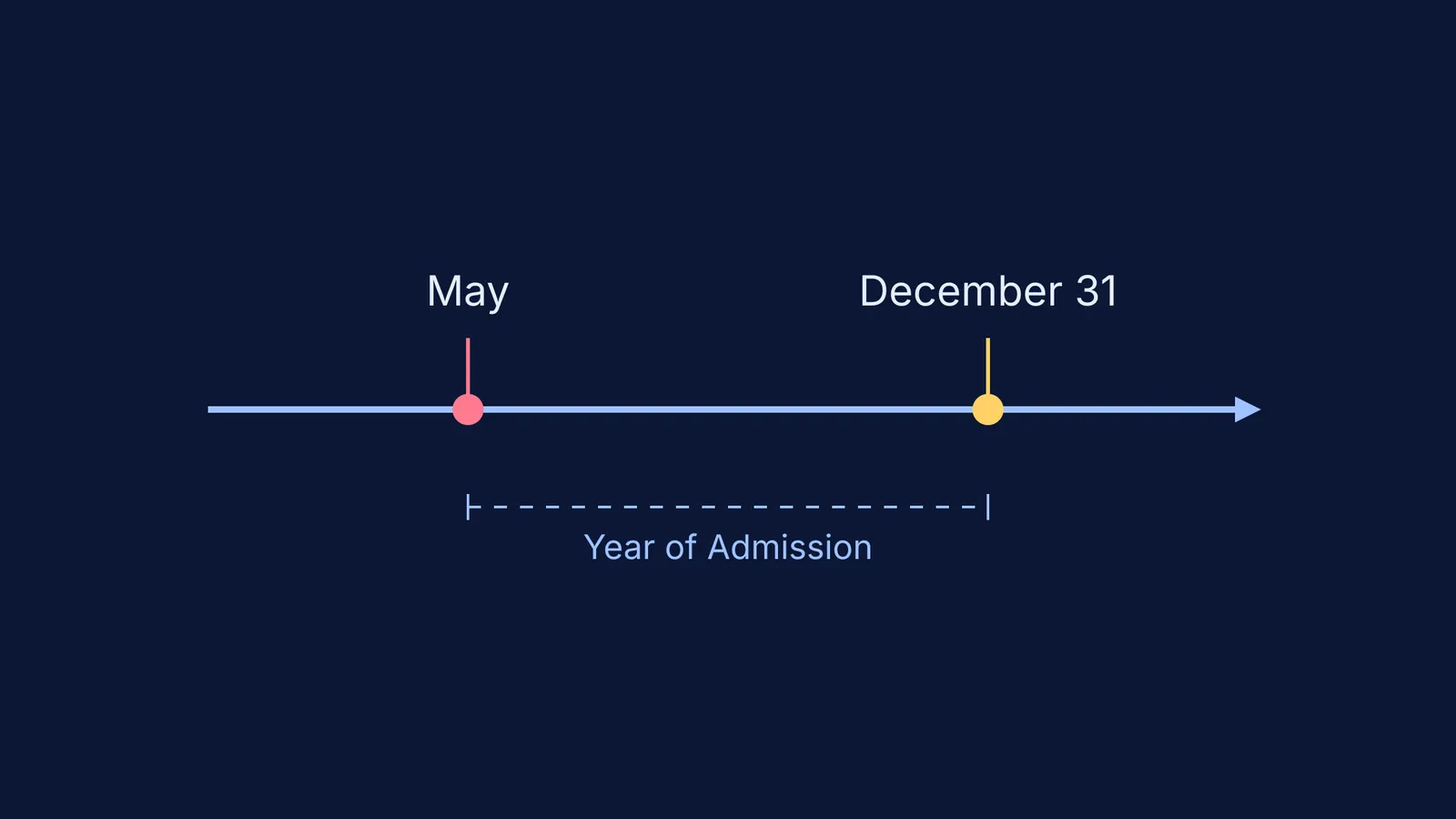
The rule for the lower age limit is strict but simple: a candidate must be at least 17 years old at the time of admission or will complete that age on or before December 31 of the year of their admission to the first year of the undergraduate medical course (Careers360).
For example, if your child is applying for the 2027 academic session, they must have been born on or before December 31, 2010. The National Testing Agency (NTA) verifies this using the exact date of birth recorded on the Class 10 passing certificate. This December 31 cutoff is designed to ensure that all students entering the rigorous first year of an MBBS program have reached a baseline level of maturity. It means that even if a student is 16 when they write the exam in May, as long as their 17th birthday falls before the end of that calendar year, they remain fully eligible to apply.
Is there a maximum age limit?
No, there is currently no upper age limit for NEET (Careers360).
The National Medical Commission (NMC) officially removed the upper age limit for all candidates appearing for the NEET-UG exam. This removal means anyone who meets the academic requirements and the minimum age can take the test, regardless of how old they are. This shift has opened the doors for older students, working professionals, and those seeking a late career change to pursue medical education in India.
How many times can my child attempt NEET?
There is no restriction on the number of attempts for NEET (Careers360).
Because the upper age limit was removed, the number of times a student can take the exam is also uncapped. They can appear as many times as they wish. This rule change was designed to give students more flexibility, allowing them to take a gap year or even return to medical aspirations later in life without facing an administrative roadblock.
Many students take one or more gap years—a dedicated year of preparation after finishing school—to improve their scores. Because there is no attempt limit, taking a drop year does not penalise a student administratively. However, parents should consider the emotional toll of repeated attempts and ensure their child has a balanced routine.
What subjects and marks do they need in Class 12?
To be academically eligible, your child must have passed Class 12 (or an equivalent qualifying examination) with Physics, Chemistry, Biology/Biotechnology, and English as core subjects.
The minimum aggregate marks required in the core science subjects (Physics, Chemistry, and Biology/Biotechnology combined) vary by category, according to the official eligibility criteria (Careers360):
General and EWS category students need a minimum aggregate of 50%.
SC, ST, and OBC category students need a minimum aggregate of 40%.
Persons with Benchmark Disabilities (PwBD) in the general category need a minimum aggregate of 45%.
Students who are currently in Class 12 and waiting for their board results are also eligible to apply and write the exam, provided they meet these percentage requirements by the time counselling begins. It is important to remember that these are the minimum qualifying marks to appear for the exam and participate in counselling, not the cutoff scores needed to secure a medical seat. Achieving 50% in your boards makes your child eligible to write NEET, but they will still need to score well above the annual NEET cutoff percentiles to gain admission. If you are already thinking ahead to that stage, you might want to read about NEET UG counselling for parents: MCC, state quota and rounds.
How to discuss attempts with your child
Even though there is no limit on attempts, teenagers often put immense pressure on themselves to clear the exam on their first try. When they hit a difficult concept or see a low mock-test score, the fear of "running out of chances" can freeze their progress.
If your child is overwhelmed, remind them that the exam rules are built to give them time. You might say, "The medical council literally removed the attempt limits because they know this takes time to master. You have as many chances as you need. Let's just focus on understanding this one chapter today."
Breaking the work down into smaller, visual steps can also lower anxiety. For instance, if they are stuck on a physics concept, exploring it in the Fermi Simulation Lab lets them see the mechanics in action without the stress of a timed test. Taking the pressure off the final outcome helps them engage with the material right in front of them.
As you navigate the preparation journey, remember that where they study can also impact their stress levels. If you are debating the environment they need next, reviewing the options between Moving cities for coaching or staying home: questions to weigh can help clarify the family's next steps.


