

On this page
For parents in Maharashtra, the shift from Class 10 to Class 11 is not just a change in syllabus; it is a change in the entire education system. Students leave their familiar schools and enter junior colleges, while simultaneously facing the pressure of national entrance exams like JEE and NEET.
This transition brings two major challenges: securing a seat through the Centralised Admission Process (CAP) and deciding whether to enroll in regular classes or an "integrated" coaching programme.
How does the FYJC admission process work?
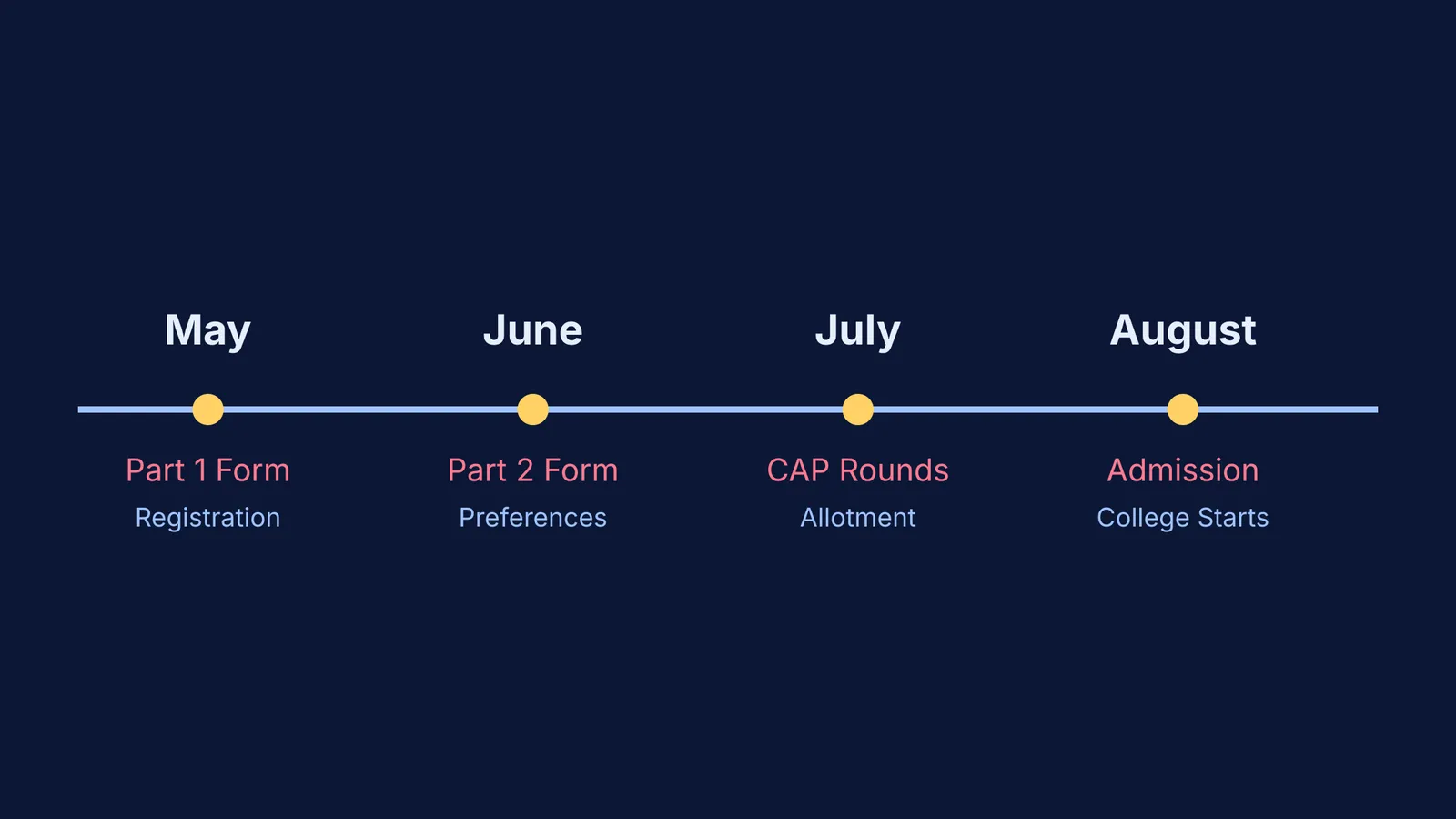
The First Year Junior College (FYJC) admission process is a centralized online system for major urban areas like Mumbai, Pune, Nagpur, Nashik, and Amravati. You apply through the state's official FYJC online admission portal.
The application is split into two phases:
Part 1 (Registration): This typically opens in May, before the Class 10 (SSC) board results are declared. Students create a login, fill in personal details, and verify their documents (such as caste or domicile certificates).
Part 2 (Option Form): This opens after the SSC results. Students select their stream (Arts, Commerce, or Science) and list their college preferences.
Once the forms are submitted, the state runs several regular CAP rounds based on merit marks. If a student is allotted their first-preference college, they must secure admission there, or they will be blocked from subsequent regular rounds. For students looking to take up technical subjects, there is also a separate section for "Bifocal" subjects (like Computer Science or Electronics) which often have higher cut-offs.
What is integrated coaching?
Preparing for competitive exams requires immense time. To prevent students from juggling a full day at junior college followed by an evening at a coaching centre, many institutes offer "integrated coaching".
In this model, the coaching institute ties up with a junior college to teach both the board syllabus (HSC) and the entrance exam syllabus (JEE or NEET) on the same campus, during school hours. This synchronises the curriculum and saves students significant daily travel time. Instead of learning optics at college in August and at the coaching centre in October, the topics are aligned.
For parents weighing the pros and cons of these setups, evaluating the quality of the teaching is crucial. How to evaluate a coaching institute before you pay the fee is an essential first step.
Are dummy schools allowed in Maharashtra?
The line between a legitimate integrated program and an illegal "dummy school"—where a student enrolls in a junior college but never attends, spending all their time at a coaching centre—has drawn strict government action.
Dummy schools are explicitly illegal. The state enforces a mandatory biometric attendance rule for junior colleges to ensure students are physically present.
If students fail to meet attendance requirements, they risk being barred from appearing for their Class 12 board exams. Furthermore, the state is tightening its regulations on coaching centres.
The draft Maharashtra Private Coaching Centers Bill, 2026, proposes fines of up to ₹50 lakh for major violations, including operating dummy enrollments Times Now.
Education officials conduct surprise inspections, and if students are found continuously absent, the junior college division faces derecognition. For students who wish to focus entirely on private coaching, the legal alternative is to register as a private candidate using "Form 17", rather than faking attendance at a regular college.
A decision checklist for parents
Balancing high aspirations with your child's well-being is difficult. Before committing to a two-year junior college and coaching plan, use this checklist:
Check the travel time: Is the daily commute short? Long travel is a primary cause of burnout and leaves no time for self-study. If the distance is significant, consider the trade-offs of moving cities for coaching or staying home.
Verify college recognition: Ensure the junior college is officially recognized by the Maharashtra State Board and operates legally to avoid last-minute exam disqualifications.
Separate expectations from pressure: Are you pushing for a rank, or supporting their learning? Research shows that high expectations can be healthy, but pressure often backfires.
Plan for self-study at home: A coaching class cannot replace quiet, focused practice. Ensure your teenager has a distraction-free zone at home.
If your child struggles with the pace of their junior college or coaching classes, bringing the learning home can relieve the pressure. When concept gaps or wrong-method mistakes appear, Fermi's AI tutor holds a line of reasoning across a session. Rather than just giving the answer, the tutor works out what the student knows and builds a plan, ensuring they sit down to a clear next step. If a problem is tricky, the Fermi Problem Library provides worked problems with a step-by-step solver that explains the reasoning.


