

On this page
Is your teenager constantly running out of time in exams? You are not alone. When a student knows the material but leaves questions blank, reading speed is often the hidden bottleneck. In competitive exams, every second counts. The National Testing Agency (NTA) gives students 200 minutes to attempt 180 questions in the NEET exam Source. This leaves them just over 66 seconds per question. If they spend 40 seconds just reading and re-reading a long biology problem, they have almost no time left to solve it.
Why does my child read slowly in exams?
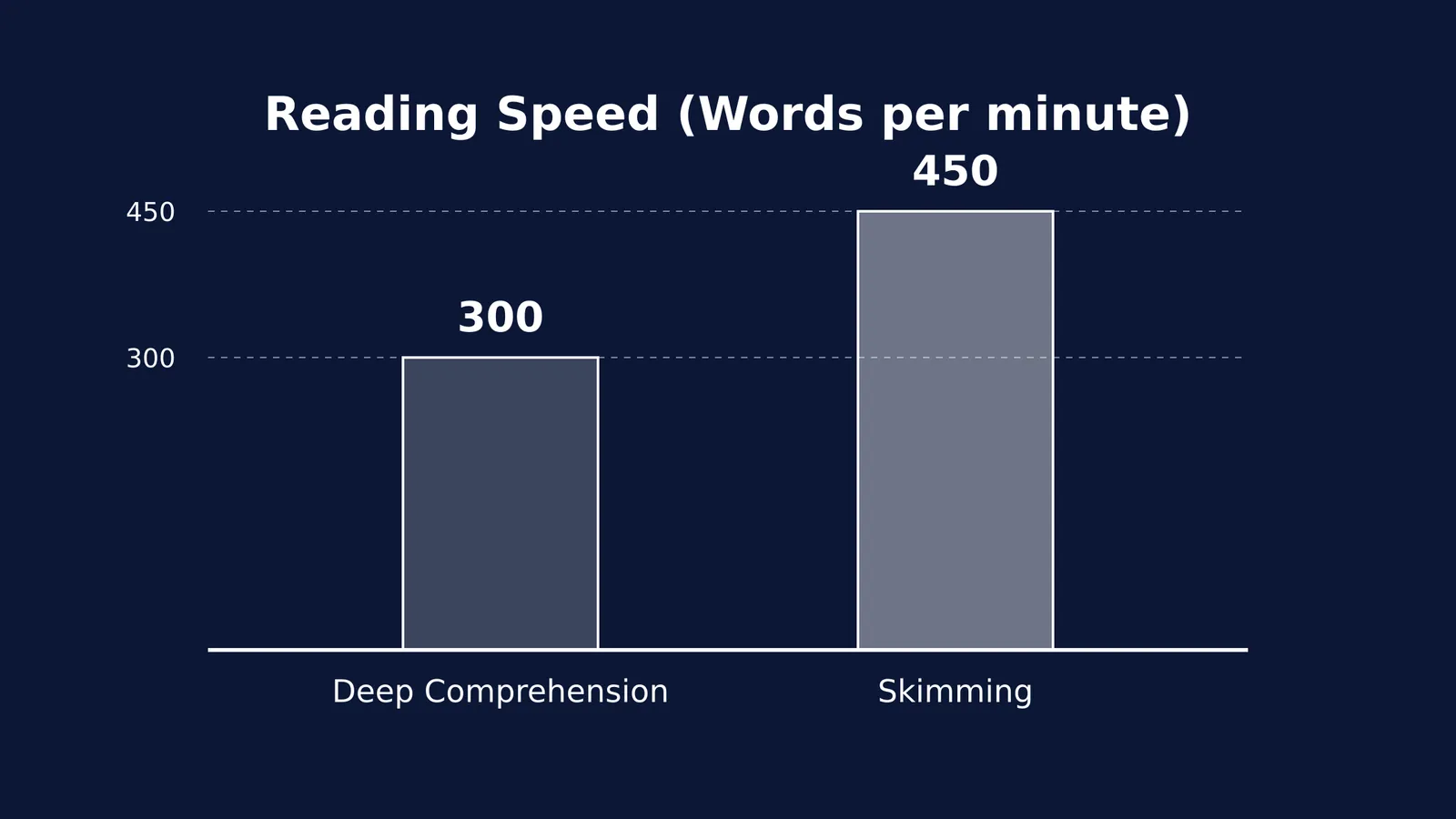
Reading for deep comprehension is a complex cognitive task. According to prominent reading researcher Ronald Carver (1982), the optimal "rauding" rate is about 300 words per minute Source. Rauding is the speed at which a typical adult can read and fully comprehend every thought in a sentence. Trying to read faster than this 300 words per minute limit usually results in a sharp drop in understanding.
However, many students read much slower than this benchmark because of two common habits:
Vocalisation: Saying every word in their head as they read caps their reading speed.
Regression: Continually jumping back to re-read the previous sentence disrupts the flow of comprehension.
The OECD recognises the importance of raw reading speed in their Programme for International Student Assessment (PISA). The PISA framework includes a strict 3-minute timed reading fluency task to measure how quickly students process simple text Source. Slow word recognition leaves less mental energy for solving complex problems.
Does skimming actually work for science and maths?
Yes, but it must be used strategically. When reading speeds push past 450 words per minute, readers are no longer reading every word; they are skimming Source.
While skimming reduces overall comprehension, it is a vital tool for exam efficiency. In subjects like physics or chemistry, a student does not need to memorise the entire paragraph. They just need to understand the physical setup and find the data. By skimming the descriptive text to get the gist and scanning for numbers, units, or key phrases like "incorrect statement," students save time for calculation.
How can I help my child speed up with timed reading practice?
Building reading speed takes consistent practice, much like training for a sport. You can help your child improve their speed and focus using a structured daily routine.
The 10-Minute Timed Drill: Set a timer for 10 minutes every evening. Have your child read a dense, non-fiction passage. When the timer goes off, ask them to stop and summarise the main points in their own words. This forces the brain to process information faster under mild pressure. If they are looking for targeted practice on exam-style questions, the Fermi Problem Library has worked problems with a step-by-step solver that explains the reasoning rather than printing an answer.
The Pointer Method to Stop Regression: To stop your child from constantly re-reading sentences, ask them to trace the text with a pen or their finger at a steady, continuous pace. The eyes naturally follow motion. By keeping the pen moving forward, they train themselves to stop regressing and trust their initial comprehension. When the hand moves steadily across the page, the eyes are forced to keep up, gradually breaking the habit of looking back.
Practice "Two-Pass" Exam Reading: Encourage them to approach practice papers in two phases. In the first pass, they should skim the questions to answer the quick, factual ones immediately. This builds confidence. They can then return to the longer, wordier questions with a clearer mindset. This connects well with effective time management in the exam hall: a two-pass plan for JEE and NEET. Using a two-pass strategy ensures that no easy marks are left behind simply because a student ran out of time reading a difficult paragraph earlier in the paper. It also allows the subconscious mind a little extra time to process the harder questions before they tackle them in the second pass.
When should I seek extra support?
Sometimes, slow reading is not just a matter of habit. If a child consistently struggles with basic word recognition despite practice, or if you notice signs of severe anxiety that causes them to freeze, it may be worth consulting a school counsellor. If exam pressure is becoming overwhelming, you can read more about exam stress in teenagers: everyday support, and when to get help.
Anxiety itself can cause reading speed to plummet. When a student is stressed, their working memory becomes overloaded, making it harder to hold onto the meaning of a sentence. This often leads to more regression and a feeling of panic when the clock is ticking. Addressing the underlying stress is just as important as practising reading techniques. For immediate mental health support, the Tele MANAS helpline (14416) is available across India Source.
By incorporating just a few minutes of timed practice into their daily routine, your child can gradually break the vocalisation habit and learn to skim effectively. Over time, those saved seconds will add up, giving them the breathing room they need to perform at their best and approach competitive exams with confidence. They will start seeing exams not as a frantic race against the clock, but as a manageable set of challenges.


