

On this page
Coming home from school is a major transition for an eight-year-old. After six hours of sitting still, navigating social dynamics, and following instructions, they are often tired, hungry, and ready to unwind. However, Class 3 is also the time when many schools begin assigning regular, independent homework that requires them to sit down and concentrate once again.
Building a predictable after-school schedule helps bridge this gap between school and home. According to the American Academy of Pediatrics (AAP), predictable routines give children a vital sense of security. Knowing exactly what happens next helps them develop self-discipline and reduces anxiety, meaning you spend less time issuing verbal reminders.
Why 45 minutes is the right length?
A common mistake parents make is expecting an eight-year-old to walk through the door and immediately study for hours. Instead, aim for a tight, 45-minute sequence that handles their immediate physical needs before they even open a book.
The National PTA and researchers like Harris Cooper at Duke University endorse the "10-minute rule" for daily homework. This guideline suggests that children should do about 10 minutes of homework per grade level each night. For a Class 3 student, this means a maximum of 30 minutes of focused academic work.
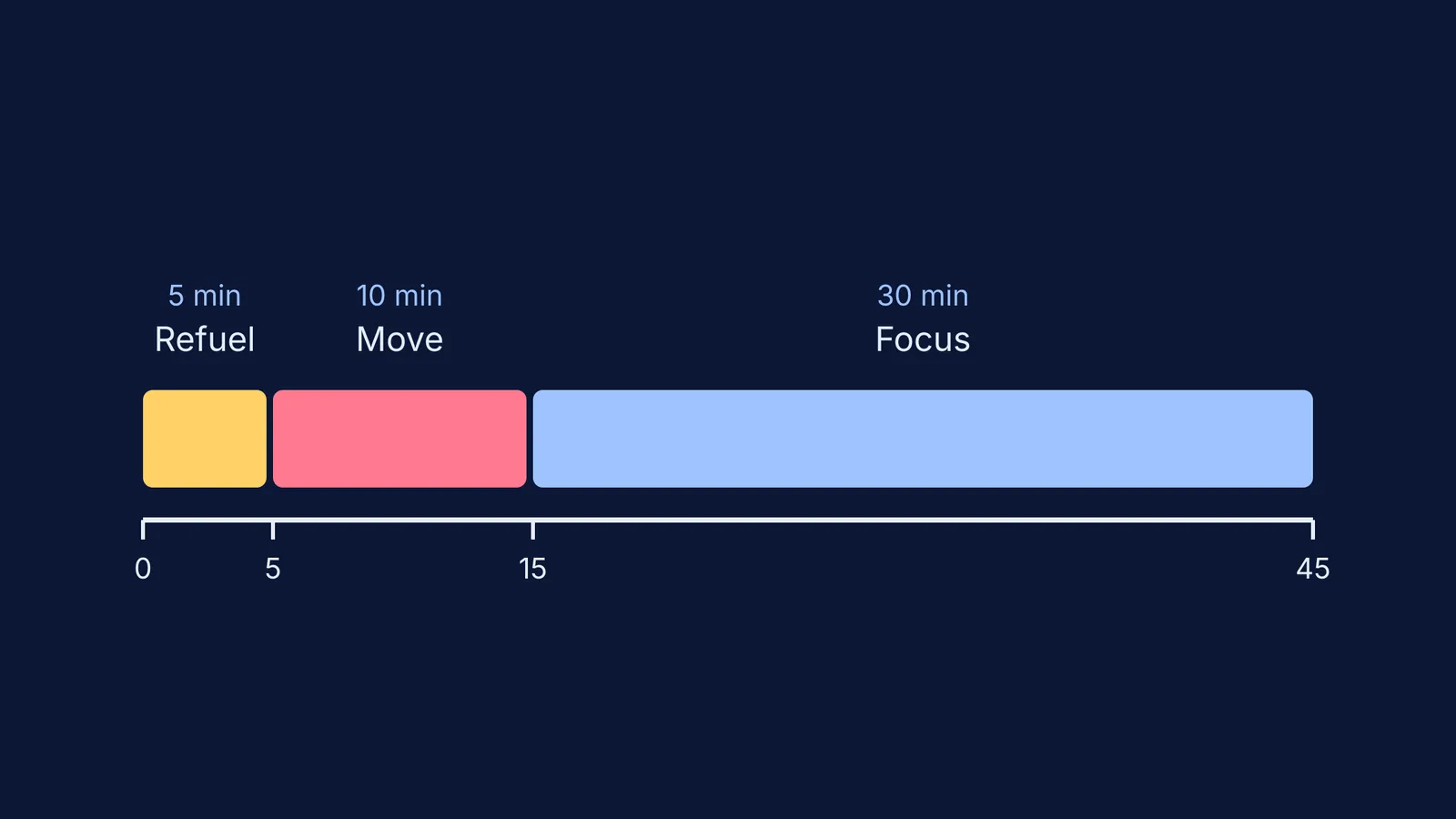
Adding just 15 minutes to decompress gives you a complete 45-minute after-school plan that is easy to manage and repeat every day.
The 45-minute after-school plan
Here is a simple framework to guide your child from the front door to the end of their daily homework:
Refuel (5 minutes): Children often experience a significant energy crash in the afternoon. Offer a quick, healthy snack and a glass of water at the kitchen table as soon as they drop their bags. This provides a physical "reset" moment.
Move (10 minutes): Before asking them to focus again, let them shake off the school day. The AAP recommends at least 60 minutes of moderate-to-vigorous physical activity daily. While this brief 10-minute block won't hit the daily target, quick unstructured play—like running in the yard, riding a bike, or a game of catch—resets their attention. This physical break acts as a healthy transition, similar to deciding what to do in a study break.
Focus (30 minutes): Move to a designated, quiet study spot. This is where they complete their school assignments or review what they learned in class that day.
If they finish their schoolwork in 15 minutes, do not fill the remaining time with extra drills or busywork. Let them use the extra time to read a book of their choice or transition to free play early.
What if they get stuck during the focus block?
At eight years old, homework should be something a child can complete mostly independently. If a concept from class is missing, they will struggle, and this can easily lead to frustration and tears at the kitchen table.
This is where Fermi's AI tutor can help. If your child is stuck on a science or mathematics problem, Fermi works out what they already know and builds a plan for the session. It teaches rather than answers—writing on a board, explaining the reasoning, and checking understanding as it goes.
How do you make the routine stick?
Consistency matters much more than perfection. Building strong habits of study takes time. Phillippa Lally, a health psychology researcher at University College London, found that it takes an average of 66 days for a new behaviour to become an automatic habit.
Start small: Do not expect a flawless 45 minutes on day one. Expect pushback as they adjust to the new expectations.
Use visual cues: Write the three steps (Snack, Play, Study) on a piece of paper or a whiteboard where they can see it. Point to the board instead of giving verbal commands; this reduces friction and gives them a sense of control.
Protect the schedule: Try to start the 45-minute block at the exact same time each afternoon. If you miss a day due to a family event, Lally's research shows that a single missed day does not stop the habit from forming, as long as you return to the plan the next day.
Once the 45-minute block is complete, officially close the books. The rest of the evening should be protected for family connection, dinner without screens, and unwinding before bed.


