

On this page
When your Class 2 child fidgets, drops their pencil, or wanders away from the table after ten minutes, it is easy to assume they are avoiding their work. In reality, they are simply acting their age. Sitting still is a demanding physical and mental task for a young body, especially after a long school day where they have already exhausted their reserves of self-control.
Instead of fighting their natural restlessness, you can design a study routine that uses movement to help them focus.
Why can a Class 2 child not sit still for homework?
Attention is not a fixed trait that a child either has or lacks; it is a cognitive skill that takes years to develop. The prefrontal cortex, which manages a child's executive function and their ability to tune out distractions, is still growing rapidly at age seven.
Because of this, a seven-year-old has an average attention span of just 14 to 21 minutes, based on the standard developmental baseline of two to three minutes per year of age. Expecting them to sit quietly and focus on a repetitive worksheet for an unbroken hour goes against their fundamental biology. When they squirm, rock in their chair, or kick their legs, they are often trying to wake up their nervous system to stay alert, not trying to be difficult. Movement is their bridge to concentration.
How much homework should a 7-year-old get?
Before changing how your child studies, check if they are simply being asked to do too much. The National Education Association and the National PTA endorse the "10-minute rule," which suggests a maximum of 10 minutes of homework per grade level each night.
For a Class 2 student, this means core assignments like maths practice and writing should take no more than 20 minutes (often paired with an additional 15 to 20 minutes of independent reading). If homework regularly takes longer than this because of lost focus or frustration, educators recommend stopping the timer at 20 minutes and communicating directly with the teacher. For early primary students, the primary goal of homework is building basic routines, responsibility, and time management, not mastering complex academic content through sheer endurance.
How do movement breaks help children focus?
Short bursts of physical activity—often called "brain breaks"—act as a reset button for a child's attention. Movement increases the heart rate, sending more oxygen-rich blood to the brain and releasing dopamine, which naturally primes them to learn and retain information.
A well-known 2006 study by Matthew Mahar found that daily 10-minute movement breaks improved students' on-task behaviour by 8% overall, and by 20% for the least-focused children. Rather than breaking their concentration, stepping away from the desk actually restores their capacity to focus on the next task.
Continuous micro-movements during study time also help significantly. Researchers at Texas A&M University observed 282 primary students over a full school year and found that those using standing desks were 12% more engaged. This translates to about seven extra minutes of active focus every hour, simply because the children had the freedom to shift their weight and stand naturally while working.
How to build a movement-friendly study routine?
You do not need to buy expensive ergonomic furniture or redesign a whole room to help your restless child. You can build movement directly into their afternoon routine with a few simple, practical changes:
Create a temporary standing table: Place a sturdy, flat-bottomed box or a plastic crate on top of your regular dining table. It should be high enough that your child can rest their forearms comfortably on the surface while standing. Let them choose whether to sit at a chair or stand at the box, and allow them to switch between the two freely.
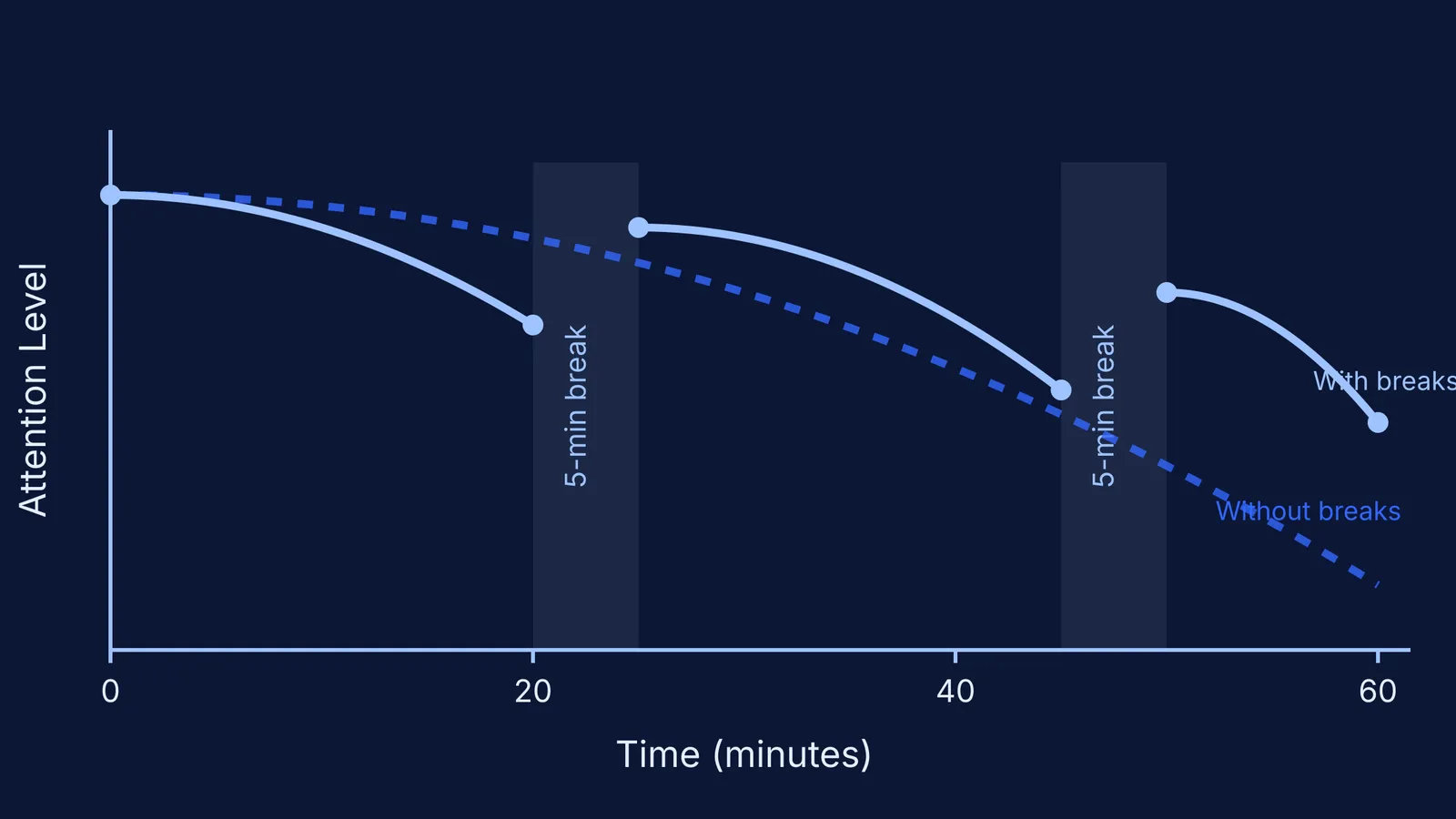
Use the 20/5 rule: Set a visible timer for 20 minutes of focused work, followed by a mandatory five-minute movement break. This respects their natural 21-minute attention limit and gives them a predictable finish line.
Schedule "heavy work" breaks: When the five-minute break begins, have them do physical activities that provide resistance to their joints. Wall push-ups, carrying a heavy stack of books across the room, or doing ten jumping jacks calm the sensory system faster than running around wildly.
Pace the room for reading: If part of their homework involves reading a story or memorising spelling words, let them walk around the room with the book instead of sitting down. Rhythmic pacing can dramatically improve recall for many learners.
As children move into higher classes, losing focus often happens simply because they do not know where to start a hard problem. When that time comes, Fermi's AI tutor can work out what they already know and build a plan for the session, teaching through the material rather than just answering questions. But for a seven-year-old in Class 2, the best tutor is a clear timer, a firm limit on duration, and the freedom to stand up.
Read more about balancing study and rest:


