

On this page
Brochures for Class 11 science tend to look the same: results, toppers, a photo of a smart lab. The visit is where you find out how the next two years will actually go. Choose the stream first (our guide on choosing a stream after Class 10 can help), then use this checklist to compare schools.
Why do labs and practicals matter so much in Class 11?
In CBSE Class XI Physics for 2026-27, the theory paper is worth 70 marks and the practical exam 30, according to the CBSE Physics curriculum. The theory papers in Chemistry and Biology are also out of 70.
The Physics practical is not a single test on one day. The same CBSE document says the record you submit must include at least 8 experiments, at least 6 activities and a project report. The 30 marks split into two experiments (7 each), the record (5), one activity (3), the investigatory project (3) and a viva (5).
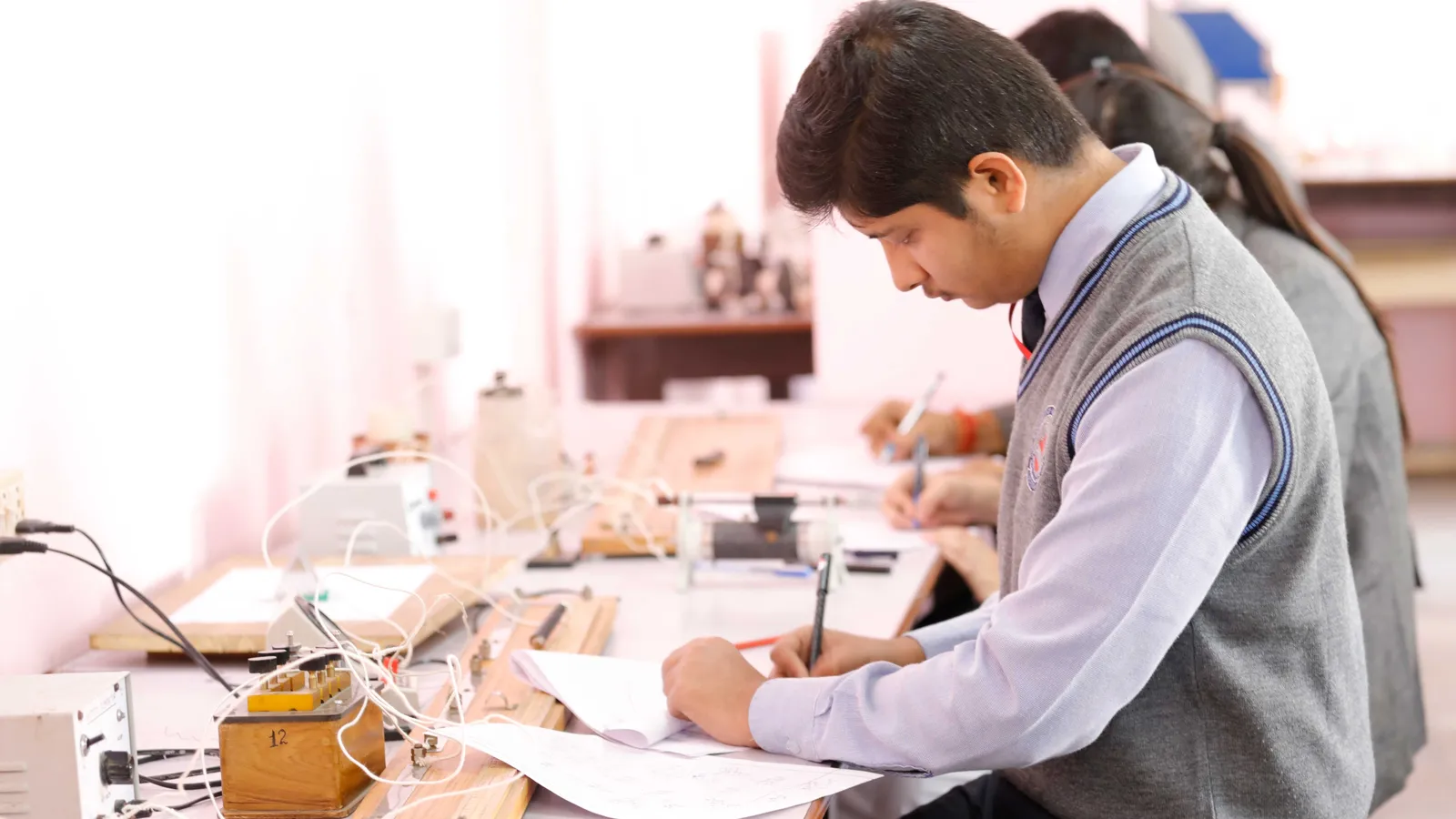
So a student who rarely enters the lab loses more than marks. Experiments like the vernier callipers, the simple pendulum and the sonometer are where measurement, error and graphs stop being words in a chapter.
CBSE's affiliation norms say senior secondary schools need separate Physics, Chemistry and Biology labs, each at least 9 m by 6 m and fully equipped, as listed on the CBSE infrastructure page. A room that meets that rule can still sit locked most weeks, so ask how often students use it.
What should you ask on a school visit for Class 11 science?
Take this list with you. Ask to see things, not just hear about them.
Lab time. How many lab periods does each science get per week in Class 11? Can we see this term's timetable for a Class 11 section?
Lab reality. Do students do experiments with their own hands in pairs or small groups, or watch a teacher demonstrate? Is there a lab assistant?
Subject teachers. Is there a dedicated teacher for each of Physics, Chemistry, Biology and Maths at the senior level? How many of them taught Class 11 or 12 here last year too?
Teacher details in public. CBSE's affiliation bye-laws, as amended in a 2021 CBSE circular, say every affiliated school's website must give details of its teachers, including qualifications, and carry a Mandatory Public Disclosure. Read those pages before you visit.
Practical records. Who checks the practical file, and how often? When does project work start?
Timetable. When does the school day end? Are periods for practicals ever cancelled for "revision"?
Attendance. How does the school record attendance, and how will it tell you if your child falls short?
How does coaching fit around school in Class 11?
Many families plan for JEE or NEET coaching alongside school. The risk is a plan that only works if school quietly drops out.
CBSE's attendance circular of 4 August 2025 restates its exam bye-laws: students need at least 75% attendance to be eligible for the Class X and XII board exams, with relaxation only for exigencies such as medical emergencies, backed by documents. It also says students found absent without proper leave records during surprise inspections may be treated as non-attending or dummy candidates, and CBSE will not allow them to sit the board exams.
That makes "dummy" arrangements a real risk to your child's board exam, not a shortcut. When you hear a school offer an "integrated" programme, ask how lab periods and attendance are kept.
Here is a worked example of one weekday for a student at school until mid-afternoon with evening coaching:
Morning: school, including the lab period on the timetable
After school: a meal and a short rest, not straight into another class
Late afternoon to early evening: coaching
Evening: one focused block on whichever topic the school or coaching class covered that day, then sleep on time
If the week has no room for that last block, something has to give. Our guide on how to evaluate a coaching institute has questions on batch size and schedules.
Some lab ideas are hard to picture from a textbook alone. The Fermi Simulation Lab has interactive simulations for ideas that are easier to see than to read, which can help before or after a lab period. It is a supplement to real experiments, not a replacement.
How can you compare two schools fairly?
After each visit, write down what you saw for each checklist item: seen, told only, or not available. A school where you saw the timetable, the lab and the teacher list usually beats one with better brochures and vaguer answers.
When practical exams arrive, our guide to the board practical exam and viva explains how to prepare.


