

On this page
A brilliant student often loses marks simply because the examiner cannot decipher what they have written. When a teenager is rushing to finish a Class 10 board exam, their handwriting tends to shrink and crowd. However, fixing this is not about teaching beautiful calligraphy; it is about strategic spacing, structured layouts, and clear presentation.
How much does handwriting legibility affect board exam marks?
When an examiner marks hundreds of papers under tight deadlines, cognitive load matters. The harder an examiner has to work to decode a single word, the more likely they are to miss a key point or give up on an ambiguous sentence. An examiner cannot award marks for what they think might be there; they must see the evidence clearly on the page.
Across three experiments, a 2010 study found that legible essays were evaluated more positively than identical essays written less legibly (https://doi.org/10.1177/1948550610368434). Furthermore, an examiner's first impression can heavily shape the final score. Readable handwriting and neat paragraphs act as visual cues that help examiners navigate the script, allowing them to categorise a paper into a higher marking band much faster. Conversely, scruffy, messy answers are often mistaken for a lack of effort or lower competence, which can subconsciously influence how subsequent answers are evaluated.
Why does your child write very small or messily?
Usually, poor presentation in the exam hall is a symptom of severe time pressure and anxiety. When attempting to cram lengthy explanations into the strict time limit, students unconsciously reduce their letter size to save time and space. They might also overlap words, blurring the boundaries between them to keep their pen moving constantly.
Additionally, a student who is unsure of their answer or spelling might deliberately write messily in the hope that the examiner will give them the benefit of the doubt. In reality, the result is a dense, illegible wall of text that exhausts the person marking it and rarely earns the desired score. The anxiety of finishing the paper overrides the need to be understood.
How can you improve legibility before the Class 10 board exam?
Improving legibility quickly requires focusing on the structure of the writing rather than the shape of individual letters. Here is how to guide your child to a cleaner exam script:
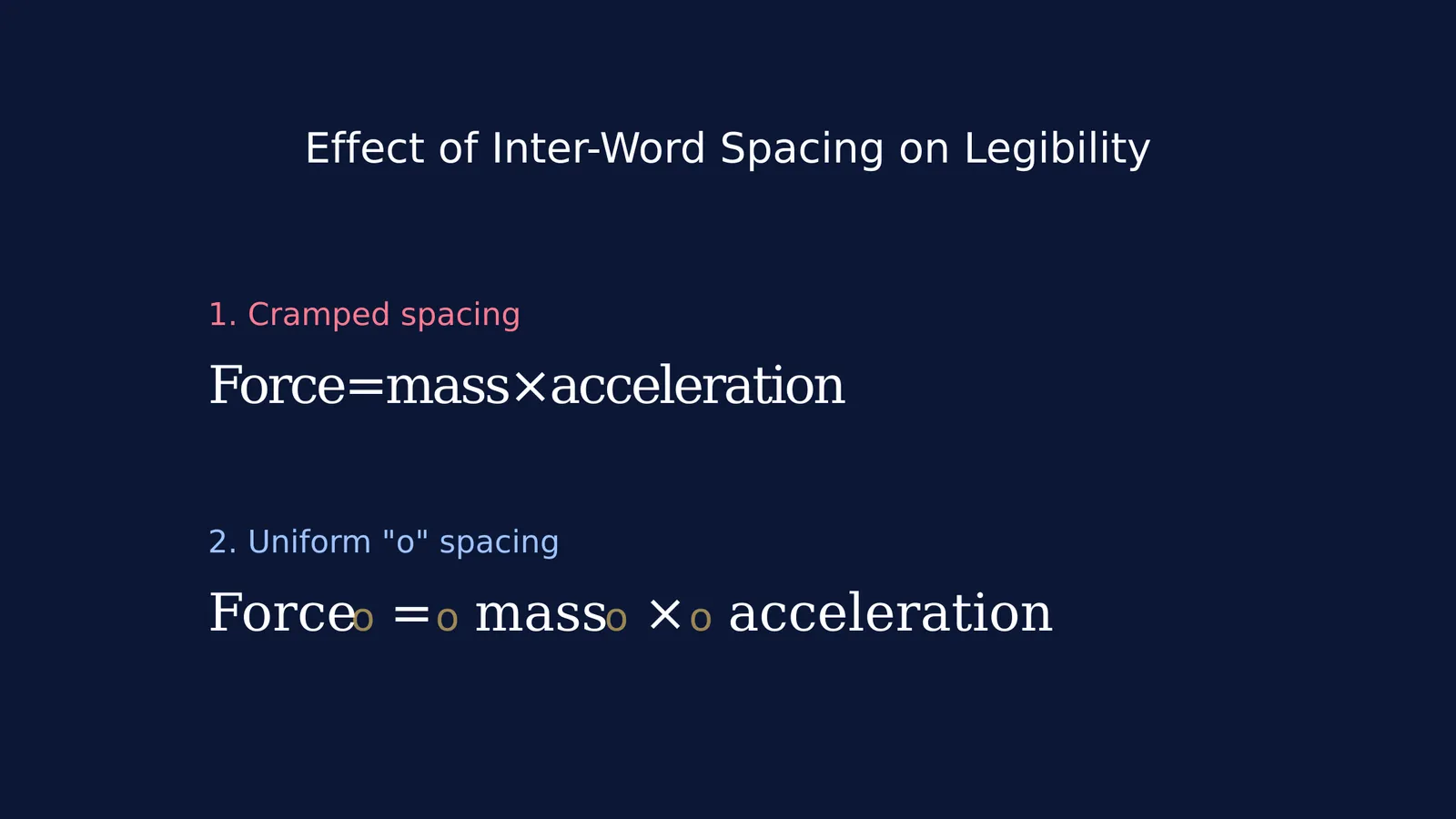
Apply the "o" rule for spacing: Consistent inter-word spacing is the single biggest factor in readability. Teach your child to leave a gap roughly the width of a lowercase 'o' between each word. This visual buffer stops words from blurring together and makes scanning much easier.
Enlarge loop letters: Letters like 'a', 'e', 'o', and 'g' need open, rounded loops. When these loops collapse under writing speed, a word like "sucrose" can easily look like "sucrase", costing marks in exact subjects like biology or chemistry.
Use structural guides: Long answers should be broken into distinct paragraphs or bullet points. Whether a student is laying out the steps for naming carbon compounds in Class 10, solving quadratic word problems in Class 10, or explaining the diagram for tracing a ray through a glass slab, neatness ensures the examiner can follow their logic step by step.
Cross out mistakes neatly: If your child makes an error, they should draw one single diagonal line through the word. Scribbling heavily over mistakes looks chaotic and often bleeds through the paper, making the other side difficult to read.
A daily legibility plan
You can help your teenager build exam-ready handwriting stamina with a short, consistent daily routine:
Have your child copy one paragraph from their textbook every day using an exam-approved blue ballpoint or gel pen.
Set a short timer to simulate exam pressure and encourage a realistic writing speed.
Review the text together and circle any words that touch or overlap.
Draw a small 'o' with a pencil between words to test if the spacing is wide enough.
Repeat this process until they naturally leave enough space without needing the pencil check.
How a structured approach helps
When studying complex science topics, a student may struggle not just with handwriting but with structuring their thoughts on paper. Fermi's AI tutor can work out what they already know and build a plan for the session, writing on a board and drawing figures clearly so the student has a high standard of presentation to follow.
By giving them clear concepts and a structure for problem-solving, their final answers on the board exam are far more likely to be legible, logical, and fully credited.


