

On this page
You are checking your child's mock paper and notice they answered Question 14, followed by Question 4, and then Question 21. Your first instinct might be to correct them and insist they work from start to finish. But is writing answers in the wrong order actually a bad thing?
It turns out that skipping around the paper is an effective test-taking strategy. Far from being a sign of confusion, choosing which questions to tackle first is a mature way to manage time. However, this strategy only works if your child labels their answers clearly and follows the specific rules of their exam board.
Why write answers in the wrong order?
Tackling a difficult question first can drain a student's time and confidence, leaving them rushed for questions they actually know how to solve. Answering easy questions first builds momentum and secures marks early on. When a student feels they have already banked a solid portion of the paper, their cognitive load drops, allowing them to think more clearly about the remaining problems.
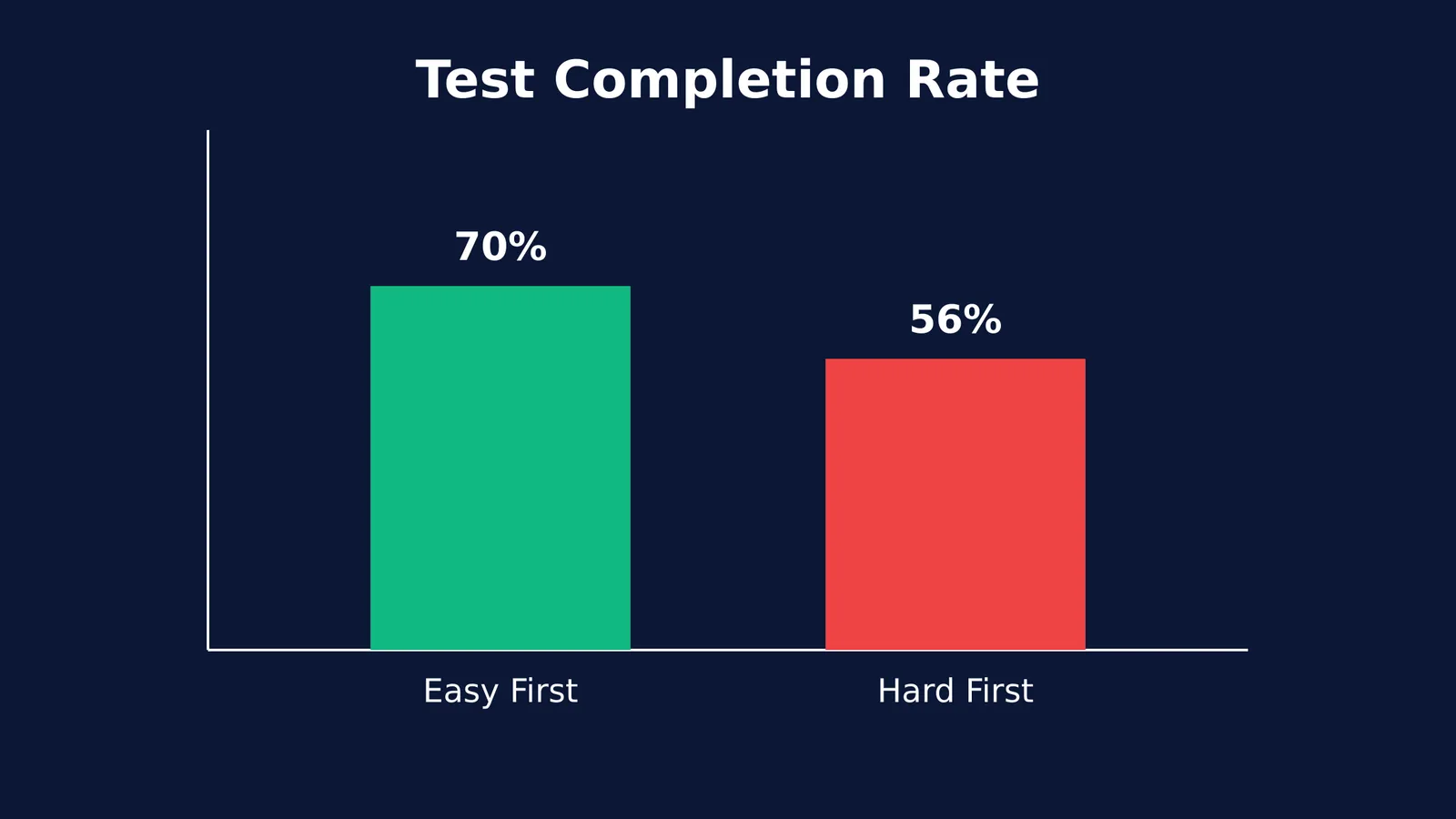
A study of 19,000 students found that those who faced difficult questions first were more likely to abandon the test, while starting with easy questions led to higher completion rates and better overall scores (University of Arkansas). This is because high anxiety impairs working memory. By banking the easy marks first, your child reduces their test anxiety and leaves their brain free to subconsciously process the harder problems in the background. The feeling that you must keep working on a difficult problem because you have already spent ten minutes on it is a common trap, and skipping it early prevents that wasted effort.
When does jumping around cost marks?
While examiners are used to seeing answers out of sequence, a correct and legible question number is completely non-negotiable. If an examiner cannot tell which question is being answered, they cannot award marks, no matter how brilliant the physics or mathematics might be.
Furthermore, exam boards are beginning to enforce stricter formatting rules to streamline the marking process. For the 2026 board exams, CBSE has introduced a mandatory section-wise structure for Class 10 Science and Social Science papers (NDTV Profit). Students must write their answers strictly within the designated sections. For example, the Science paper is divided into Physics, Chemistry and Biology sections. If a student writes a Physics answer in the Chemistry section, it will not be evaluated and they will receive zero marks. These errors cannot be corrected during the re-evaluation process, making them exceptionally costly.
How to plan the answer order safely
If your child prefers to jump around the paper, they need a reliable routine to ensure they do not miss anything or lose marks to poor formatting. A scattered approach without a plan leads to missed pages and lost marks.
The three-pass method: Encourage your child to read the whole paper during the reading time. On the first pass, they should answer only the questions they know instantly. On the second pass, they tackle questions that require more thought or calculation. The final pass is for the hardest questions.
Label clearly and leave space: Every answer must have the correct question number written clearly in the left margin. If they are skipping a question but plan to return to it in its original order, they should leave a generous blank space rather than squeezing it in later or writing it at the very end of the booklet.
Keep rough work separate: All calculations should be done in a designated rough work margin on the right side of the page and crossed out cleanly when finished. This ensures the examiner does not mistake rough working for a final answer.
Respect the subject sections: For exams like the new CBSE Class 10 format, students must create clear headings for each section. They should complete all the questions they can for that section—in whatever order they choose—before moving on to the next.
Practising a safe exam routine
Building this kind of discipline takes practice. If your child struggles to plan their approach and often stares at a blank page, Fermi's AI tutor can work out what they already know and build a plan for the session, so they sit down to a clear next step.
You can also help them refine their strategy at home. Set up a realistic environment and show them how to analyse a mock test to see if their chosen answering order is working. If skipping questions is causing panic rather than momentum, it might be worth reviewing how they manage exam stress before the final paper. Having a set plan is the best defence against the pressure of exam day.


