

On this page
Watching your child struggle with the decision to take a second drop year (a third overall attempt) is one of the toughest moments in parenting. The National Medical Commission (NMC) has removed the upper age limit for NEET-UG, which means there is no official cap on the number of attempts. While the door is legally open, walking through it again requires a heavy investment of time, money, and emotional resilience.
Before you agree to another year of preparation, you need to move past the emotional desire to become a doctor and look at the practical data. Here are the four questions you must ask.
Is a third NEET attempt worth it based on the score trend?
The most reliable predictor of future success is past progress, not just hard work. While structured coaching programs report that up to 1 in 3 of their repeater students become doctors, the jump in their score depends heavily on where they started.
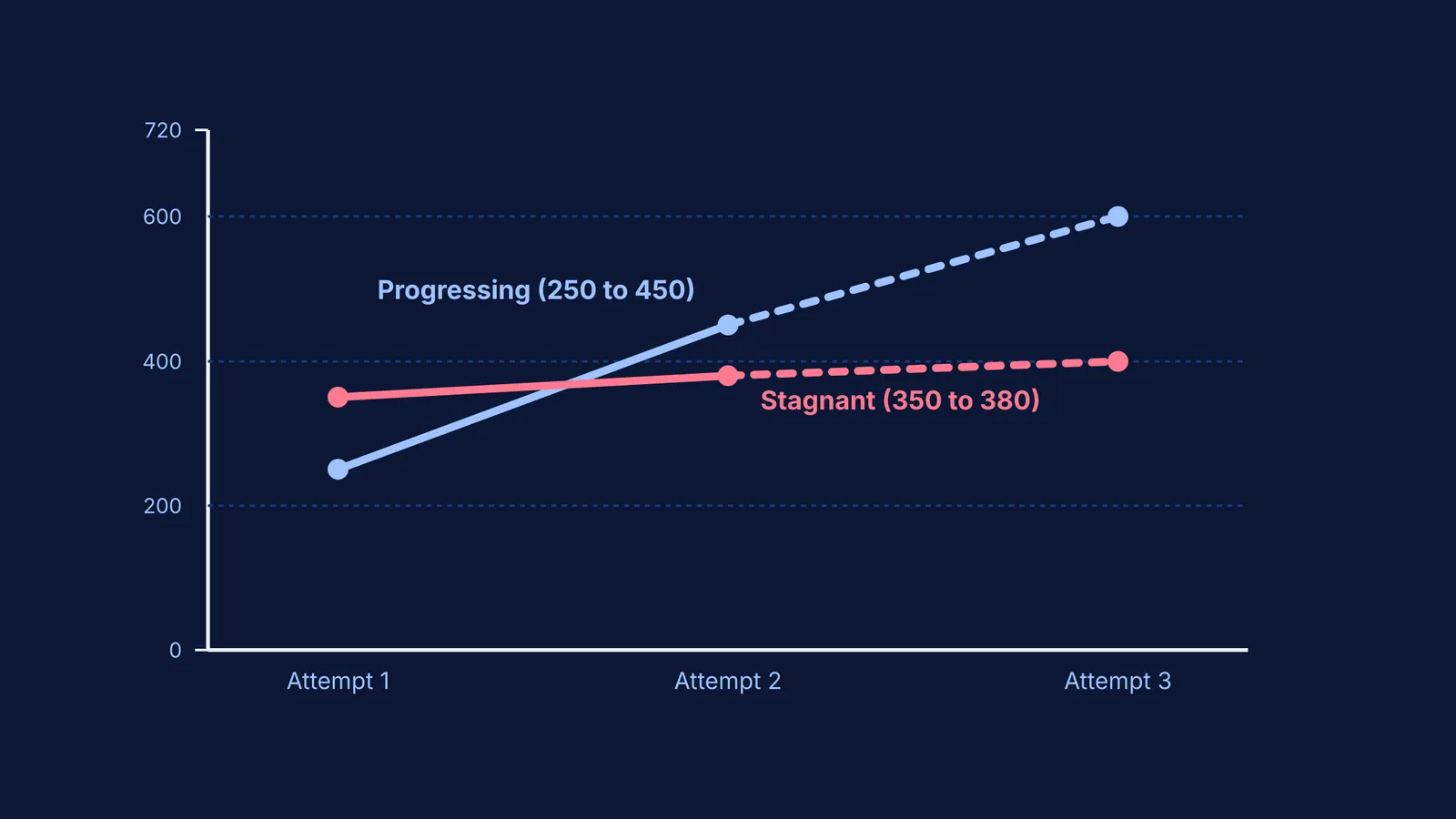
Look at their score progression from the first to the second attempt. If your child went from scoring 250 to 450, they have demonstrated the ability to absorb new information and improve. A third attempt to bridge the gap to 600+ might be worth the effort. However, if their score stagnated—for example, moving only from 350 to 380—it indicates a fundamental flaw in how they are preparing, not just a lack of time. Repeating the exact same process for a third year will likely yield the same stagnant result.
What should we change for a second drop year?
If the decision is yes, the study routine cannot look the same as last year. Reading the same NCERT textbooks for the fourth time (including Class 11 and 12) often leads to a "fluency illusion," where the student feels they know the material simply because it is familiar, but they still cannot solve novel problems under pressure.
They need an active testing strategy. If they struggle to identify exactly where their reasoning breaks down, Fermi's AI tutor can help. Instead of just giving the final answer, it works out what the student already knows, builds a plan for the session, and teaches through it—drawing figures and checking understanding step-by-step. If they have specific gaps, the Concept Library can help them relearn targeted topics without having to reread entire chapters.
Consider whether a change of environment is necessary. Sometimes, studying away from home in a hostel or PG can remove daily distractions, while for others, the comfort of home is vital for mental health. Discuss this openly rather than assuming the same setup will work again.
How much does another drop year cost emotionally?
The financial cost of coaching and living expenses is obvious, but the emotional cost of a second drop year is often underestimated. By their third attempt, your child will watch their peers enter the final years of their undergraduate degrees. This creates intense social isolation and a psychological burden known as the "guilt of investment." Talking about failure at home before the year begins can help manage these expectations.
What are the best backup plans for medical students?
A third attempt must be accompanied by a concrete "Plan B" agreement. Knowing there is a viable alternative reduces the crushing, all-or-nothing anxiety that causes students to panic in the exam hall.
Sit down and research allied medical fields together before the preparation year begins. Options like Biotechnology, Clinical Research, Pharmacy, or Veterinary Science offer fulfilling careers in healthcare without the NEET-UG bottleneck. Additionally, understanding the intricacies of the admission process, such as NEET UG counselling for parents: MCC, state quota and rounds, can help you navigate alternative pathways if the final score falls just short of a government MBBS seat.


