

On this page
If your teenager sleeps through multiple alarms and refuses to get out of bed on school days, you are likely exhausted from the daily argument. Many parents resort to acting as a human alarm clock—waking their child up, returning five minutes later, and eventually raising their voice just to get them out the door.
This daily struggle is frustrating, but it is deeply rooted in adolescent biology. Handing the responsibility back to your teenager, and letting them face the school's natural consequences, is often the most effective way to change their morning habits for good.
Why is my teenager always tired in the morning?
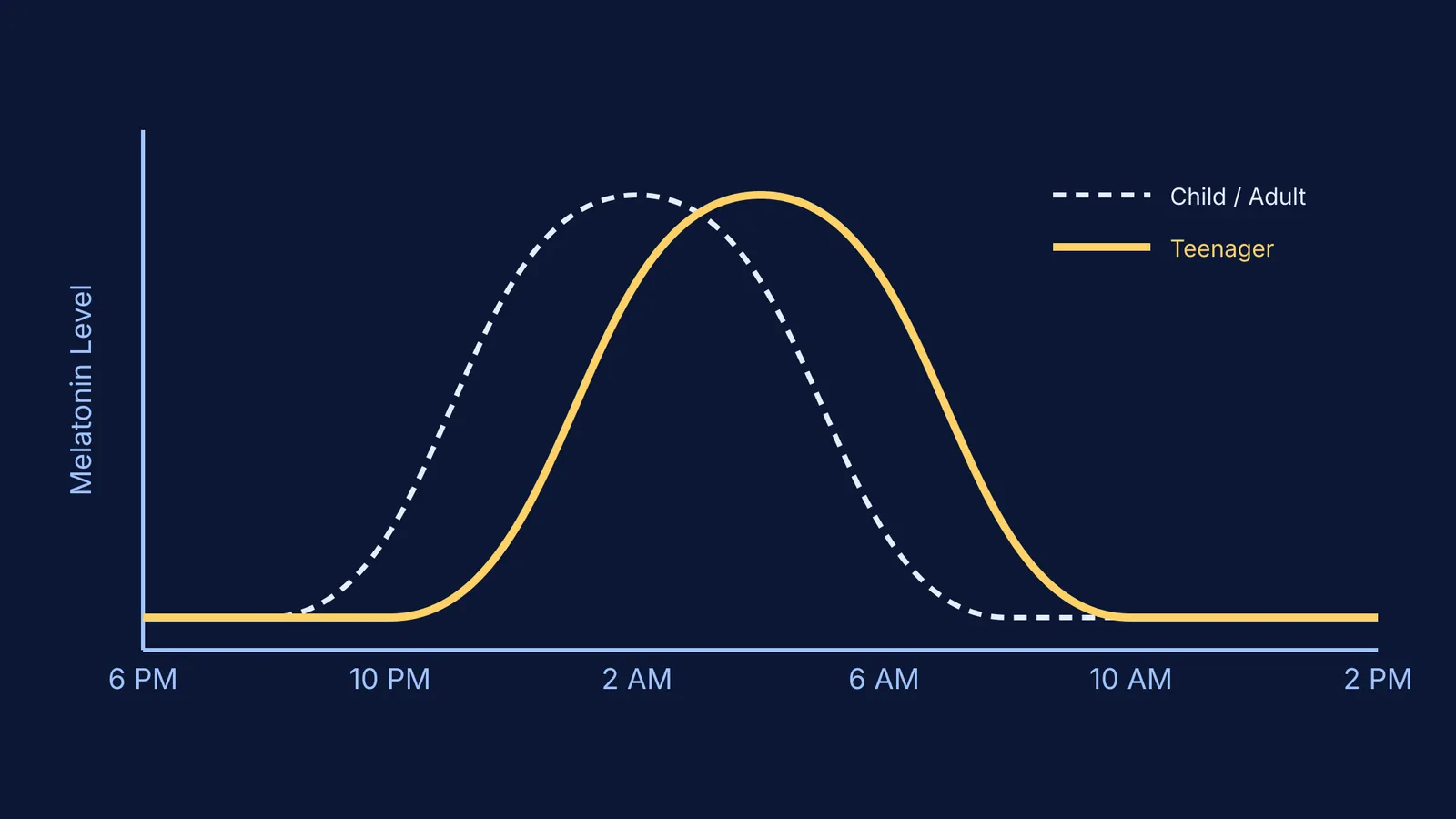
It is not just a matter of laziness or poor discipline. According to a policy statement from the American Academy of Pediatrics (AAP), puberty causes a biological "sleep phase delay" that pushes a teenager's internal clock about two hours later than it was in childhood.
This biological shift alters their entire circadian rhythm. Melatonin, the hormone that signals sleepiness to the brain, is released later at night and stays in their system longer into the morning. This makes it biologically difficult for most teenagers to fall asleep early, and practically impossible for them to wake up alert at 6:00 AM.
The Sleep Foundation notes that teenagers need eight to ten hours of sleep per night for optimal health and academic performance, but around seven out of ten high schoolers do not get enough sleep on school nights. When a teenager is forced awake during their biological "night" because of early school start times, they operate on severe sleep debt.
What are natural consequences for waking up late?
If you are waking your child up every day, you are taking on the stress of the morning while they sleep peacefully. Child psychology experts recommend using natural consequences—such as letting them experience the school's late policy—rather than taking on the daily work of waking them up yourself.
When you rescue your teenager from being late, they have no motivation to change their evening habits. A natural consequence removes the daily power struggle between you and your child. Instead of you being the "enemy" who yells and pulls the covers off, the school's attendance policy becomes the boundary they must navigate.
If they miss the bus, they may have to walk, pay for transit from their own allowance, or face detention for an unexcused absence. Experiencing the discomfort of these consequences is how older teenagers internalize the need to change their habits and respect the clock.
How can parents help reset a sleep schedule?
While you should step back from waking them up, you can still help them build a better environment for sleep. You can read more about how much sleep teenagers need, and how parents can help.
A consistent bedtime: Encourage them to go to sleep and wake up at the same time every day, even on weekends. Shifting their schedule by more than an hour on Saturday ruins their Monday morning reset.
The alarm out of reach: Put the alarm clock on the other side of the room so they are forced to physically stand up and walk to turn it off.
Morning light: Light naturally stops the production of melatonin in the brain. Encourage them to open the curtains immediately or step outside for a few minutes right after waking up.
Manage late-night stress: Many teens stay up late because they are stuck on difficult homework assignments. If they are staring at a blank page at midnight, Fermi's AI tutor can work out what they already know and build a plan for the session, so they sit down to a clear next step. For specific textbook questions, the Fermi Problem Library has worked problems with a step-by-step solver that explains the reasoning rather than just printing an answer.
Changing the morning routine will likely result in a few missed buses and late arrivals. Hold the line, show empathy when they complain about school detention, and let them learn how to manage their own time. Once they start taking ownership of their schedule, you might also consider reading about how parents can help children learn without adding pressure.


