

On this page
It is increasingly common for middle school students to feel the weight of high-stakes testing long before they sit for the paper. A 12-year-old is undergoing significant cognitive and emotional changes, and simply hearing older students or relatives talk about the make-or-break nature of Class 10 can trigger early panic.
When a child worries about a test that is three years away, they are often dealing with a fear of the unknown rather than a realistic academic challenge. Breaking down what the exam actually is and anchoring them back to their current term can help them regain confidence and enjoy learning again.
Why is a class 7 child already worried about board exams?
Children absorb the stress of their environment, and academic pressure in India is highly visible. In a 2022 NCERT survey of nearly 3.8 lakh students, 81% identified studies, exams and results as a major cause of anxiety. At age 12, a student's brain is developing the ability to think abstractly and project into the future, which means they can imagine failing an exam they have not even seen.
The shift from primary to middle school also brings a heavier workload. The syllabus introduces more subjects, harder concepts, and formal testing. If a student struggles with a new idea in maths or science, they might wrongly conclude that they are already falling behind for the boards. This is often compounded by well-meaning adults who remind them to build a strong foundation for the boards every time they sit down to study.
What exactly are board exams?
To a 12-year-old, a board exam sounds like an impossible, insurmountable hurdle. It helps to demystify the process and bring it down to a factual level. Explain that a board exam is simply a school test written by teachers from different schools, based entirely on the syllabus of that specific year. It is not an assessment of everything they have ever learned since kindergarten.
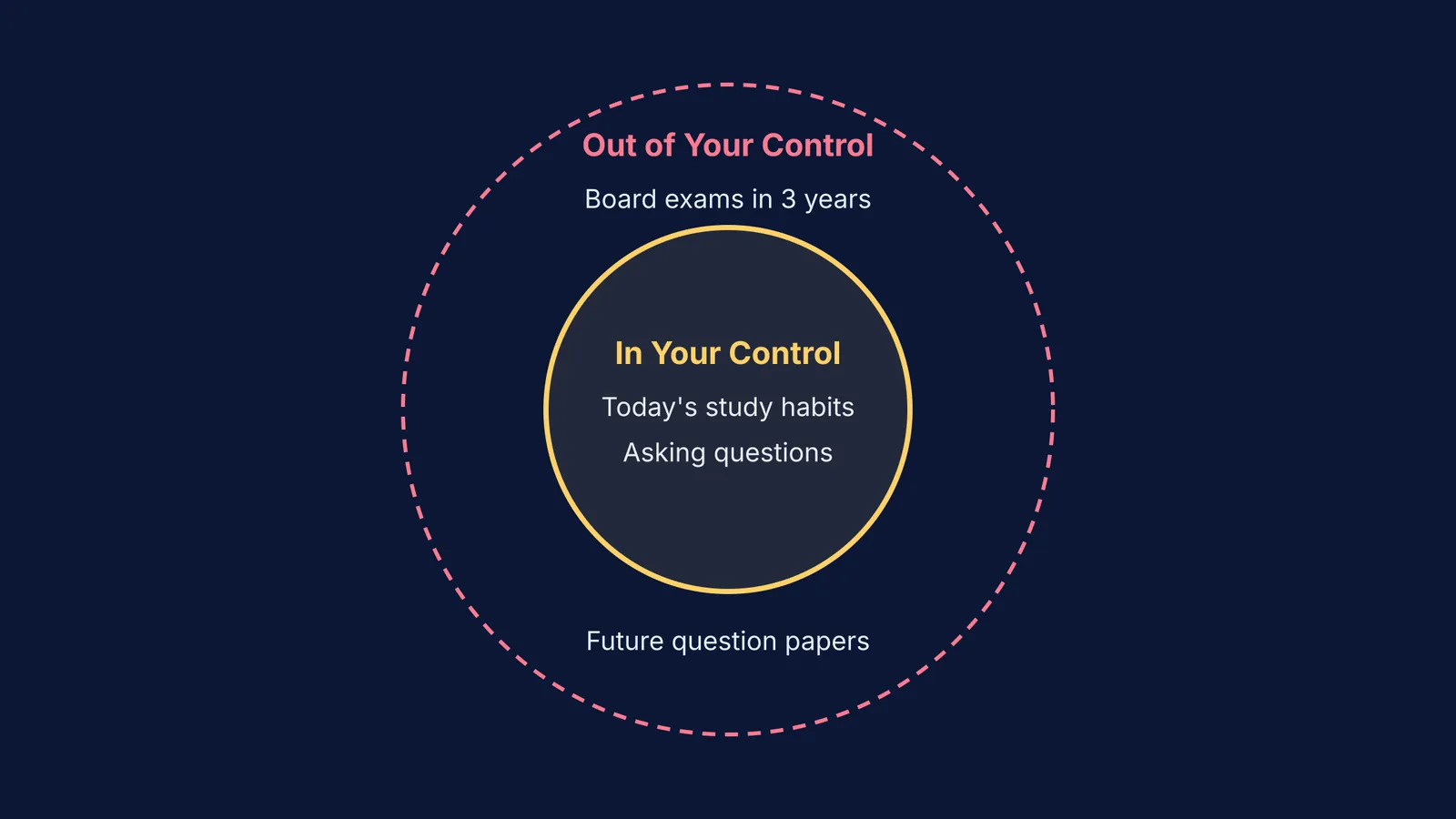
You can reframe their thinking when they express worry about failing the boards. Explain that the boards are just tests on what they learn in Class 10, and they do not test Class 7 work. Right now, their only job is to learn Class 7 topics. When they reach Class 10, their teachers will make sure they are ready for that paper, just like they did for their Class 6 exams.
How can parents shift focus to the current year?
Anxiety often thrives on vague, distant threats. You can help your child by making their daily routines concrete and manageable. This stops them from feeling overwhelmed by the entire school curriculum and returns their attention to the present moment.
Focus on building habits. Praise the process rather than the marks. Whether they are helping with maths word problems or running a science experiment, celebrate the effort they put into understanding a tricky concept. Consistent study habits are built over time.
Normalise mistakes. Make it clear that making mistakes in Class 7 is the best way to learn. A mistake is just a signal that a concept needs a bit more attention, not a prediction of their future performance.
Use the right tools for stuck points. When a student cannot find the next step, they often freeze, which fuels anxiety. This is where active learning helps. Fermi's AI tutor can work out what a student already knows and build a plan for the session, keeping the focus on mastering the immediate concept rather than worrying about the final answer.
Separate rest from work. Ensure they have clear boundaries between study time and downtime. Physical activity reduces stress hormones, and a consistent sleep schedule gives the brain time to consolidate new memories.
When should you worry about exam anxiety?
While some apprehension is normal as children step into middle school, chronic stress can severely interfere with a child's health and learning capacity. Parents should look out for physical and behavioural changes. Red flags include a sudden change in sleep patterns, frequent stomach aches or headaches before school, or a sudden reluctance to attend classes.
If exam nerves start causing these physical symptoms or stop your child from enjoying their hobbies, it may be time to seek external support. Speak to the school counsellor or a paediatrician. Early support gives children the practical tools they need to manage stress, ensuring they arrive at their senior years with resilience and a healthy approach to learning.


