

On this page
A slow reader is usually not lazy. Often they are still spending effort on each word, so little is left for meaning. The methods below need only a book and a few minutes a day.
Why does my child read so slowly?
The US National Reading Panel describes fluent readers as able to "read orally with speed, accuracy, and proper expression", and calls fluency one of several critical factors for comprehension. The Panel found that guided repeated oral reading, with guidance from teachers, peers or parents, led to significant gains in word recognition, fluency and comprehension. It found no such evidence for simply encouraging lots of silent reading. Your child needs to read aloud with you, not just more books.
What is paired reading and how do I do it at home?
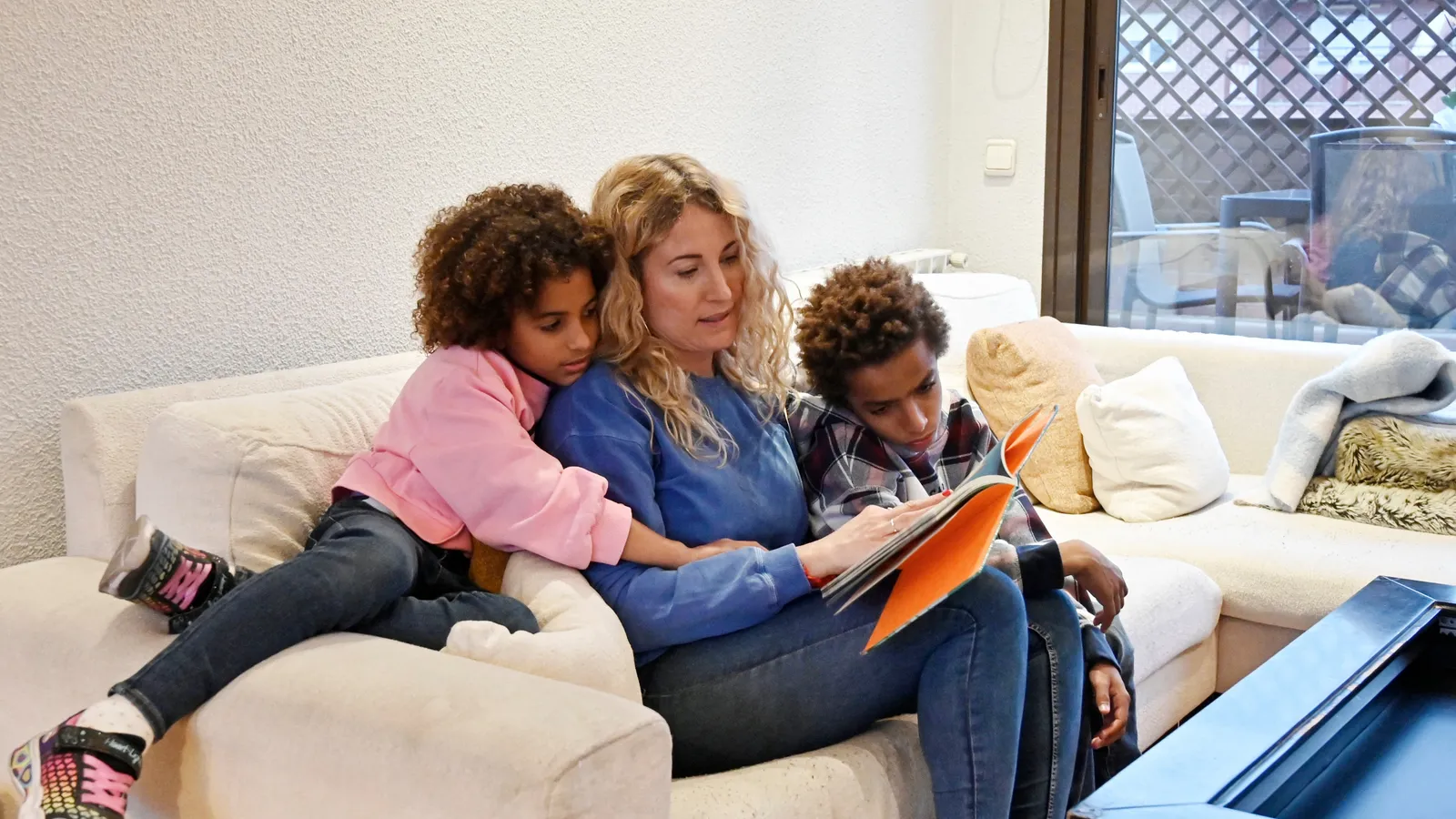
In paired reading, you and your child read aloud together and they take over when ready. A parent guide taken from education researcher Keith Topping's 2001 book sets out the rules:
Your child chooses the book, comic or newspaper, even if it looks too hard.
Start by reading aloud together, at your child's speed.
When your child feels ready, they give an agreed signal (a knock or a nudge) and you go quiet.
If they struggle for more than about 5 seconds, or struggle and get a word wrong, you say the word, they repeat it, and you go back to reading together.
Praise hard words read well and self-corrections. Don't make them "sound it out" again and again.
The guide suggests nearly every day (aim for 5 days a week), for no more than 15 minutes unless your child wants to carry on. A 2024 meta-analysis of 15 studies of read-together methods like this, by Jake Downs and Kathleen Mohr (DOI), found medium-to-large effects for primary-school children; gains varied with who tutored (adult, older pupil or classmate).
How does repeated reading of short passages help?
Repeated reading means reading the same short passage aloud several times until it sounds smooth. A 2004 meta-analysis by William Therrien found it can raise fluency and comprehension on the practised passage and, as an intervention, in reading generally, for children with and without learning disabilities.
An example for a Class 4 child, using a passage from their English reader:
They read it aloud for one minute while you count words read correctly. Say it is 70.
You read it once, with expression, while they follow with a finger.
They read it two or three more times. Count again: perhaps 92.
Write both numbers in a notebook. Next week, use a new passage.
For reference, the Hasbrouck and Tindal 2017 norms put the middle (50th percentile) US Grade 4 reader at 94 words correct per minute in autumn and 133 in spring.
Do audiobooks count as reading practice?
Only as a helper, and with the print open in front of your child. A 2023 meta-analysis by Virginia Clinton-Lisell of 30 studies found only a trivial overall benefit of reading while listening over reading alone for comprehension. The benefit showed up only when the pace was set for the reader, not when readers went at their own pace. So choose an audiobook of a book you own, ask your child to follow the words, and use it alongside reading aloud with you, not instead of it. Audiobooks also keep stories enjoyable; our piece on building a habit of reading for pleasure has more ideas.
For older children who find dense science chapters hard going, the Fermi Simulation Lab has interactive simulations for the ideas that are easier to see than to read.
When should I ask the school for an assessment?
Give the home routine a month or so. Ask the school sooner, or after that, if you notice:
Little or no rise in first-read scores despite regular practice
Frequent guessing, skipping small words, or trouble sounding out new words
Spelling far behind classmates, or a child who avoids reading and gets upset
India's Rights of Persons with Disabilities Act, 2016 lists dyslexia under "specific learning disabilities", so a formal assessment can open the door to support at school. Slow reading has many possible causes, including eyesight and hearing, so ask the school counsellor, a paediatrician or a clinical psychologist to assess rather than relying on a home test. Our guide to learning differences such as dyslexia and dyscalculia has more background.
A script for the class teacher: "We have done paired reading most days for over a month; here are our notebook scores. Our child still reads much more slowly than classmates. Could the school assess their reading, and what support is available meanwhile?" See also questions to ask at a parent-teacher meeting.
If your child seems anxious, withdrawn or very upset about school, talk to the school counsellor. You can also call the government's free Tele MANAS helpline on 14416.
Start tonight: let your child pick a book, agree a signal, and read together for a few minutes.


