

On this page
Most of what a child needs for real experiments is already in your kitchen. The skill is choosing what teaches most, leaving out what causes accidents, and giving the kit a home.
What should be in a home science kit for kids?
Aim for one shoebox-sized box:
Kitchen chemicals: white vinegar, baking soda, salt, and a red cabbage when needed
Containers: clear plastic cups, a reusable plastic bottle, a small funnel
Measuring: teaspoons, a 30 cm ruler, a phone stopwatch
Paper: coffee filters or kitchen roll, a results notebook, a pencil
Odds and ends: balloons, string, metal washers, sticky tape, washable felt-tip pens
Seeds: a handful of whole moong from the kitchen
Protection: splash-proof goggles for each child, and an old shirt as an apron
Goggles are the one thing worth buying. The American Chemical Society booklet Safety in the Elementary Science Classroom says to wear splash-proof goggles when working with chemicals, hot liquids or flying objects. It also suggests plastic instead of glass where possible, because cuts are among the most common lab injuries.
What should stay out of the kit?
Button and coin batteries. Poison Control warns that a swallowed button battery stuck in the food pipe can cause severe damage in just 2 hours.
Cleaning products and medicines. Kitchen ingredients do every job a beginner needs.
Mercury thermometers. The ACS booklet recommends alcohol thermometers, because mercury from a broken one is hard to clean up and its vapour is dangerous.
Heat beyond warm water. The booklet says to heat only water or water solutions, never oil or alcohol.
Garden-shop seed packets. Many store-bought seeds are coated with insecticides, fertilisers or both, the booklet notes, which is why this kit uses kitchen moong.
How do you store a home science kit safely?
The rule that prevents most mix-ups: kit materials never go into food or drink containers. The ACS booklet says to store chemicals in properly labelled containers and never in containers originally used for food.
Keep everything in one lidded box marked “Science kit, not food”.
Leave vinegar, baking soda and salt in their original packets, so the label travels with them.
Store the box on a high shelf, away from food and out of reach of younger siblings.
After each session, rinse the cups and wash hands, as the booklet asks after every activity.
If something is swallowed, India's National Poisons Information Centre at AIIMS New Delhi answers on toll-free 1800 116 117, 24 hours a day. Write the number inside the lid. For a swallowed battery or trouble breathing, go straight to the nearest emergency department.
Which five experiments should you try first?
Balloon inflater. Half fill a plastic bottle with vinegar, use a funnel to put baking soda in a balloon, stretch it over the neck, then tip the powder in. The Science Museum Group explains that the reaction releases carbon dioxide, which fills the sealed balloon.
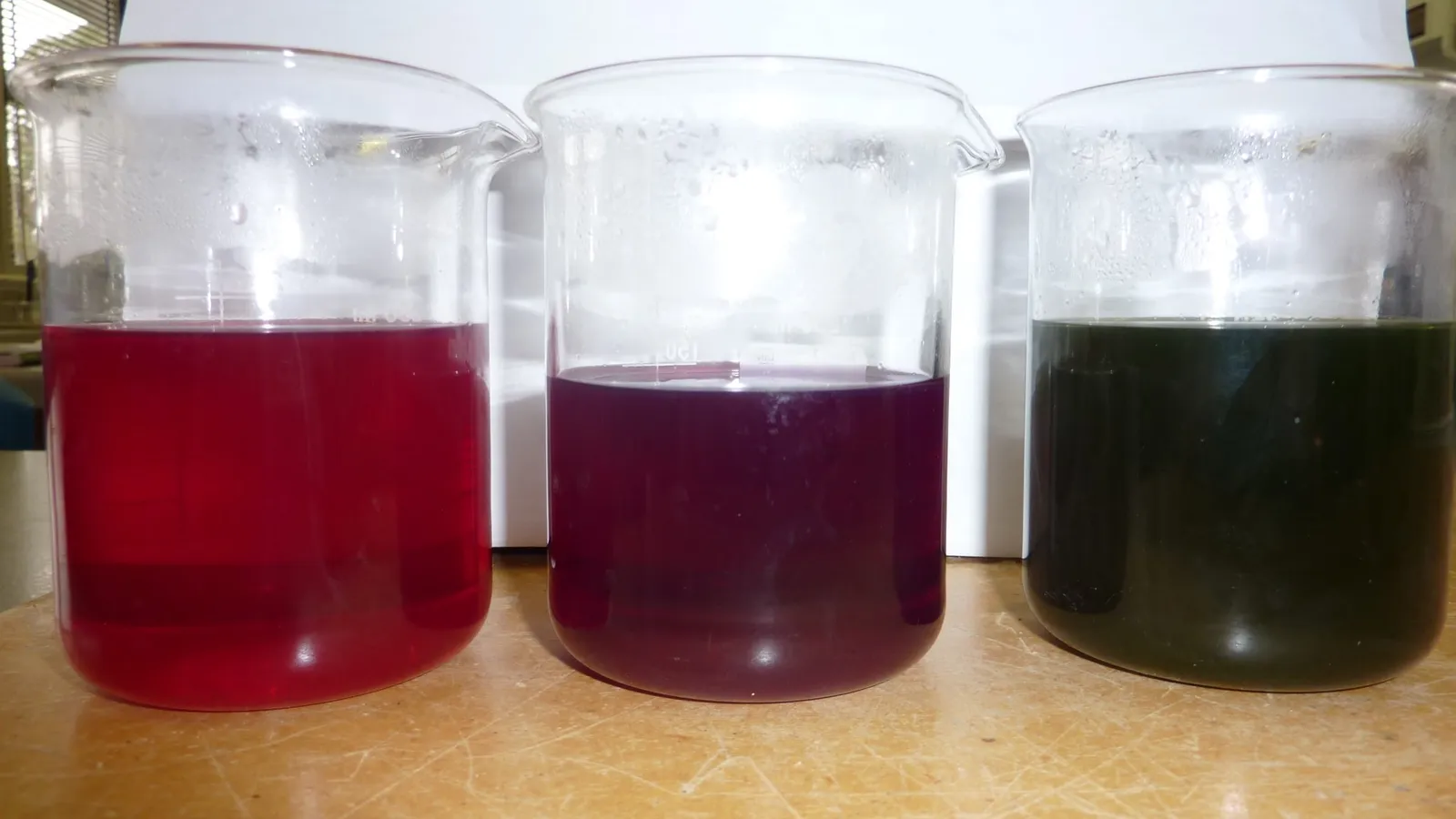
Red cabbage colour test. An adult chops the cabbage and pours boiling water over it; once cool, strain off the purple liquid. The Francis Crick Institute explains that its pigment, anthocyanin, turns redder in an acid, stays purple when neutral, and turns blue, green or yellow in an alkali. Test lemon juice, vinegar, water and baking soda solution.
Hidden colours in black ink. Put a dot of washable black felt-tip on a coffee-filter strip and dip the end in water. The Royal Society of Chemistry notes that black ink is often a blend of other colours, and some pens separate better than others, so try three.
The fair pendulum. Tie a washer to string, swing it gently and time ten swings. Then change one thing: the length, or the number of washers. OpenStax College Physics gives the period as T = 2π√(L/g), independent of mass, for swings under about 15°.
Sprouting moong. Soak a few seeds overnight, then set them on damp kitchen roll in two cups, one in a dark cupboard and one by a window. Measure the shoots daily. Seeds used in experiments never go in the mouth, a rule from the ACS booklet.
How do you turn a fizz into real science?
A fizz becomes science when your child predicts first and records what happens. Use this script for every activity:
Before: “What do you think will happen? Write it down.”
During: “What exactly do you see? Draw it.”
After: “Was your guess right? What would you change next time?”
When a result raises a question neither of you can answer, such as why the pendulum ignores weight, the Fermi Simulation Lab has interactive simulations for the ideas that are easier to see than to read.
For more pantry ideas, see our guide to kitchen science experiments. When an activity sparks a bigger question, turning a question into a science project shows the next step, and our guide to encouraging curiosity covers how to keep the questions coming.
Start this weekend with the balloon: all it needs is a bottle, vinegar, baking soda and a balloon.


