

On this page
When parents look for good biographies of scientists for children, they often reach for books that celebrate genius. We want our children to be inspired by the brilliance of Albert Einstein or Marie Curie. However, research suggests that stories focusing purely on a scientist's achievements might actually do more harm than good when a student faces their own academic challenges.
Choosing the right biography is about finding narratives that humanise the researcher. By reading about the mistakes, failures, and personal hurdles that scientists had to overcome, students learn that resilience is far more important than innate talent.
What makes a good biography of a scientist?
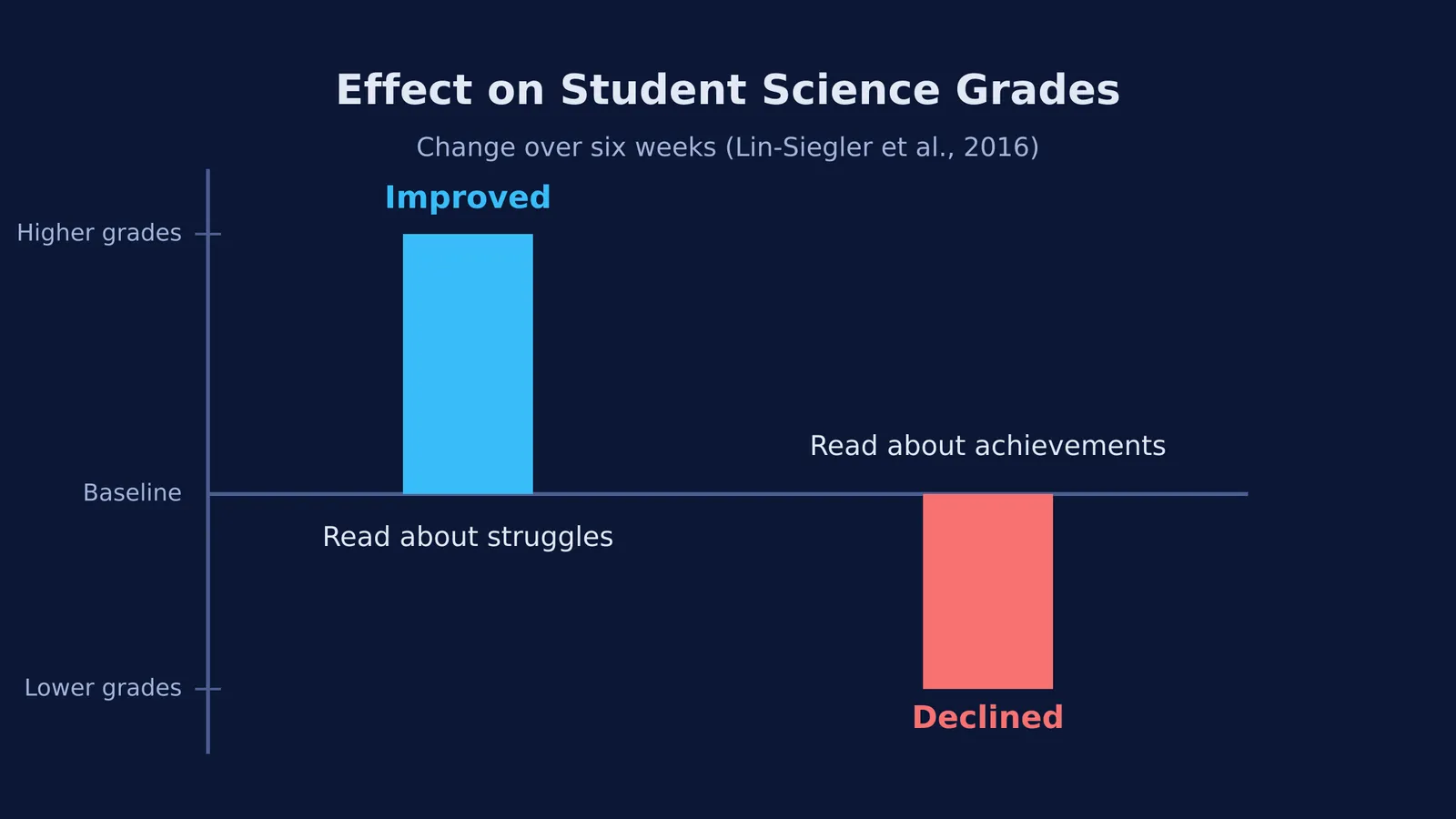
When students believe that scientific discovery relies on natural brilliance, they often lose motivation when the work gets hard. A 2016 study published by the American Psychological Association tested this by having 402 high school students read different types of stories about famous scientists.
The researchers found that students who read about the intellectual or personal struggles of scientists saw a significant improvement in their science grades over the next six weeks. In contrast, the control group, who read traditional textbook accounts of the scientists' great achievements, actually experienced a decline in their grades. The students who learned about the struggles felt a stronger personal connection to the scientists, viewing them as ordinary people who had to work hard to succeed.
This means that a good biography should not hide the difficult parts of the scientific process. It should show the failed experiments, the rejected papers, and the times when the scientist simply did not know what to do next.
How do you choose biographies for different ages?
The way you introduce these stories should evolve as your child grows. Here is a framework for selecting books at different stages:
For Early Readers (Ages 5–8): Focus on curiosity and observation. At this age, children do not need complex scientific explanations. They need to see that scientists start by asking simple questions. Look for picture books like *On a Beam of Light* (about Albert Einstein) or *The Watcher* (about Jane Goodall), which emphasize watching, wondering, and trying things out.
For Middle Schoolers (Ages 9–13): This is when students start facing harder maths and science problems in school. Choose chapter books that highlight the scientific method and the frustration of failure. You can also explore short articles on specific discoveries; for instance, reading about Agnes Pockels and the kitchen trough that measured surface films shows how significant work often happens through pure persistence outside formal labs.
For High Schoolers (Ages 14+): Older students benefit from stories that intertwine scientific hurdles with real-world career paths and societal challenges. Books like *Hidden Figures* or stories about Gladys West and the precise Earth model that GPS relies on reveal the collaborative and often difficult reality of working in modern STEM fields.
How can stories spark conversations about careers?
Reading a biography is a natural starting point for discussing future careers. When a book details the daily routine of a marine biologist or an aerospace engineer, it moves the career from an abstract concept to a concrete job.
Use the stories to demystify what scientists actually do. Point out that much of a researcher's time is spent setting up equipment, checking data for errors, and collaborating with others. For example, the story of Maria Mitchell and the telescopic comet of 1847 is not just about looking through a telescope; it is about the nightly discipline of recording coordinates. Discussing these details helps teenagers realise that a career in science is built on daily habits, not just moments of sudden inspiration.
How do you move from reading to problem-solving?
Reading about struggle is the first step, but students also need to experience and overcome it in their own studies. Learning to push through a difficult physics or chemistry problem builds the exact resilience that those biographies describe.
This is where the right tools can support the process. The Fermi Problem Library provides a space where getting stuck is treated as a normal part of learning. Instead of just printing an answer, it offers a step-by-step solver that explains the reasoning behind each move. When a student does not know where to start, Fermi's AI tutor works out what the student knows and builds a plan for the session, guiding them through the intellectual struggle just as a scientist would navigate a tough experiment.
By pairing honest biographies with active problem-solving, you can help your child see that struggle is not a sign of failure—it is the very nature of science.


