

On this page
For the 2024–25 academic year, the CBSE has increased the weightage of competency-focused questions (which include case studies) to 50% for Class 12, matching the standard already set for Class 10. This means half of your board paper will test your ability to apply concepts to real-life situations rather than just recalling definitions.
While official sample papers and textbooks are a good start, they often run out quickly. This is where artificial intelligence can step in to give you unlimited practice, provided you use it correctly.
Why are good case study questions hard to find?
Case study questions usually feature a short paragraph describing a real-world scenario, followed by a few multiple-choice or short-answer questions. Because this format is relatively new, many reference books simply copy the few examples released by the board or recycle old numerical problems by adding a generic introductory paragraph.
To truly prepare, you need questions that force you to extract data from a passage and apply a principle to solve a new problem.
What is the difference between a memory test and a true case study?
A poor case study question might give you a long paragraph about the history of lenses, only to ask: "What is the formula for the refractive index?" You do not need the paragraph to answer that. It is a simple recall question disguised as a case study.
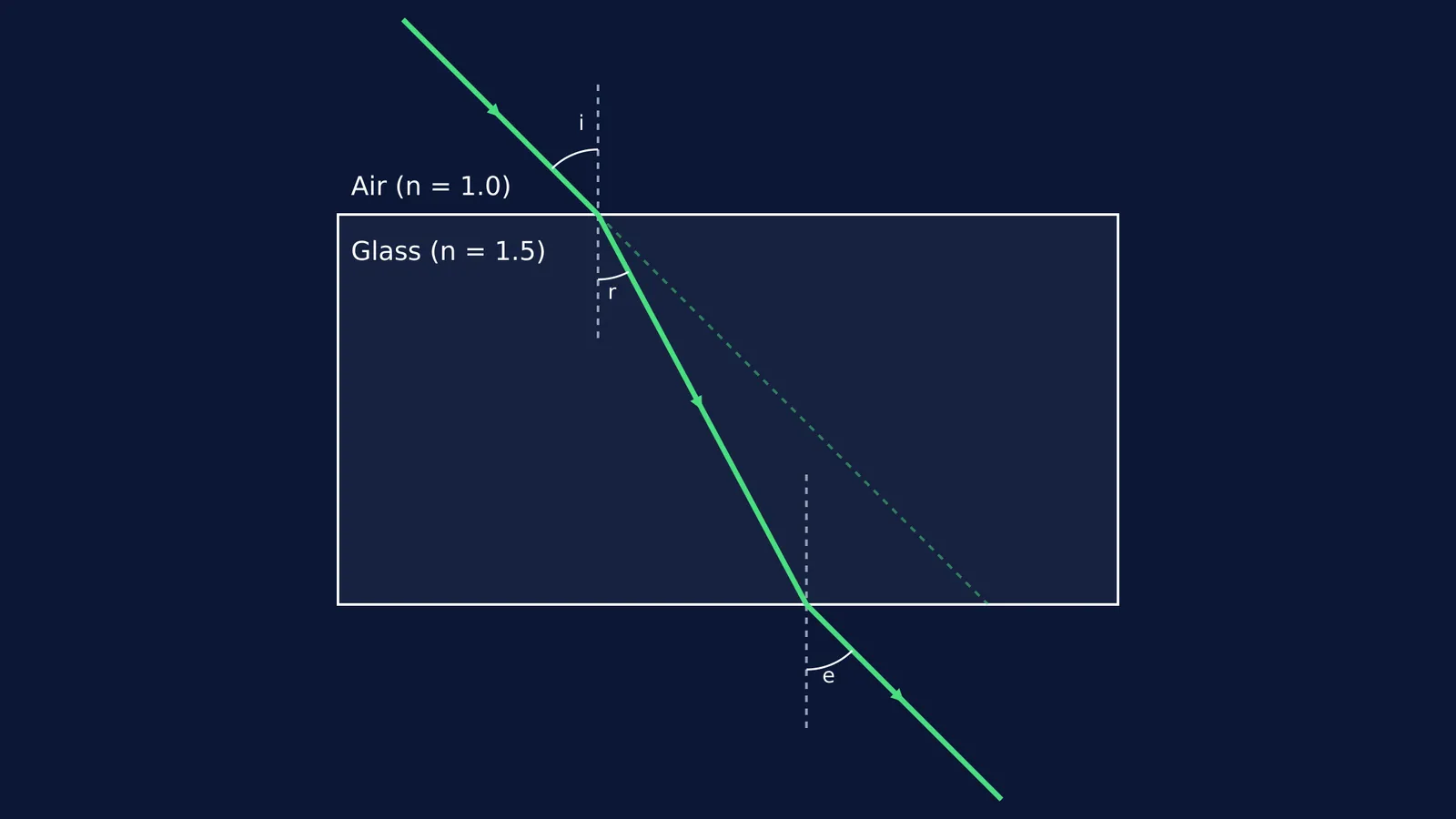
A true case study question requires you to interact with the provided text. For example, it might describe an experiment where a student shines a laser through a rectangular glass slab of unknown material and measures the lateral displacement. The question would then ask you to calculate the material's refractive index using the student's measurements, or to predict how the lateral displacement would change if the slab were thicker.
To answer this, you have to extract the specific values from the passage, apply Snell's law, and perform the calculation. If the AI you are using keeps generating simple recall questions, you need to adjust your prompt to explicitly demand data extraction and application.
How to generate CBSE case study questions with AI?
You can use tools like ChatGPT or Claude to generate your own practice questions, but the quality of the output depends entirely on how you ask. A vague prompt will give you generic questions that do not resemble a board exam.
To get questions that feel like the real thing, give the AI a clear role, a specific topic, and rules about what to avoid.
Once it generates the passage, you can practice without looking at the answers.
How do you check if questions match the board style?
AI can sometimes hallucinate or write questions that are too easy or far beyond the syllabus. Before you spend time solving an AI-generated case study, run it through this quick checklist:
Does it require the text? If you can answer all the questions just by knowing the chapter without ever reading the case, it is a memory test, not a true case study.
Are the distractors plausible? In board exams, the incorrect options are often common misconceptions, not obvious nonsense.
Is the math realistic? For Physics or Chemistry, check if the numbers given in the scenario lead to clean calculations. Board exams rarely ask for tedious arithmetic without a calculator.
If you are practising assertion-reason questions, the same rules apply: ensure the statements are conceptually sound before trusting the answer key.
How should you review AI-generated answers?
Even with a perfect prompt, you should not blindly trust an AI's answer key. AI models can make calculation errors or misinterpret the nuances of a physics problem. Treat the generated answer key as a hint rather than absolute truth.
When you finish a practice case study, solve the problem yourself first. If your answer differs from the AI's, work backwards through the AI's explanation. Does it use the correct formula? Did it substitute the right values from the text? This active reviewing process forces you to engage deeply with the material, which is often more valuable than just getting the right answer immediately.
Using Fermi's AI tutor for case studies
Generating questions is only half the battle; learning from your mistakes is the other. When an ordinary AI generates a question, it usually prints the final answer immediately, which does not help if your fundamental concept is weak.
This is where a dedicated tutor helps. A student brings a topic, a course, a problem set or a scanned assignment to Fermi's AI tutor. Fermi works out what they already know, builds a plan for the session, and teaches through it — writing on a board, drawing the figure, running the simulation, and checking understanding as it goes.
If you bring a confusing case study to Fermi, it will not just hand you the solution. It will help in structuring an AI study plan around that concept, identifying where your reasoning broke down, and guiding you to the correct application step by step.


