

On this page
Why are Fermi problems so hard?
When Enrico Fermi famously dropped scraps of paper to estimate the blast yield of the Trinity nuclear test, he used what we now call a Fermi problem. This is a back-of-the-envelope calculation that pieces together a few known facts to guess an unknown quantity.
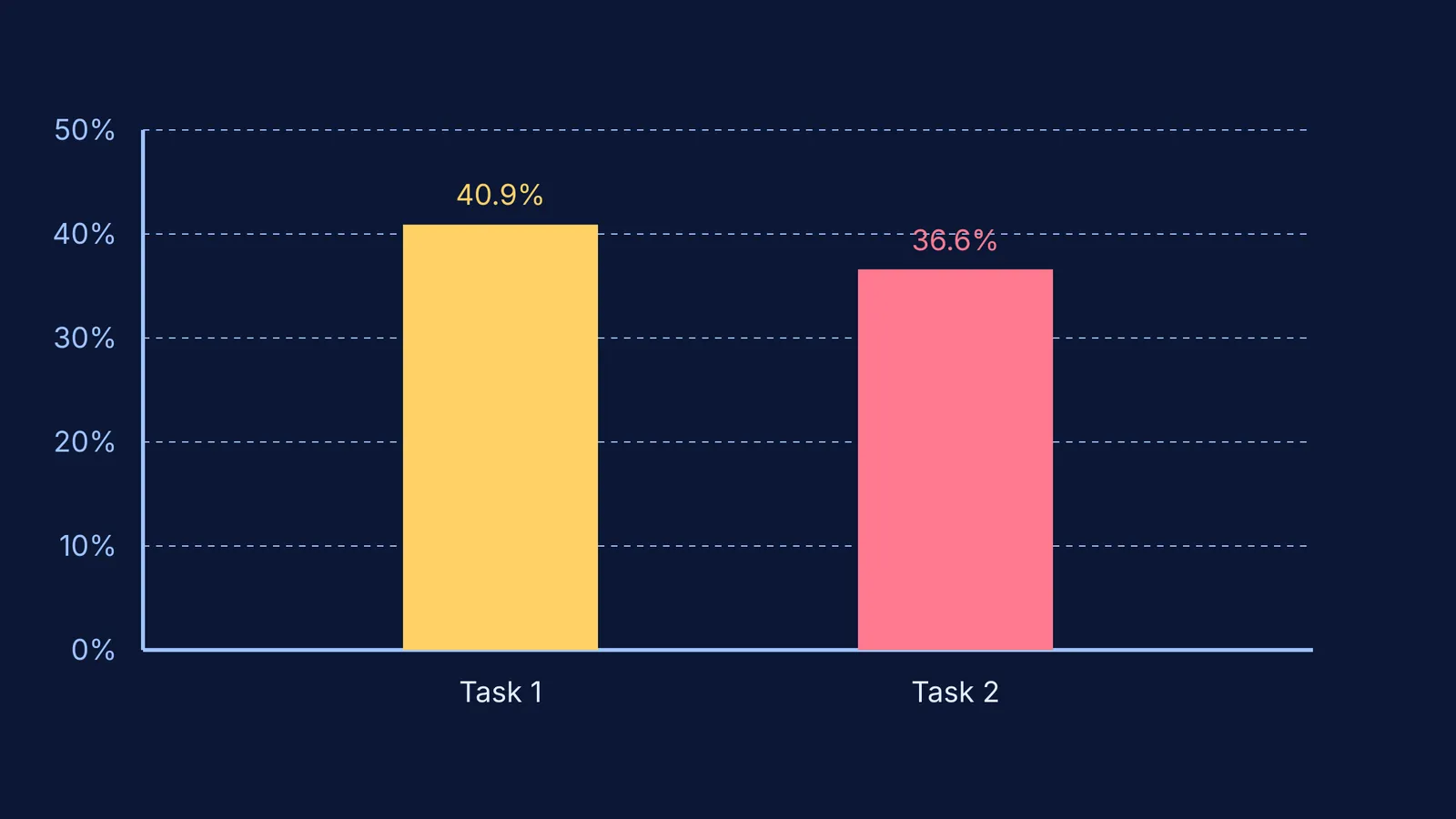
Unlike standard textbook exercises, Fermi problems have no single correct answer and no prescribed formula. You have to decide which variables matter and which can be ignored. That forces you into an active, cyclic process of guessing, calculating, and then verifying if the result makes sense. A 2026 study in the *Eurasia Journal of Mathematics, Science and Technology Education* observed students doing mathematical modelling tasks and found they spent 40.9% and 36.6% of their time on estimation and checking [[1]](https://doi.org/10.29333/ejmste/19138).
This constant checking is where the real learning happens. Whether you are converting a quantity between unit systems or setting up population growth models, the core skill lies in evaluating your own logic. When you face an unfamiliar scenario, you cannot just plug numbers into an equation; you must construct the model from scratch.
How can you practice estimation problems with an AI tutor?
Because these problems require you to string together multiple assumptions, working alone can lead to compounding errors. A single bad guess at the start throws off the final order of magnitude, and it can be hard to spot where you went wrong.
When you practice estimation problems with an AI tutor, you get a partner that can check your logic at each branch of the problem. Fermi's AI tutor holds a line of reasoning across a whole session, notices where a student is stuck, and decides whether to explain, ask, or show. You can state your first assumption, ask if it is reasonable, and then move to the next step with confidence.
If you struggle with breaking down the variables or structuring your thought process, the Fermi Problem Library has worked problems with a step-by-step solver that explains the reasoning rather than printing an answer. This approach helps you see the underlying structure of a good estimate.
The 4-step framework for estimation
To tackle any Fermi problem, follow this structured approach:
Define the target: Be specific about what you are measuring. "Water consumption" is vague; "litres of drinking water consumed in one day" is measurable.
Break it down: Split the target into smaller factors. Total volume is the product of the number of people and the volume per person.
Estimate the parts: Use everyday facts to bound your guesses.
Compute and verify: Multiply your estimates and ask if the final order of magnitude makes physical sense.
A worked example: India's daily water intake
Let us apply the framework to estimate how many litres of drinking water India consumes in one day. Here is a script of how you might break it down alongside your tutor.
First, you need the population. India's population is approximately 1.45 billion, according to the United Nations [[2]](https://www.unfpa.org/data/world-population-dashboard).
Second, you estimate individual intake. Let us assume a typical person drinks about 2.5 litres of water a day.
Finally, you multiply the two figures: 1.45 × 10⁹ people × 2.5 litres/person = 3.625 × 10⁹ litres.
That is about 3.6 billion litres a day, just for drinking. If you were doing this live, you could then ask your tutor to introduce variables like summer heat waves, agricultural water use, or variations across age groups.
What else can you estimate?
Once you understand the method, you can estimate almost anything. Try working out how many piano tuners there are in your city, the number of heartbeats in a human lifetime, or the number of photons emitted per second by a desk lamp. The goal is not precision; it is learning to navigate uncertainty by grounding your thoughts in facts you already know.
In competitive exams, estimation can also save you crucial minutes. If a multiple-choice question asks for a complex calculation, a quick Fermi estimate might let you eliminate three out of four options before you even touch a calculator. Whenever you hit a wall with the underlying science behind your assumptions, the Concept Library holds every concept in physics, chemistry, biology, mathematics and computing, each with its own lesson and its place in the map.


