

On this page
Before you write the first equation, what goes through your mind? For many students preparing for competitive physics exams, the first instinct is to scan the problem for a familiar object—a spring, a pulley, or a charged sphere—and immediately recall the formulas associated with it.
But research shows this is precisely the opposite of what expert physicists do. Asking an AI tutor to identify the concept *before* you solve a problem can help you break this habit and build a much stronger mental map of your subject.
How do experts and novices see problems differently?
When you look at a physics problem, what stands out? A classic 1981 study published in *Cognitive Science* answered this by asking undergraduate students (novices) and physics PhD students (experts) to sort 24 physics problems into categories [[1]](https://doi.org/10.1207/s15516709cog0502_2).
The novices grouped the problems by their surface features. If a problem featured a block on an inclined plane, they put it in the "inclined plane" pile. If it had a spring, it went into the "spring" pile.
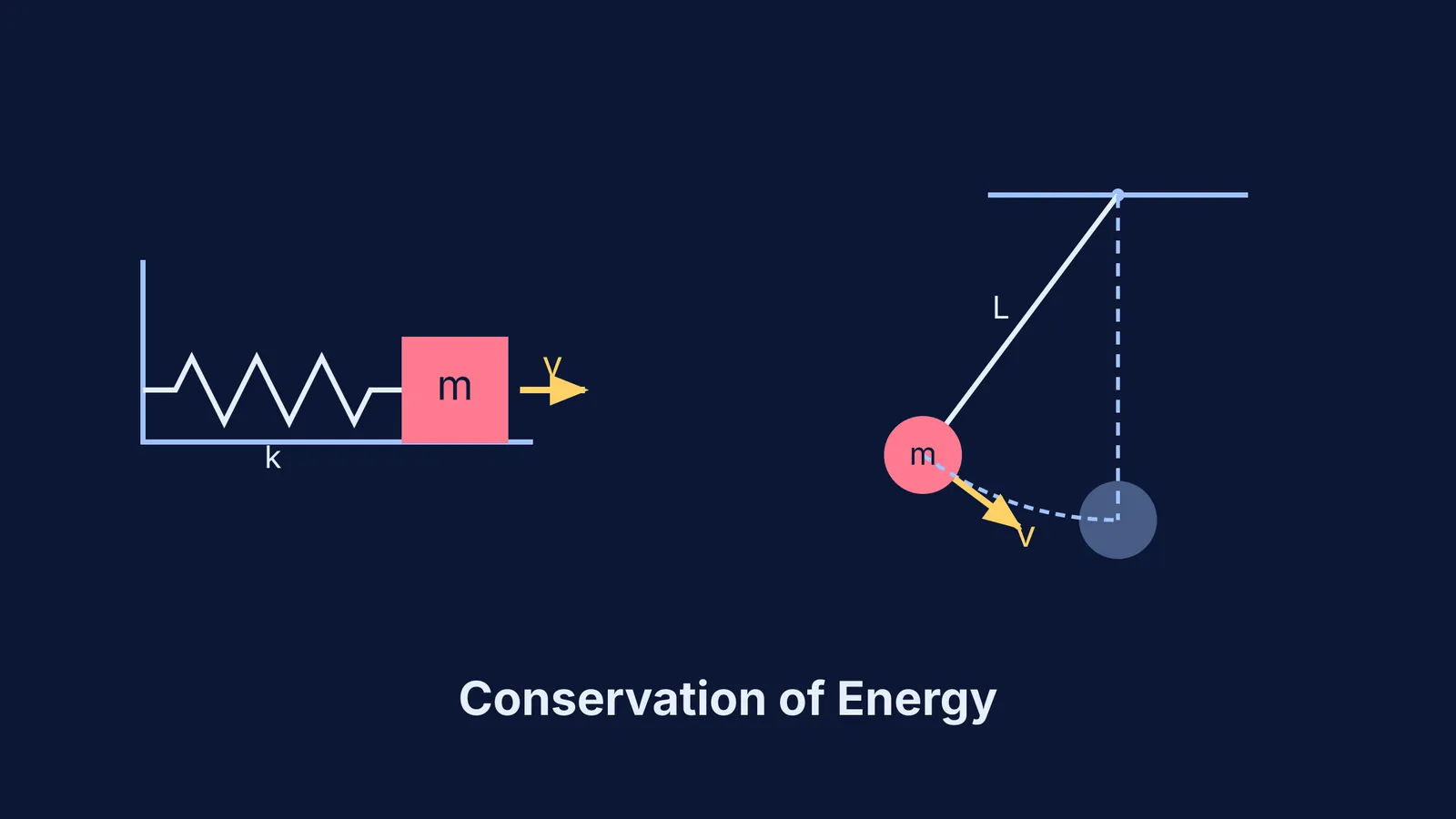
The experts ignored the surface objects completely. Instead, they grouped the problems by their deep structure—the fundamental principles needed to solve them. A problem about a falling pendulum and a problem about a block compressing a spring both went into the "Conservation of Energy" pile.
The researchers found another striking difference in how the two groups approached solving the problems. Because their knowledge was fragmented and tied directly to specific formulas, novices tended to work backward from the unknown variable, searching for a formula that contained it. In contrast, experts worked forward from the foundational physical principles they had identified, building a comprehensive representation of the problem before plugging in any values.
By focusing on the underlying concept first, experts know exactly which mathematical tools to deploy. Novices, on the other hand, often "plunge" into calculations based on the objects they see, grabbing formulas that may not apply and quickly hitting a wall. If you struggle to know where to begin, or if you understand physics theory but still fail numericals, you are likely stuck in the novice view.
How do you check your understanding before solving?
To think like an expert, you need to force yourself to identify the core principle before you start solving. Fermi's AI tutor is designed to hold a line of reasoning and teach rather than just print an answer, which makes it ideal for this kind of active practice.
Here is a simple framework for your next study session:
Read and guess: Read the problem carefully. Before writing any numbers, guess the core concept the examiner is testing (for example, "Conservation of Angular Momentum" or "Electromagnetic Induction").
Ask the AI: Feed the problem to the tutor and give it this exact prompt: *"What concept is this question testing? Do not solve it or give me the answer."*
Compare: Compare the AI's response with your guess and with your textbook's chapter list.
If the AI's concept matches yours, you are on the right track and can confidently proceed. If it names a different concept, ask it to explain *why* that principle applies here. You have just caught a conceptual error before spending ten minutes on a dead-end calculation. (If you are wondering if an AI can really teach this way, research is starting to show whether AI tutors can teach better than chatbots that give answers.)
What happens when you check the concept first?
Checking the concept before solving does more than just save time on a single problem. Over weeks and months, it builds your metacognition—your ability to monitor your own learning.
Educators at Carnegie Mellon University formalized a similar idea using "exam wrappers"—short reflection forms students complete after getting a graded test back [[2]](https://www.cmu.edu/teaching/designteach/teach/examwrappers/). Instead of just looking at the score, students must categorize their errors. Did they lose marks because of a careless reading mistake, or did they fundamentally fail to apply the right concept?
When you routinely ask an AI tutor to verify the concept, you are performing a micro-version of this reflection on every single practice problem. You stop seeing physics or mathematics as a disconnected list of hundreds of equations to memorise, and start seeing it as a tight web of core principles. Once you can name the principle, the math usually takes care of itself.


