

On this page
Most students meet chemistry as equations in a textbook. Yelavarthy Nayudamma met it in hides, bark and tanning pits, and spent his life showing that the chemistry of an old craft could be studied, improved and handed back to the people who practised it. This post covers what he worked on, what the records say about his career, and what a student can borrow from his way of working.
Who was Y. Nayudamma?
According to the profile published by CSIR-CLRI, Nayudamma was born in Guntur on 10 September 1922 and trained as a chemist and chemical engineer in India, the UK and the USA. A Government of Canada commission report, The Families Remember, adds that he studied industrial chemistry at Banaras Hindu University before his advanced studies abroad.
He joined the Central Leather Research Institute (CLRI) in what was then Madras. CLRI's list of its directors shows B. M. Das as founder director from 1953 to 1956 and Nayudamma as director from 1958 to 1973. The Gazette of India notification of 26 January 1971 lists "Dr. Yelavarthy Nayudamma, Director, Central Leather Research Institute, Adyar, Madras" among that year's Padma Shri awardees.
He then led the whole Council of Scientific and Industrial Research. CSIR's page of former Director Generals gives his term as 27 August 1971 to 27 July 1977. The CLRI profile notes he also served as Vice-Chancellor of Jawaharlal Nehru University, as a governor of the International Development Research Centre in Canada and as president of COSTED, and that he later returned to CLRI to work on research for the rural sector.
What is leather science, chemically?
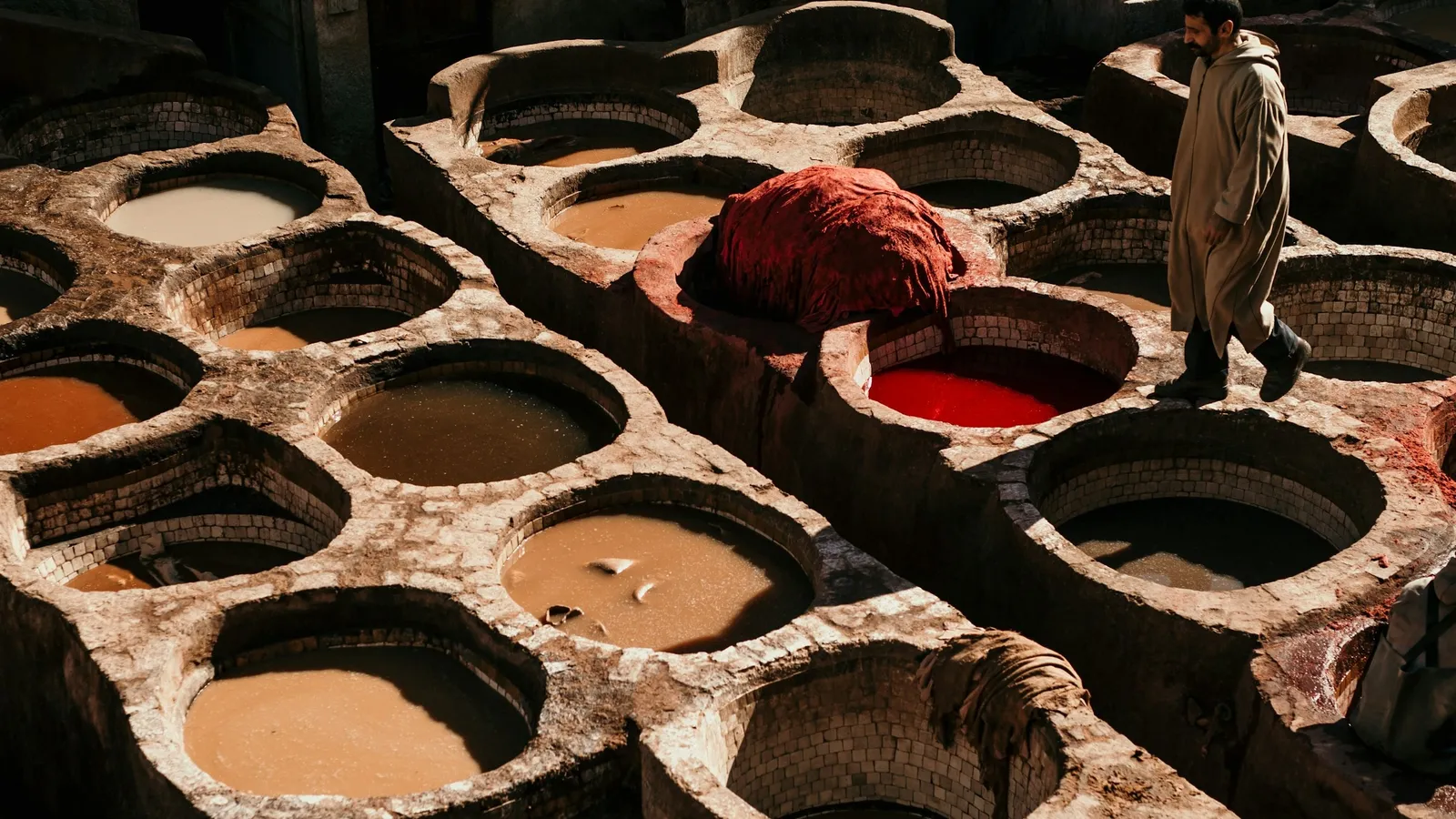
Raw skin is mostly collagen, a fibrous protein. Left alone, it rots. Tanning changes it into a material that lasts for decades. CLRI's statement of objectives quotes its first director, B. M. Das, describing research into "the conversion of putrescible raw hides and skins into imputrescible and permanent leather". In plain words: chemistry that stops a protein from decaying while keeping it strong and flexible.
That gives two questions a leather chemist has to answer. What is in the tanning material? And what happens to the collagen?
What did his own research look at?
Nayudamma's published papers sit on both sides of that problem.
Tanning materials. Vegetable tanning uses tannins, plant compounds that bind to collagen. In Studies on the tannins of babul, Acacia arabica, bark (1964), Bhanu, Rajadurai and Nayudamma isolated compounds including gallic acid, (+)-catechin and (-)-epicatechin from babul bark, a common Indian tanning material, and reported two of them in nature for the first time.
The protein itself. In Strength of collagen fibres obtained from different sources (1970), his group tested collagen fibres from mammals, birds, reptiles and other sources under identical conditions. They found wide variation in breaking strength, and argued it was probably due to the non-collagen material around the protein rather than its amino acid make-up. An earlier paper, Mechanical properties of skins, hides and constituent fibres (1967), measured how hides of sheep, goat, cow and buffalo differ from one part of the animal to another.
Notice the pattern. Each study takes something a tanner handles every day, such as bark or hide, and asks a precise, measurable question about it.
How did he connect a laboratory to an industry?
The CLRI profile is frank that, when he took over, the institute was equipped to help the leather industry but tanners were "politely staying away from it". It describes how he changed that:
He organised the first leather fair on the CLRI campus in 1964, jointly with industry, an event CLRI's own milestones page also records.
He started an annual Tanners' Get-together, and in the early years the institute's team visited leather centres to invite tanners personally.
Scientists could visit a tannery, offer help and tell the director afterwards, without paperwork first.
He invited firms to send executives to CLRI and sent his scientists to work in tanneries, so each side learned how the other worked.
The profile sums up the result in one line: "He made CLRI to be accepted by tanners as OUR CLRI and its Director as OUR NAYUDAMMA." He also wrote about this problem for a wider audience, in a 1967 essay in Minerva titled Promoting the industrial application of research in an underdeveloped country.
How did his life end?
Nayudamma died on 23 June 1985. The Canadian commission's report records that he was killed in the bombing of Air India Flight 182 while returning to India from a governors' meeting of the International Development Research Centre in Canada. The report describes his credo as the belief "that science existed to better the lot of people". CLRI keeps his name alive through its Nayudamma Memorial Lectures.
What can a student take from his way of working?
You do not need a tannery to use his habits.
Ask what a thing is made of. Pick something ordinary, such as tea, turmeric or a leather belt, and look up its main compounds. Our post on Asima Chatterjee's work on medicinal plants shows the same habit with Indian plants.
Measure under identical conditions. When you compare two things in a school practical, change one factor only, as his collagen study did.
Take your work to the people who use it. Explain one idea from your chemistry chapter to someone outside school and note the questions they ask. Their questions show you what you have not understood yet.
Connect topics. Collagen links biology (proteins), chemistry (bonding with tannins) and physics (tensile strength). Try to name all three when you study it.
If proteins and polymers feel abstract, the Fermi Concept Library covers every concept in physics, chemistry, biology, mathematics and computing, so you can look up collagen and protein structure in one place before going back to the papers.
This week, choose one material in your home and write three questions about its chemistry that you could test or look up.


