

On this page
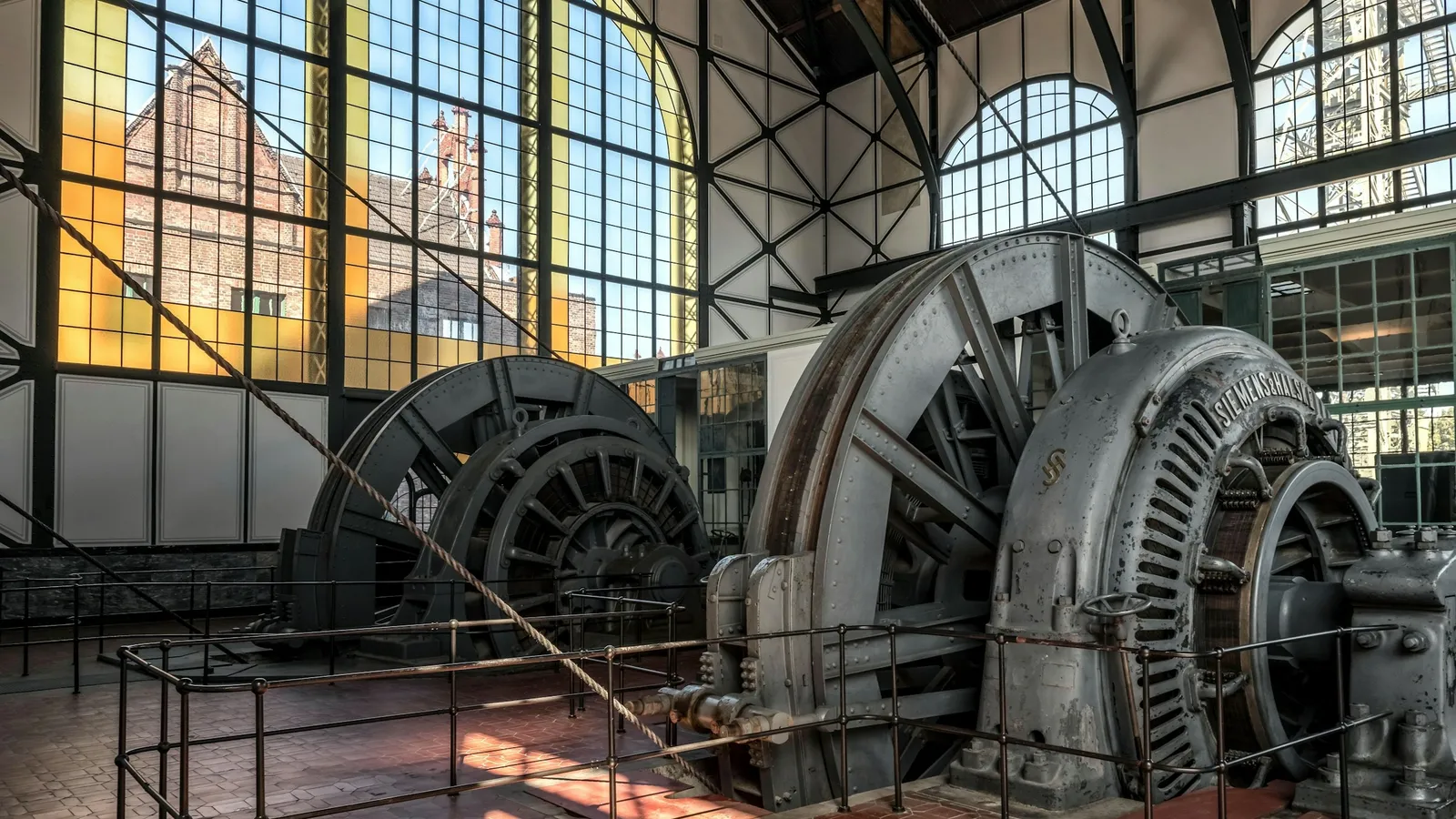
Look inside a large generator and you find electromagnets, not permanent magnets. NCERT's Class 12 chapter on electromagnetic induction notes that in most generators the coils are held still and electromagnets are rotated. The idea that a generator can power its own electromagnets, and so magnetise itself, is what Werner von Siemens worked out in 1866. This post explains what he found, how the feedback works, a worked example using the NCERT generator formula, and what you can learn from how he worked.
Who was Werner von Siemens?
Siemens (1816-1892) joined the Prussian artillery at 17 to get the engineering training his father could not pay for, according to Encyclopaedia Britannica. He built a pointer telegraph and in 1847 co-founded the firm Siemens & Halske, which went on to lay telegraph lines and cables across continents. He was ennobled in 1888, which is where the "von" comes from.
What problem did the dynamo solve?
Early generators used steel permanent magnets. The Siemens history page on the dynamo says their output was barely enough for telegraphs. Britannica calls the steel magnet inefficient, and his brother William later pointed out that steel magnets lose their magnetism in use.
Werner's idea was to replace them with electromagnets and let the machine power its own magnets. He already had the right rotating coil: the double-T armature he had designed for telegraphs, which the Siemens page says was mechanically strong enough to turn at high speed. The Siemens history page quotes a letter to William: "The effects should turn out to be enormous."
How does a self-excited dynamo start itself?
The clearest description is the paper William Siemens read to the Royal Society in London on 14 February 1867, On the conversion of dynamical into electrical force without the aid of permanent magnetism. He wrote that "an experiment, however, has been lately suggested to me by my brother, Dr. Werner Siemens of Berlin, which proves that permanent magnetism is not requisite in order to convert mechanical into electrical force".
The machine had soft-iron electromagnets wired in the same circuit as the rotating coil. The paper explains the steps:
Any small magnetism in the iron, even what is left over from last time, makes a small current when the coil turns.
That current flows through the electromagnet coils and makes the field a little stronger.
A stronger field gives a bigger current, which gives a stronger field again. The paper says a starting battery is "only necessary for a moment of time", and that leftover magnetism alone was found to be enough.
The machine also gets harder to turn. The paper reports that the driving belt began to slip, or the wires grew hot enough to set their silk insulation alight.
That last point is energy conservation at work. The electrical energy comes from the mechanical work you do against the growing magnetic force.
Printed directly after it in the Proceedings is a paper by Charles Wheatstone, received on 14 February 1867, On the augmentation of the power of a magnet by the reaction thereon of currents induced by the magnet itself. He showed that an electromagnet with "the slightest polarity" could build itself up the same way. Two inventors reached the same idea at nearly the same time.
Worked example: how big is the voltage?
NCERT's Class 12 chapter on electromagnetic induction gives the emf of a coil of N turns and area A spinning at angular speed ω in a field B as ε = NBAω sin ωt, with a peak value ε0 = NBAω. The coil size and field values below are sample numbers.
Angular speed: NCERT notes that the frequency of rotation in India is 50 Hz, so ω = 2π x 50 ≈ 314.2 rad/s.
Strong field (sample): N = 100, B = 0.50 T, A = 0.020 m². ε0 = 100 x 0.50 x 0.020 x 314.2 ≈ 314 V.
Only leftover magnetism (sample): B = 0.005 T, a hundred times weaker. ε0 = 100 x 0.005 x 0.020 x 314.2 ≈ 3.1 V.
The 3.1 V is small, but in a self-excited machine it drives a current through the field coils, which raises B, which raises ε0. The machine climbs from the 3 V level towards the 300 V level on its own.
Common mistakes to avoid:
Using f instead of ω. Putting 50 in place of 314.2 makes your answer 2π times too small.
Forgetting N. Each turn adds its own emf, so the peak emf scales with the number of turns.
Thinking the dynamo makes energy. It converts mechanical work into electrical energy. More current means a harder push on the crank.
For more practice, see our guide to transformers and AC generators, and for the history of the electromagnet itself, our post on William Sturgeon.
Why did it matter?
Britannica describes the 1866 self-excited generator as a dynamo set in motion by "the residual magnetism of its powerful electromagnet". The Siemens history page quotes Werner again: "Provided the design is correct, electricity will become available very inexpensively." The same page says the dynamo paved the way for electric street lighting, electric trams and the industrial use of electric machines. NCERT adds that modern generators can produce power as high as 500 MW.
What can a student take from how Siemens worked?
Look for the weak link. The problem was not the coil but the magnet, so he removed the magnet.
Reuse your own tools. The double-T armature from his telegraph work became the heart of the dynamo.
Trust small effects. A trace of leftover magnetism was enough to start the whole process.
Expect others to be close. Wheatstone's paper in the same session is a reminder to write up and share what you find.
If you can follow the feedback loop in words but not in a numerical, the Fermi Problem Library has worked problems with a step-by-step solver that explains the reasoning rather than printing an answer.
Next step: redo the worked example for a coil of 200 turns in a 0.25 T field, and check that the peak emf is again about 314 V.


