

On this page
Vannevar Bush was an American engineer who bridged the gap between mechanical calculation and the conceptual foundations of the digital age. He understood early on that as scientific knowledge expanded rapidly, human memory and calculation speed would become the primary bottlenecks to further discovery. His two most famous ideas—one a physical machine and the other a conceptual framework—addressed these distinct problems, fundamentally changing how we process and store information.
What was the 1931 Differential Analyzer?
Before the advent of digital computers, solving complex mathematical equations required human operators working continuously for weeks. Bush tackled this mathematical complexity through physical machinery rather than human labor.
Between 1928 and 1931, Bush and Harold Hazen constructed the Differential Analyzer at the Massachusetts Institute of Technology (source). It was a room-sized mechanical analog computer with some digital components, capable of solving complex differential equations. The machine used six wheel-and-disk integrators, chaining mechanical units together with interconnecting shafts to trace the curves of equations.
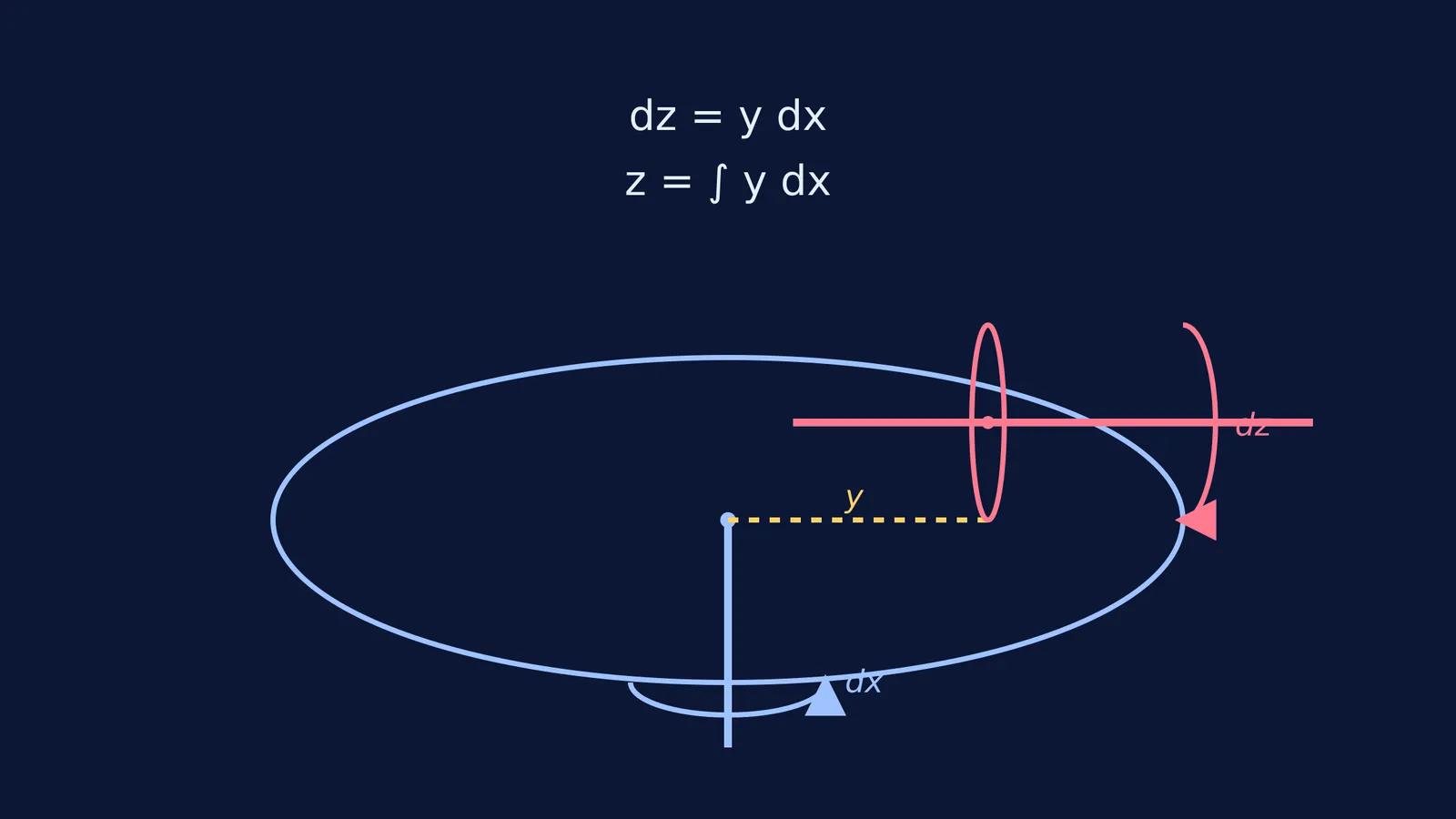
Its core mechanism—the wheel-and-disk integrator—relied on a simple physical principle. A vertical wheel rested on a rotating horizontal disk. As the disk turned to represent one variable, the wheel turned at a speed proportional to its distance from the disk's centre, continuously calculating the integral. This physical representation allowed engineers to model the dynamic behaviour of power grids, acoustics, and ballistics without doing the arithmetic by hand.
The Analyzer was a practical success, mechanising the reasoning behind complex mathematics. For students today tackling homogeneous differential equations or calculus, tracing the logic of a solution remains the hardest part. When you are stuck on where your method went wrong, the Fermi Problem Library provides worked problems with a step-by-step solver that explains the reasoning rather than printing an answer.
Why did he propose the Memex?
During World War II, Bush served as the director of the Office of Scientific Research and Development, coordinating the work of roughly 6,000 American scientists (source). By the end of the war, he saw a new problem emerging on the horizon: information overload. The volume of research was growing so fast that scientists were becoming bogged down by specialization, unable to keep up with the findings in their own fields.
In his essay "As We May Think", published in the July 1945 issue of *The Atlantic Monthly* (source), he addressed this problem by proposing a hypothetical electromechanical device called the Memex. The Memex (a portmanteau of "memory" and "index") was imagined as a desk with translucent slanted screens where an individual could store all their books, records, and communications on microfilm. It was designed to serve as an enlarged supplement to human memory, storing information in a way that could be consulted with speed and flexibility.
What are associative trails?
The core feature of the Memex was associative indexing. Bush argued that traditional library systems were artificial because they forced information into rigid, hierarchical classifications. The human mind, he observed, snaps from one thought to the next through an intricate web of associations. The Memex was designed to mimic this biological reality.
Instead of filing things alphabetically, a user could create permanent links between different pieces of information, which Bush called associative trails. A user could pull up two related documents side-by-side on the screens, tap a button, and permanently tie them together. If they retrieved one document years later, the connected document would be immediately available.
This vision directly inspired later computing pioneers, including Douglas Engelbart and the computer mouse, and served as the conceptual blueprint for the World Wide Web. Bush understood that the brain learns best through these active connections. Modern digital learning relies on this principle. For example, the Fermi Concept Library connects every concept in physics, chemistry, biology, mathematics and computing, each with its own lesson and its place in the map.
How can students use associative trails today?
When you study physics or mathematics, the syllabus often feels like a series of isolated chapters. But real mastery happens when you see the underlying connections—like realising that the mathematics of a swinging pendulum is structurally identical to an oscillating electrical circuit. This is where associative learning changes exam preparation.
You do not need a microfilm desk to apply Bush’s ideas. Students can build their own associative trails using the Zettelkasten ("slip-box") method, developed by sociologist Niklas Luhmann, which connects individual ideas using associative links (source). Instead of passively storing notes by date, you can build active knowledge networks.
Take fleeting notes: During a lecture, quickly jot down the main concepts.
Write permanent notes: Later, rewrite one idea per index card (or digital page) in your own words.
Build the trail: Explicitly link the new note to at least two existing notes. Ask yourself: "How does this relate to what I learned last week?"
By deliberately linking what you learn across subjects, you create a personal web of knowledge that mirrors how the human brain actually works.


