

On this page
Neuroscientist Shubha Tole and her laboratory at the Tata Institute of Fundamental Research (TIFR) in Mumbai have spent decades mapping how a single sheet of embryonic cells folds and differentiates into the complex structures of the mammalian brain. At the centre of this transformation is a gene known as *Lhx2*.
*Lhx2* is a transcription factor, which means it codes for a protein that binds to DNA and turns other genes on or off. By acting as a master switch, this single gene dictates the fate of thousands of cells as the brain builds its most advanced regions.
What is the role of Lhx2 in brain development?
To build a brain, cells need precise timing and clear instructions. If cells in the early embryo misread their signals, the entire architecture of the brain changes.
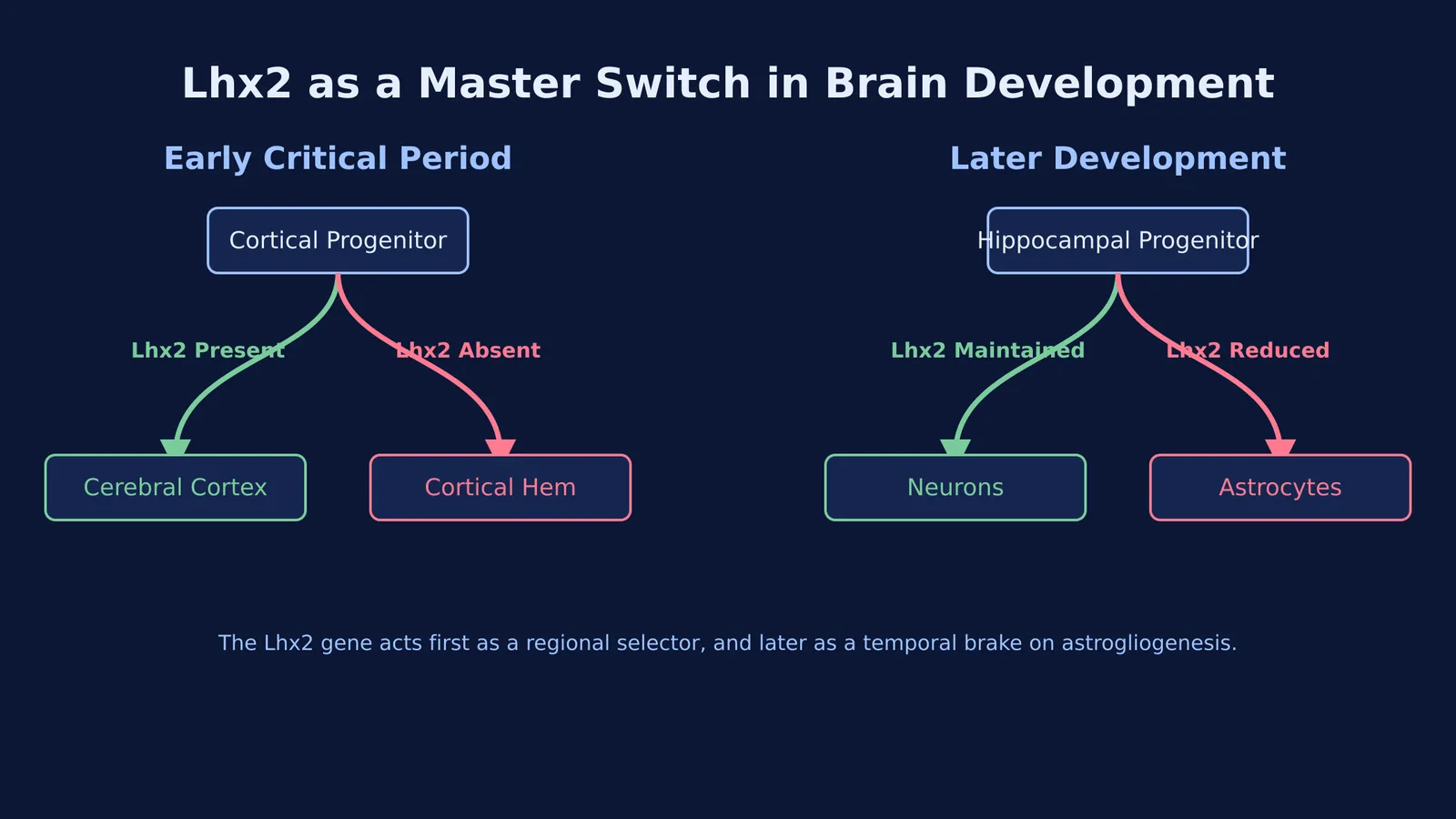
Tole's group discovered that *Lhx2* acts as a "selector gene" that chooses what the tissue will become. During an early critical period in mice, *Lhx2* is essential to specify the identity of the cerebral cortex (Science). The cerebral cortex is the folded outer layer of the brain responsible for higher thought, memory, and voluntary movement.
If the *Lhx2* gene is absent, the tissue that should have become the medial cortex transforms into an alternative structure known as the "cortical hem". The hem normally acts as a small signalling centre that instructs neighbouring cells to form the hippocampus. Without *Lhx2*, ectopic hem cells expand and organize ectopic hippocampal fields, and the neocortex fails to form.
How does the brain switch from neurons to astrocytes?
Once the identity of the cerebral cortex is locked in, the brain faces a new challenge. It must produce a massive number of neurons first, and then eventually switch to producing supportive glial cells called astrocytes.
In the developing hippocampus, *Lhx2* acts as a brake on astrogliogenesis to ensure enough neurons are made first. During the neurogenic period, disrupting *Lhx2* function causes premature production of astrocytes (PNAS). By maintaining high levels of this transcription factor, the brain keeps its progenitor cells in a neuron-producing state. As *Lhx2* levels naturally drop, the brake is released, triggering the switch to astrocyte production.
This regulatory role lasts long after the initial brain structures are built. A 2025 study from her lab found that this brake remains active even after birth. Loss of *Lhx2* at birth increased astrocyte proliferation in the upper layers of the cortex in the first postnatal week (Development).
How can you apply the "loss of function" framework?
Tole's research is a masterclass in the "loss of function" experimental logic. Instead of just observing what a gene does, biologists remove it and carefully map what breaks. For students preparing for biology exams, adopting this framework makes complex genetics much easier to trace.
Here is a simple checklist for mapping out an experimental genetics problem:
Identify the wild-type: What happens when the gene is present? (e.g. *Lhx2* builds the cortex).
Note the mutant phenotype: What structure or function takes over when the gene is missing? (e.g. The tissue defaults to a cortical hem).
Check the timing: Does the effect change if you remove the gene later in development?
Determine the function: Is the gene acting as a "brake" (suppressor) or an "accelerator" (promoter)?
This exact logic applies across your syllabus. You use the same reasoning when tracing how a missing enzyme leads to Mendelian disorders like sickle-cell anaemia, thalassemia and PKU, or when deciding whether to use a test cross or a back cross to identify an unknown genotype.
Bringing experimental logic to your studies
Biology is driven by elegant, logical rules rather than rote facts. When you understand the mechanisms behind the facts, exam questions become puzzles to solve rather than sentences to remember.
If you have concept gaps around gene regulation and transcription factors, the Fermi Concept Library contains every concept in biology, each with its own lesson and its place in the map. When you are working through complex experimental pathways, Fermi's AI tutor teaches rather than answers; it holds a line of reasoning across a whole session, notices where you are stuck, and decides whether to explain, ask, or show.


