

On this page
In 1975, Shashikant Phadnis was a young Indian chemist at Queen Elizabeth College in London, working under his adviser Leslie Hough. That is how Burkhard Bilger tells it in his 2006 New Yorker report, The Search for Sweet, reproduced here. The lab was adding sulfuryl chloride, a highly toxic chemical, to sugar to make chlorinated sugars. On a late-summer day, Phadnis was told to test one of the powders. He thought he had been told to taste it, so he put a little on his tongue from a small spatula and found it intensely sweet.
According to the same report, Phadnis later recalled that when he told Hough, "he asked if I was crazy". Before long, though, Hough was so pleased with the substance that he nicknamed it "Serendipitose" and tried some in his coffee.
What exactly did Shashikant Phadnis discover?
He found that a chlorinated sucrose could be far sweeter than sugar itself. Bilger reports that over the next year Hough and Phadnis worked with the British sugar company Tate & Lyle to make more than a hundred chlorinated sugars, finally settling on one with three chlorine atoms (New Yorker report, reproduced). The two published a one-page paper in Nature, "Enhancement in the sweetness of sucrose", on 28 October 1976 (Hough and Phadnis, Nature 263, 800).
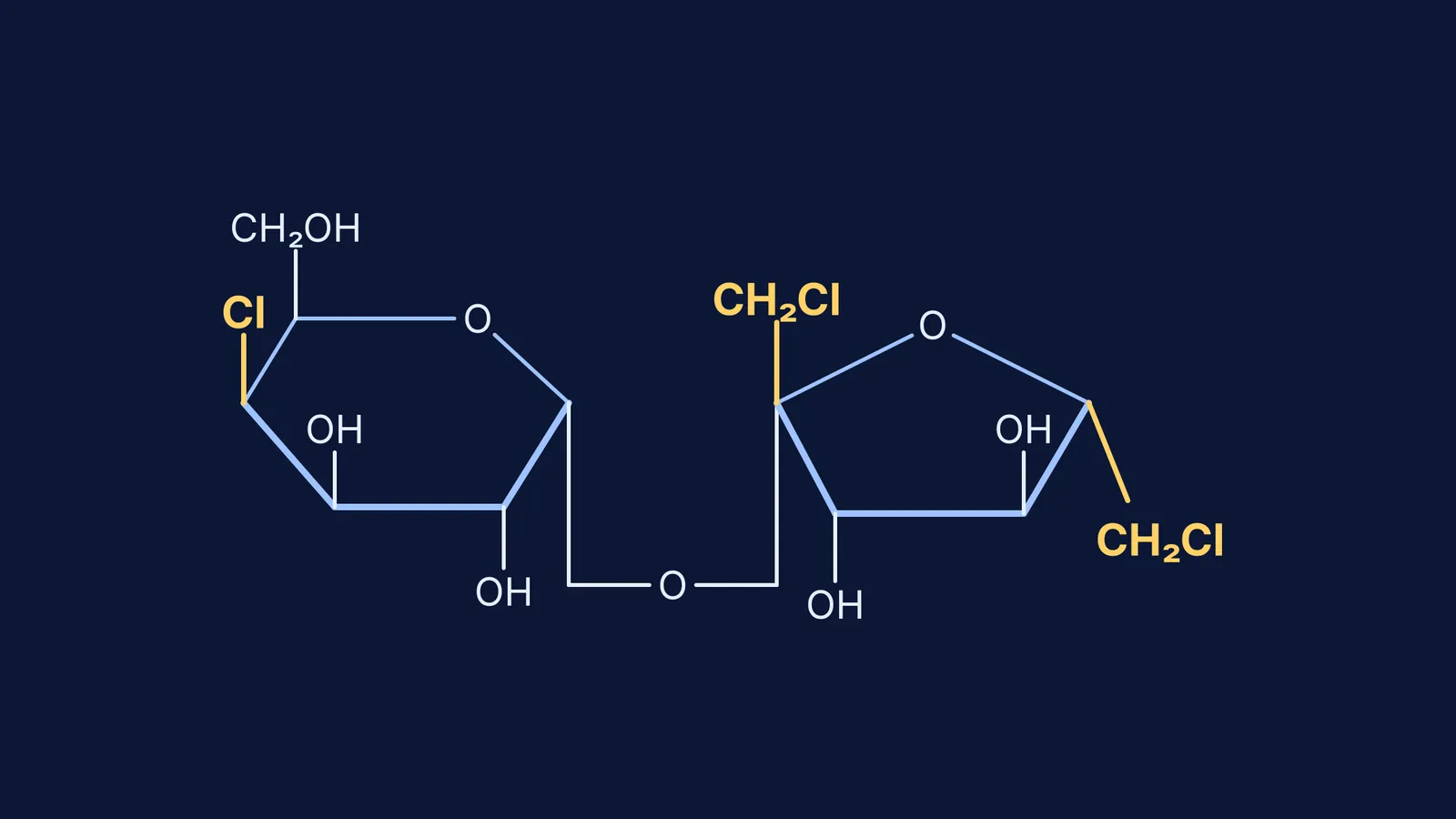
The compound they settled on is sucralose. Its chemical name is 4,1′,6′-trichloro-4,1′,6′-trideoxygalactosucrose, and a 1986 New Scientist article by John Emsley, written with Hough's help, called it 650 times sweeter than sugar (New Scientist, 1986). The figure most people quote comes from the US Food and Drug Administration: sucralose is about 600 times sweeter than table sugar (FDA).
Treat the "test or taste" story as an anecdote. Wikipedia calls it an anecdotal account and dates the discovery to 1975 (Wikipedia: Sucralose). Emsley's 1986 version is slightly different: Phadnis misheard a telephone call asking for samples to be sent for testing (New Scientist, 1986).
Why does adding chlorine make a sugar sweeter?
Chemists explain sweetness through how a molecule binds to a protein in the sweet receptor, not through whether it is a sugar. Emsley's New Scientist article describes the model. Robert Shallenberger and Terry Acree proposed that sweet molecules have two hydrogen-bonding sites, labelled AH and B, about 0.3 nanometres apart. Lemont Kier later added a water-repelling site called X, and the three together form a "triangle of sweetness" (New Scientist, 1986). Emsley does not use the triangle to explain sucralose itself, so treat it as a way to think about sweetness, not a full answer.
If the two linked rings in the diagram look unfamiliar, start with how Walter Haworth drew sugars as rings, then why sucrose counts as a non-reducing sugar. If carbohydrates still feel slippery, the Fermi Concept Library has its own lesson for every concept in chemistry and shows where each one fits in the map.
Worked example: from sucrose to sucralose on paper
Class 11 mole concepts are enough to check this.
Sucrose is C12H22O11, with a molar mass of 342.30 g/mol (PubChem: sucrose).
Each swap removes one OH group (one O and one H) and adds one Cl.
Three swaps give C12H(22−3)Cl3O(11−3), which is C12H19Cl3O8.
Molar mass: 342.30 − 3 × 17.01 + 3 × 35.45 = 397.6 g/mol.
Check: PubChem lists sucralose as C12H19Cl3O8 with a molar mass of 397.6 g/mol (PubChem: sucralose).
Sweetness: if sucralose is about 600 times as sweet as sugar (FDA), you get the sweetness of 6 g of sugar from 6 ÷ 600 = 0.01 g, or 10 mg.
For more practice with sums like steps 3 and 4, the Fermi Problem Library has worked problems with a step-by-step solver that explains the reasoning rather than printing an answer.
What can students learn from the test-or-taste slip?
The slip was a mistake; the follow-up was careful science. Here is a checklist you can use in any lab:
Never taste or directly sniff anything in a lab, even something made from sugar. The same lab was using sulfuryl chloride, a highly toxic chemical.
If an instruction could mean two things, repeat it back. A simple script: "Just to check, you want me to test it, not taste it?"
Report what happened at once. Phadnis told Hough, and the result went on from there.
Write the surprise down with the date, the sample and what you saw. A surprise is data.
Follow it up carefully. The team made more than a hundred related compounds before settling on one.
How did sucralose get from the lab into food?
Canada approved sucralose first, in 1991, and the European Union approved it in 2004 (Wikipedia: Sucralose). The FDA approved it for 15 food categories in 1998 and as a general-purpose sweetener in 1999 (FDA).
In 2023 the World Health Organization advised against using non-sugar sweeteners, including sucralose, to control body weight (WHO, 15 May 2023). If you have questions about sweeteners in your own diet, ask a doctor or a registered dietitian.
Phadnis misheard one word. What made the slip count was that he reported what he found.


