

On this page
Nearly every school chemistry lab has a Bunsen burner, and most students never ask why it is shaped the way it is. Robert Bunsen designed it to solve a real problem, and it helped him find a new element hidden in spa water. This post covers his life, the burner, the hunt for caesium, a worked stoichiometry example on what he recovered, and what a student can take from his way of working.
Who was Robert Bunsen?
The Science History Institute's biography of Bunsen and Kirchhoff gives his dates as 1811 to 1899 and says he earned his doctorate at Göttingen in 1830. Early in his career, work on arsenic compounds cost him his right eye: Henry Roscoe, his former student, wrote in his Bunsen Memorial Lecture that an explosion of cacodyl cyanide left him blind in that eye and "nearly poisoned". Bunsen moved to Heidelberg in 1852 and spent the rest of his career there. Students who worked with him included Lothar Meyer and Dmitri Mendeleev, as well as Ludwig Mond and Hans Goldschmidt, who later developed thermite welding.
Why did Bunsen need a new burner?
Roscoe, whose lecture is readable in a digitised copy of the Chemical Society's memorial lectures, tells the story. Bunsen's new laboratory in Heidelberg opened in the summer of 1855, shortly after the town was first lit with gas. Roscoe brought back from London the burner then used in English laboratories, with a wire-gauze top. Bunsen disliked it: the flame flickered, was too large, and was so diluted with air that it was not very hot.
He wanted a gas and air mixture that would burn at the top of a tube without any gauze, giving "a steady, small, and hot, non-luminous flame" that would not strike back down the tube when the gas was turned up or down. After many failed trials he succeeded. Roscoe adds that Bunsen never patented the burner or his battery, though either could have made him rich.
Why does a non-luminous flame matter?
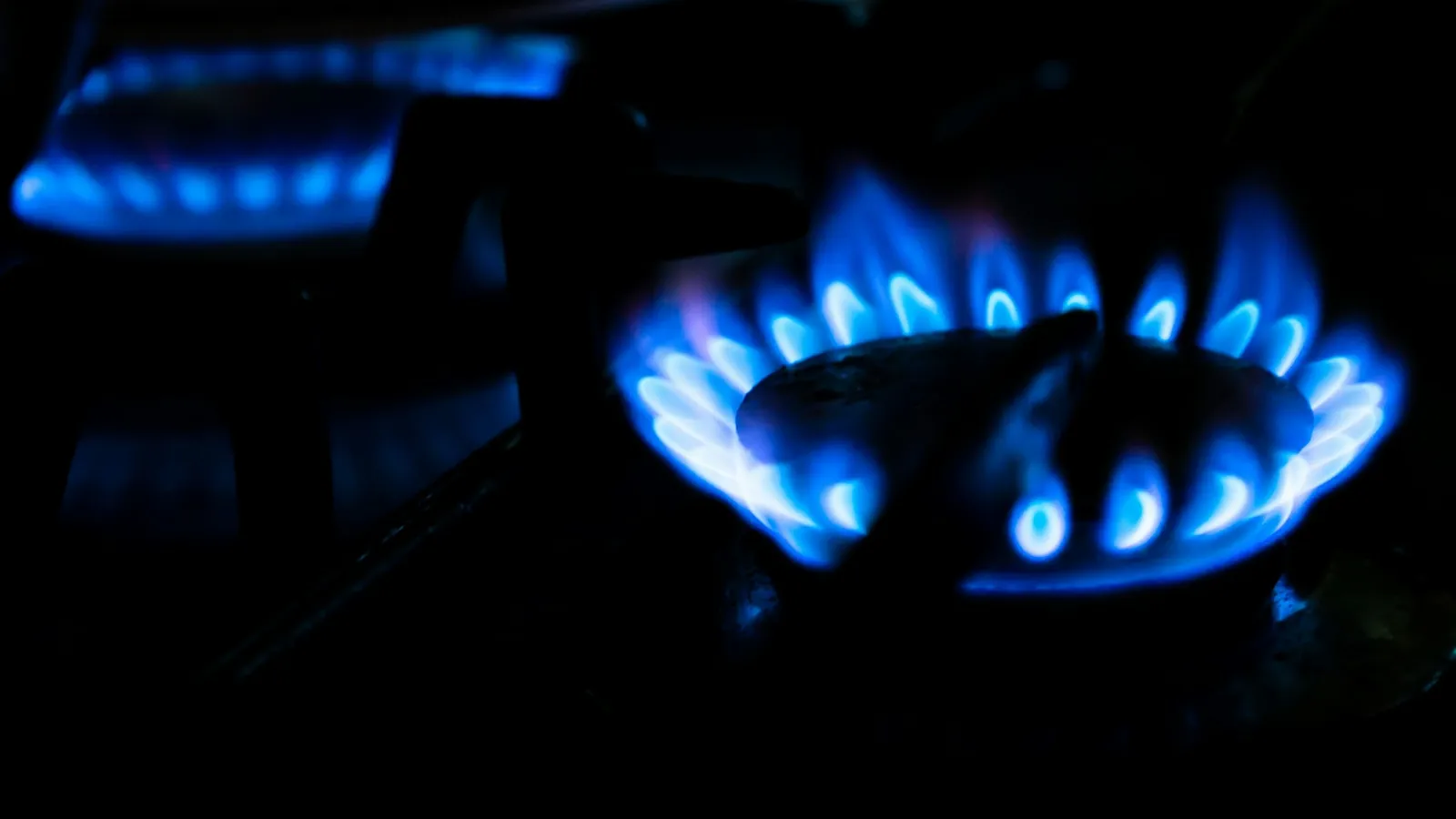
The Science History Institute notes that Bunsen created the burner for flame tests: its non-luminous flame did not interfere with the coloured flame given off by the sample. With a clean flame, the faint colour of a trace element can be seen. Pass that light through a prism, as Bunsen and Kirchhoff did, and each element shows its own lines. Our post on Gustav Kirchhoff and spectroscopy covers the physics side of that partnership.
How did they find caesium?
The Royal Society of Chemistry says Kirchhoff and Bunsen discovered caesium in 1860 by examining mineral water from Dürkheim and seeing spectral lines they did not recognise. Roscoe quotes Bunsen's letters. On 10 April 1860 Bunsen told him privately about the new metal; the Berlin Academy heard on 10 May. On 6 November 1860 Bunsen wrote that he had 50 grams of the nearly pure chloroplatinate, obtained "from no less than 40 tons of the mineral water". He named the metal from the Latin for blue, after its spectral lines. Roscoe says Bunsen then prepared and analysed the main compounds from 17 grams of caesium chloride. The NCERT Class 11 chapter on atomic structure names him among the first to identify elements by line spectra.
Worked example: how much caesium was in that water?
Molar masses: Cs = 132.91, Pt = 195.08, Cl = 35.45 g/mol.
Chloroplatinate. Cs₂PtCl₆ has M = 2(132.91) + 195.08 + 6(35.45) = 673.6 g/mol.
Moles in 50 g. 50 / 673.6 = 0.0742 mol.
Ceiling for caesium chloride. Each formula unit holds 2 Cs, so at most 2 × 0.0742 = 0.148 mol CsCl. With M(CsCl) = 168.36 g/mol, that is 0.148 × 168.36 = 25.0 g. The 17 g Bunsen worked with is about two-thirds of that ceiling.
Caesium in 17 g of CsCl. Mass fraction = 132.91 / 168.36 = 0.789, so 17 × 0.789 = 13.4 g of caesium.
Concentration in the water. Taking a ton as roughly 1,000 kg (an approximation; a British ton is about 1,016 kg), 40 tons is about 40,000 kg. 13.4 g = 13,400 mg, so 13,400 / 40,000 ≈ 0.34 mg of caesium per kilogram of water.
A third of a milligram per kilogram is far too little to notice by ordinary chemical tests, which is why it took a clean flame and a prism to find it.
What mistakes do students make in problems like this?
Using Cl₂ instead of Cl when adding up molar masses.
Forgetting the mole ratio between the compound weighed and the compound wanted.
Unit slips. mg per kg is parts per million by mass; keep grams and kilograms apart.
Mole concept and stoichiometry are Unit 1 of chemistry in the JEE (Main) 2026 syllabus; check your year's syllabus. Our post on limiting reagents gives more practice. If you want to see where a step went wrong, the Fermi Problem Library has worked problems with a step-by-step solver that explains the reasoning rather than printing an answer.
What can a student take from how he worked?
Fix your tools first. The burner came before the discoveries it made possible.
Work at scale when the signal is faint. Forty tons of water for 17 grams of salt.
Share what you build. He left his burner unpatented, and it spread to laboratories everywhere.
Next step: redo step 5 using 1,016 kg per ton and see how much the concentration changes.


