On this page
A patent is a deal: you tell the world how your invention works, and in return you get the right to stop others using it for a set time. The deal only holds if the invention is new. In the 1990s an Indian scientist read about a US patent on something many Indian families already knew, turmeric for wounds, and set out to prove it was not new. This post covers who Raghunath Mashelkar is, how the turmeric case was won, and what it changed.
Who is R. A. Mashelkar?
The Royal Society, which elected him a Fellow in 1998, describes Mashelkar as a chemical engineer known for work on polymer engineering: modelling reactors that make polymers such as PET, diffusion in polymers, swelling polymers and the flow of non-Newtonian fluids. The Council of Scientific and Industrial Research (CSIR) lists him as its Director General from 1 July 1995 to 31 December 2006.
If polymers are new to you, our post on Hermann Staudinger explains what they are.
What did the turmeric patent claim?
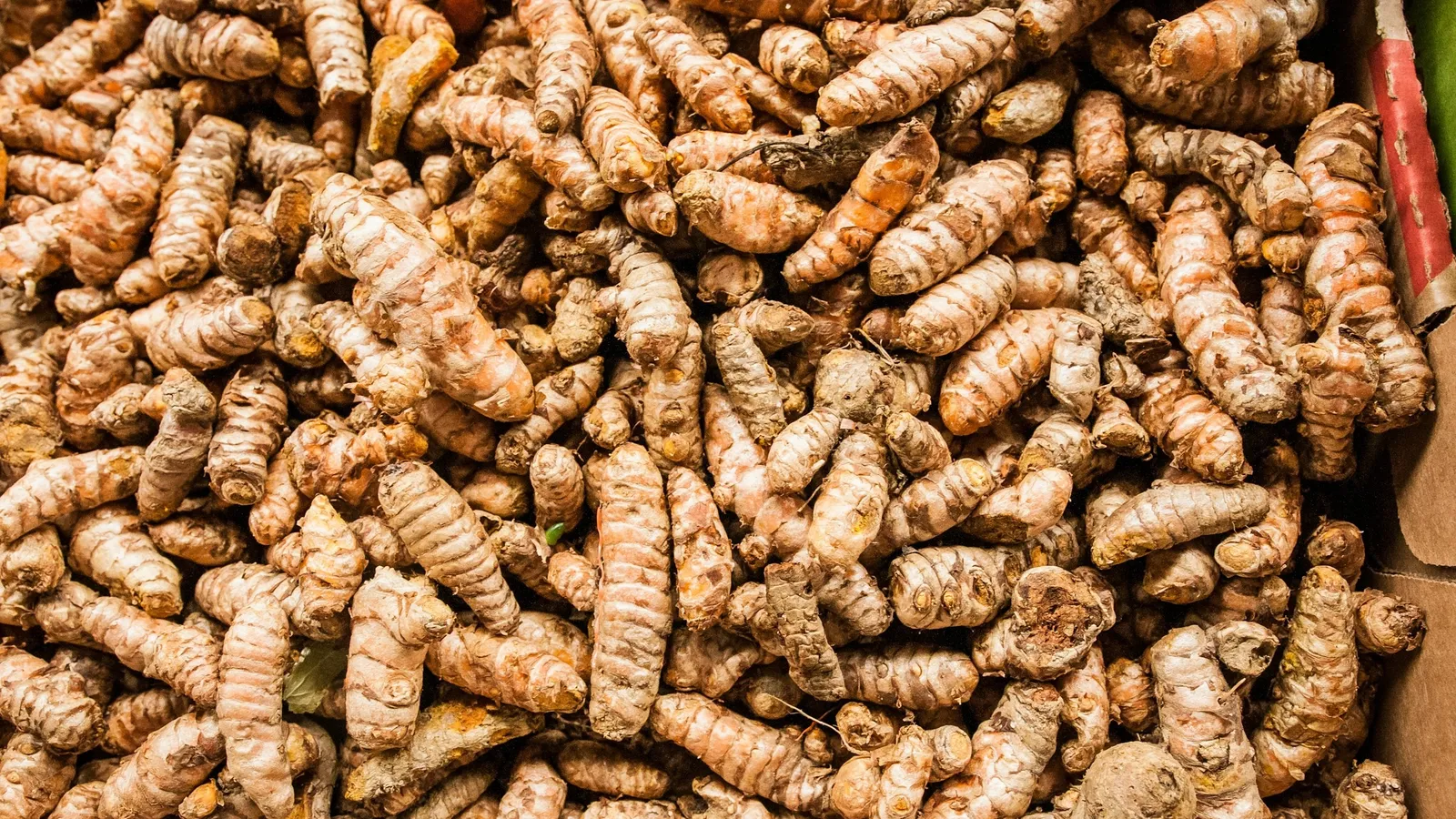
As NPR's Planet Money tells it, Mashelkar came across a newspaper story about the patent in his office in New Delhi and was shocked, because using turmeric to heal wounds was a well-known traditional remedy and patents are meant for new inventions.
The patent record for US 5,401,504, "Use of turmeric in wound healing," shows it was filed on 28 December 1993 and granted on 28 March 1995 to the University of Mississippi Medical Center, with inventors Suman Kumar Das and Hari Har Parshad Cohly. Its first claim covered "a method of promoting healing of a wound in a patient, which consists essentially of administering a wound-healing agent consisting of an effective amount of turmeric powder to said patient." Other claims covered oral and topical use, surgical wounds and ulcers.
How did CSIR get it revoked?
Mashelkar described the case in a 2001 article in Current Science. A US patent must be new, non-obvious and useful. If earlier published material already describes the claim, the patent is invalid. CSIR found 32 references, some more than a hundred years old and in Sanskrit, Urdu and Hindi, showing that turmeric was used to heal wounds in India long before the filing.
The timeline he gives:
28 October 1996. CSIR files a request for re-examination at the US Patent and Trademark Office.
28 March 1997. The first office action rejects all six claims as anticipated by CSIR's references.
Response. The university drops the case and transfers the rights to the inventors, who argue that powder and paste behave differently and narrow the claim to non-healing surgical wounds.
20 November 1997. The examiner rejects all claims again, as anticipated and obvious.
21 April 1998. The re-examination certificate is issued. The patent's legal events record that the re-examination cancelled all claims.
He called it a landmark: the first time a patent based on a developing country's traditional knowledge was challenged successfully.
Worked example: the cost of fixing a wrong patent
In the same article, Mashelkar wrote that the turmeric case cost CSIR about Rs 5 lakh. The Traditional Knowledge Digital Library says APEDA spent about Rs 7 crore in legal fees alone to get a few claims of the Basmati rice patent revoked.
Convert to the same unit. 1 crore = 100 lakh, so Rs 7 crore = 700 lakh.
Compare. 700 / 5 = 140. The Basmati fight cost about 140 times as much.
Interpret. Re-examination on published evidence was cheap. Wider legal battles were not. Better still is to stop a wrong patent before it is granted.
Common mistakes: comparing lakh with crore without converting, and treating the ratio as exact. Both figures are approximate, so "about 140 times" is the honest answer.
What changed after the turmeric case?
Mashelkar wrote that the case opened the path to the Traditional Knowledge Digital Library. The TKDL page says the library has transcribed more than 4.54 lakh formulations and practices from texts on Ayurveda, Unani, Siddha, Sowa Rigpa and Yoga into five languages, and gives patent offices including the US and European offices access to it. It reports that more than 324 patent applications have been set aside, withdrawn or amended based on TKDL evidence.
India's medical traditions go back a long way; our post on Charaka covers one of their founding texts. If the chemistry of compounds in plants like turmeric interests you, the Fermi Concept Library covers every concept in physics, chemistry, biology, mathematics and computing.
What can a student take from Mashelkar's way of working?
Read the claim, not the headline. The fight turned on exactly what claim 1 said.
Evidence beats outrage. Thirty-two references did more than protests.
Fix the system, not just the case. One win led to a library that prevents many future wrong patents.
Try it now: open the patent record linked above, read claim 1, and write one sentence on why a hundred-year-old Sanskrit text could defeat it.