

On this page
Many medicines start as molecules found in plants or animals, available only in tiny amounts. Making them cheaply is a chemistry problem, and Percy Julian was one of the people who solved it, while facing racial prejudice at almost every step. This post covers his life, his two main achievements, a worked yield problem that shows why multistep synthesis is hard, and what a student can take from him.
Who was Percy Julian?
According to the Science History Institute biography, Julian lived from 1899 to 1975. He was born in Montgomery, Alabama, the son of a railway mail clerk and the grandson of enslaved people. His high school had not prepared him well, so DePauw University in Indiana admitted him as a "sub-freshman", taking school courses alongside his first-year college courses. He majored in chemistry and graduated as valedictorian in 1920.
He taught at Fisk University, then won a fellowship to Harvard for a master's degree in organic chemistry, and taught at West Virginia State College and Howard University. In 1929 he went to the University of Vienna for doctoral work on the chemistry of medicinal plants, returning two years later with his degree.
What was his first major result?
Back in the United States with his Viennese colleague Josef Pikl, Julian worked at Howard and then DePauw. There they achieved the first total synthesis of physostigmine, the active compound of the Calabar bean. The Science History Institute notes it had been used since the late 19th century to treat glaucoma, by easing the outflow of fluid from the eye and lowering the pressure that can damage the retina.
The result appeared in 1935 in the *Journal of the American Chemical Society* as "Studies in the Indole Series. V. The Complete Synthesis of Physostigmine (Eserine)", the fifth in a series of papers by Julian and Pikl on indole chemistry; an earlier one in the series made the basic ring structure of physostigmine.
How did soybeans come in?
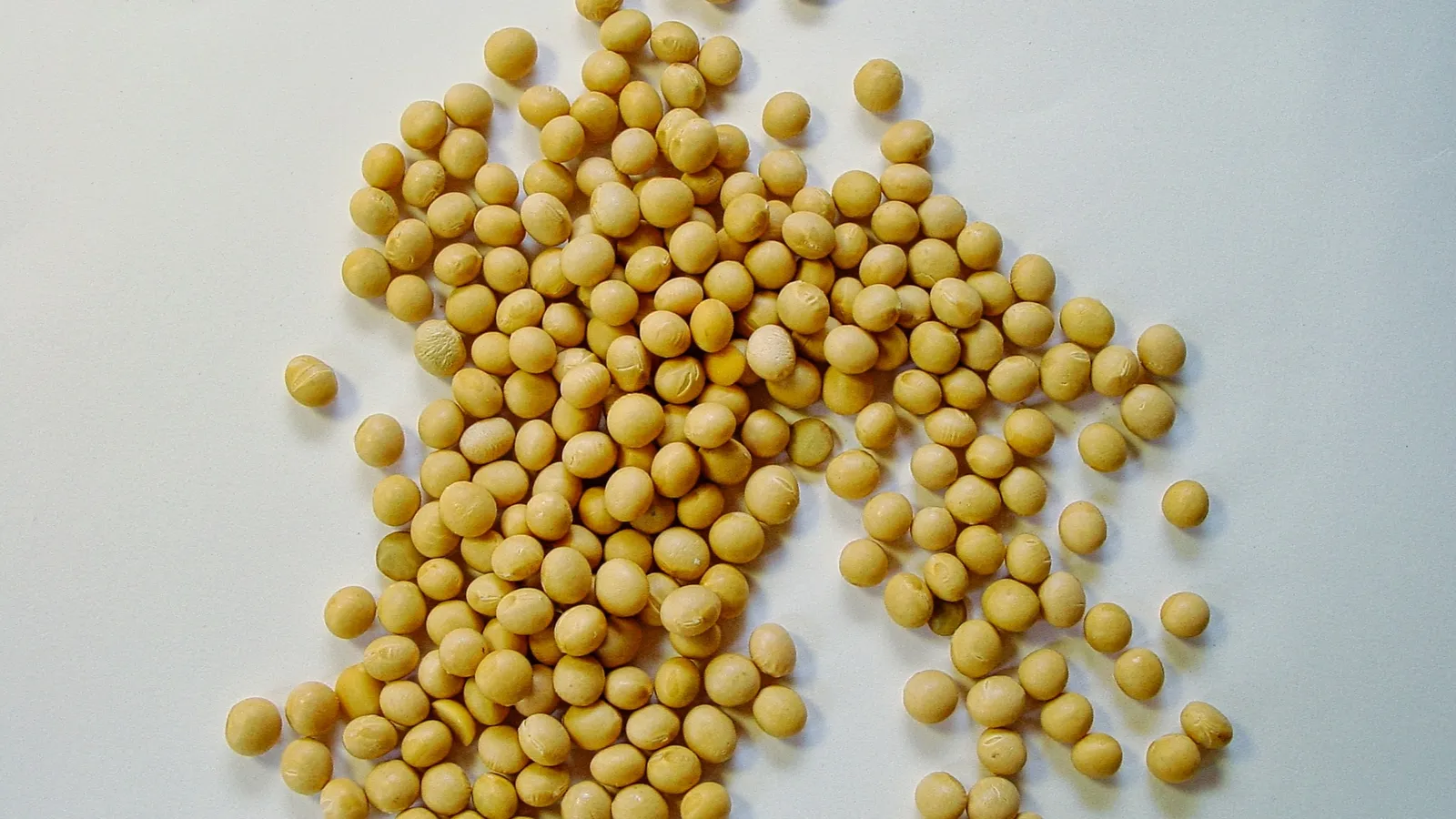
Steroids include the sex hormones and the hormones of the adrenal cortex. In the 1930s their medical promise was clear, but extracting them from animal tissue was very expensive. German chemists had found that stigmasterol, a plant steroid, could be converted into progesterone. Julian had come across stigmasterol as a by-product of his physostigmine work, and it was also present in soybeans.
In 1936 he wrote to the Glidden Company in Chicago asking for soybean oil samples, and ended up being hired as director of research in its Soya Division. Three years later, the biography says, plant workers told him that water had leaked into a tank of purified soybean oil and formed a solid white mass. He recognised it as stigmasterol, and realised he had a way to get the steroid in bulk. He then developed an industrial process to convert it to progesterone, producing five to six pounds a day.
What about cortisone?
In 1948 Mayo Clinic scientists announced the effects of cortisone on rheumatoid arthritis. In 1949, according to the Science History Institute, Julian developed a new synthesis of a related adrenal hormone called "Substance S", which differs from cortisone by one oxygen atom, and from it made both cortisone and hydrocortisone. His team's US patent 2,752,339, "Preparation of cortisone", was assigned to Glidden. In 1954 he founded Julian Laboratories. He was also active in civil rights work, helping to found the Legal Defense and Educational Fund of Chicago.
Worked example: why multistep synthesis is costly
Problem. A plant steroid is converted to a hormone in five steps, each with an 80% yield. Take stigmasterol (C₂₉H₄₈O) as the start and progesterone (C₂₁H₃₀O₂) as the product, with one molecule of product for each molecule of starting material. From 100 g of stigmasterol, find the theoretical and the expected mass of progesterone. Use C = 12.011, H = 1.008, O = 15.999.
Molar masses: stigmasterol = 29(12.011) + 48(1.008) + 15.999 = 412.70 g/mol; progesterone = 21(12.011) + 30(1.008) + 2(15.999) = 314.47 g/mol. These match PubChem's stigmasterol and progesterone entries.
Moles of stigmasterol: 100 ÷ 412.70 = 0.2423 mol.
Theoretical progesterone: 0.2423 × 314.47 = 76.2 g.
Overall yield: 0.80 × 0.80 × 0.80 × 0.80 × 0.80 = 0.80⁵ = 0.328, or 32.8%.
Expected mass: 76.2 × 0.328 ≈ 25.0 g.
This is an illustrative calculation, not Julian's actual route. It shows why a cheap, plentiful starting material changes everything: even good step yields multiply down quickly.
Common mistakes:
Adding percentage yields (5 × 80%) or averaging them. Yields multiply.
Using mass ratios instead of mole ratios. Convert to moles first.
Assuming the product mass must be smaller only because of yield. Here it is also smaller because progesterone has a lower molar mass than stigmasterol.
Where does this meet your syllabus?
Biomolecules, including a general introduction to hormones, and chemical coordination in human physiology appear in the NEET (UG) 2026 syllabus, and stoichiometry and yield are tested in every chemistry exam. Our guide to chemical coordination and hormones covers what these molecules do in the body. For another chemist who built medicines from plants, read about Asima Chatterjee.
What can a student learn from Julian?
A weak start is not a ceiling. He began college taking school courses alongside his freshman ones and graduated top of his class.
Deep knowledge lets you see luck. The soybean oil accident only helped because he could identify the solid at a glance.
Scale is its own problem. Knowing a reaction works is different from making pounds a day, which is the work that brought medicine prices down.
If multistep yield problems trip you up, the Fermi Problem Library has worked problems with a step-by-step solver that explains the reasoning, so you can see exactly where a calculation goes off track.
Try this: what overall yield do you get from eight steps at 90% each? (Answer: about 43%.)


