

On this page
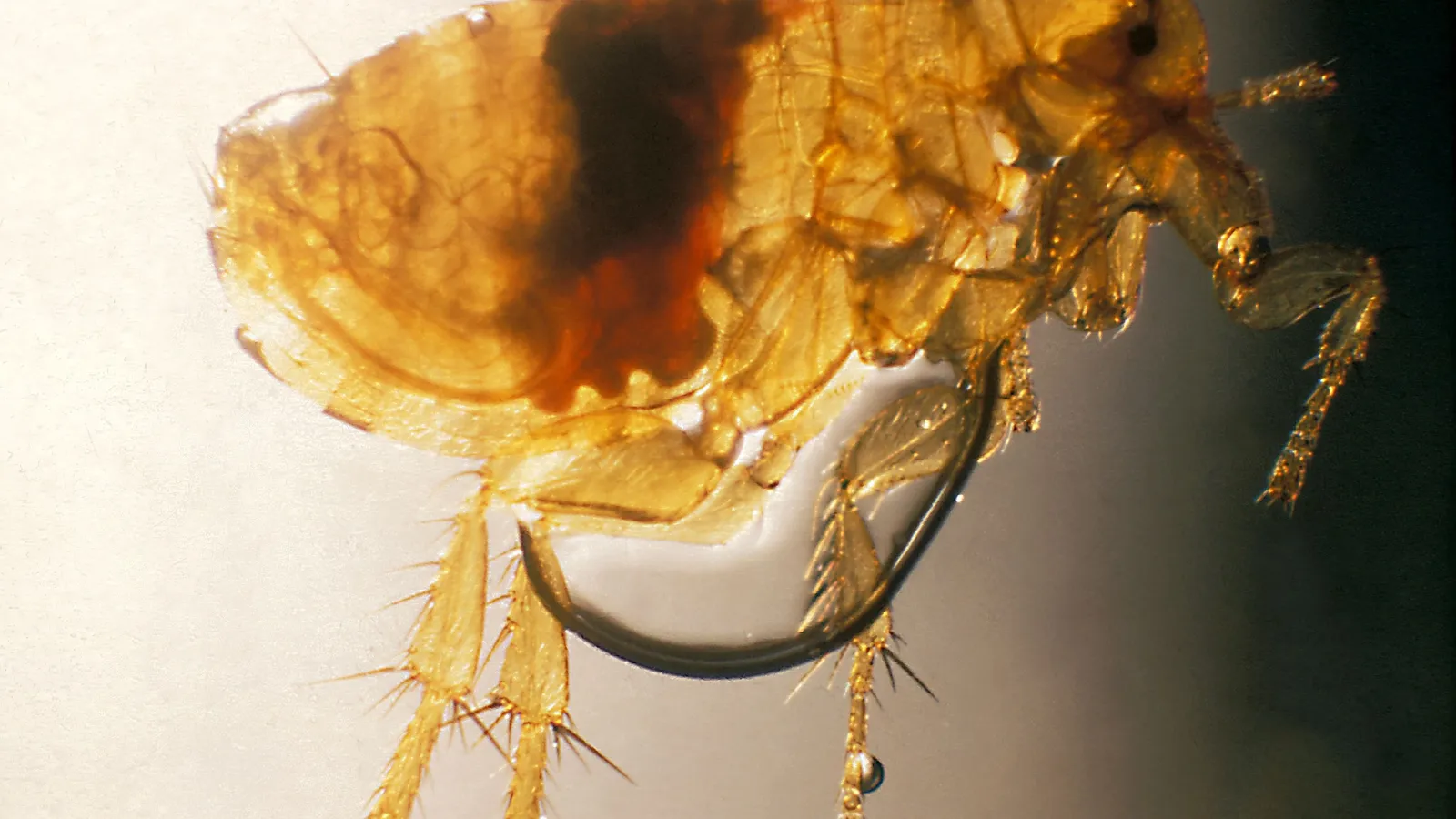
In 1898, plague was spreading through British India, and nobody could say how it got from sick rats to people. A French doctor, Paul-Louis Simond, put rats and fleas into a glass jar in Karachi and came up with an answer, though his experiment was messier than the version he published.
Who was Paul-Louis Simond?
Simond was a French physician with the Institut Pasteur, born on 30 July 1858 and died on 18 March 1947, according to the Institut Pasteur. In 1897 he took over from Alexandre Yersin, who had identified the plague bacterium (read how Alexandre Yersin discovered the plague bacterium), and ran a serum treatment campaign against plague around Bombay.
Plague outbreaks in India began in September 1896, part of a global pandemic that would lead to ten million deaths in India alone, writes historian Christos Lynteris (Medical History, 2022).
How did Simond first suspect fleas?
Simond noticed small blisters on the skin of some plague patients, which he put down to insect or flea bites (Institut Pasteur; Lynteris). That made him doubt that rats passed plague to people directly.
He also saw a pattern in houses. In July 1897, in the Mandvi quarter of Bombay, he inspected a house where two young girls had caught plague; he saw no dead rats, but the rats had disappeared 10 or 12 days earlier (Lynteris). One reading of that pattern: rats die, their fleas need a new meal, and the nearest warm body may be a person. The Japanese scientist Masanori Ogata had already concluded, from an outbreak in Taiwan, that fleas could carry plague (Lynteris).
What did Simond's Karachi experiment show?
Simond dated his famous experiment to 2 June 1898, in Karachi. In his published account, a plague-sick rat carrying fleas was placed in a glass jar, and a small iron cage holding a healthy rat, with one side covered in wire mesh, was lowered into the same jar. The healthy rat died of plague on the fifth day (Lynteris).
The design is the clever part. The mesh keeps the two rats from touching, but fleas can get through it. If the healthy rat still gets plague, the fleas are the obvious suspect. Simond later wrote: "That day, June 2, 1898, I felt an inexpressible emotion at the thought that I had just uncovered a secret that had troubled humanity since the plague first appeared in the world" (as quoted in English by the Institut Pasteur).
Was Simond's experiment really proof?
Not on its own. Lynteris read Simond's notebooks and concluded that the experiment was botched and its findings misreported (Lynteris, Medical History, 2022). The notebook describes a wooden box holding three young rats, not one. When the cover of the jar was lifted after 24 hours, several fleas had escaped, and only one of the three rats died of plague. Lynteris argues that Simond turned an inconclusive trial into an ideal one in print, and in a letter to his chief, Émile Roux, Simond admitted he was "not able to carry out absolutely irrefutable experiments so far".
So the idea was right, but one jar could not prove it. A 1907 report in the Journal of Hygiene found that plague bacilli multiply in the rat flea's stomach and that a single rat flea may transmit the disease (Journal of Hygiene, 1907). Lynteris notes it took more than a decade for colonial plague policy to focus on rats and their fleas.
Today the World Health Organization says plague is caused by the bacterium *Yersinia pestis* and that people can catch it through the bites of infected fleas, among other routes (WHO plague fact sheet). Untreated, plague has a case-fatality ratio of 30% to 100%, WHO says, but antibiotics work against it, so early diagnosis and treatment save lives. This is history, not medical advice.
How can you test a carrier claim the way Simond tried to?
Here are six questions for any textbook experiment, applied to Simond's jar.
Was direct contact ruled out? Yes: the mesh kept the rats apart.
Is the carrier the only thing crossing the barrier? Mostly, but air crosses too.
Was there a control? A fair test adds a matching jar with no fleas.
How many animals got sick? The notebook says one of three: a weak result.
Did others repeat it? Yes, and the 1907 work made the case much stronger.
Do the notes match the paper? Not here, which is why historians read notebooks.
For the matching malaria story, read how Ronald Ross traced malaria to mosquitoes. If vector, host and pathogen still blur together, the Fermi Concept Library gives every concept in biology its own lesson and its place in the map, so you can check each one and see where it fits.
Next time you read that a scientist proved something with one experiment, ask the six questions above.


