

On this page
For decades, scientists thought the surface of the Moon was bone dry. India's first lunar mission helped change that view. The engineer who led the building of that spacecraft was Mylswamy Annadurai. Here is his story, what Chandrayaan-1 found, the physics of its orbit worked out step by step, and what a student can learn from how he worked.
Who is Mylswamy Annadurai?
His official profile on the U R Rao Satellite Centre (URSC) website says he was born on 2 July 1958. He studied electronics and communication engineering at the Government College of Technology, Coimbatore, did his postgraduate degree in applied electronics at PSG College of Technology, and earned a doctorate from Anna University.
He joined ISRO in 1982, starting as team leader for a software satellite simulator. Between 1992 and 2005 he managed eight INSAT missions as Mission Director. As Project Director, the profile says, he "made the most crucial contribution to the realisation of India's first Lunar Mission, Chandrayaan-1". He later contributed to the Mars Orbiter Mission and served as Director of URSC from April 2015 to July 2018. The Government of India's Padma Awards list for 2016 names him first among that year's Padma Shri recipients, for science and engineering.
What was Chandrayaan-1?
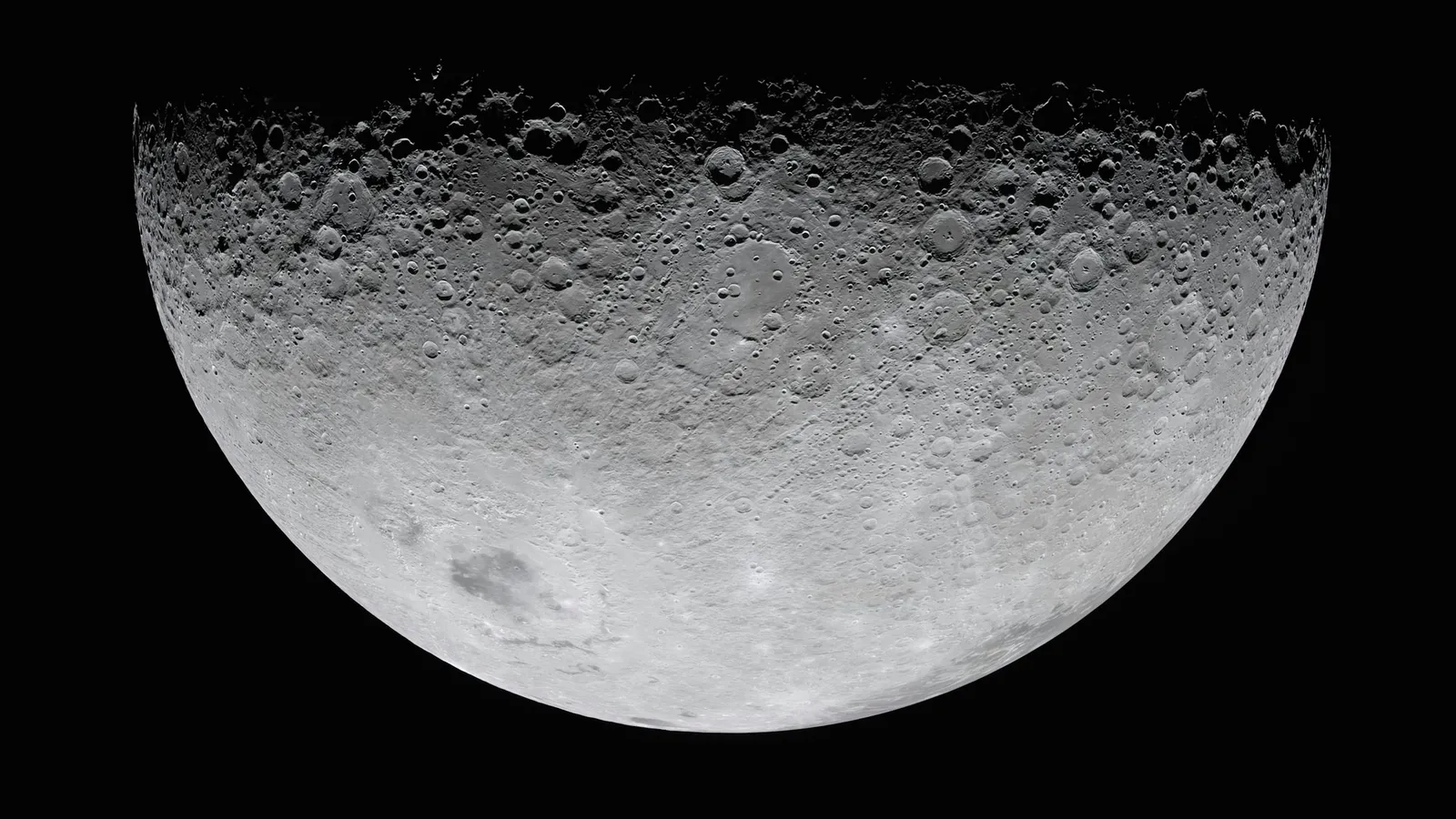
ISRO's Chandrayaan-1 mission page gives the key facts. The spacecraft, with a lift-off mass of 1,380 kg, was launched on 22 October 2008 from Sriharikota on PSLV-C11. It orbited the Moon 100 km above the surface for chemical, mineralogical and photo-geologic mapping, carrying 11 scientific instruments built in India, the USA, the UK, Germany, Sweden and Bulgaria. Its orbit was raised to 200 km in May 2009. It made more than 3,400 orbits, and the mission ended when communication was lost on 29 August 2009.
The PSLV-C11 launch brochure explains the route. The rocket first placed the craft in an elliptical orbit around Earth of 255 km by 22,860 km. Repeated engine burns raised the far point towards the Moon, and lunar orbit insertion then captured it into a polar orbit of 500 km by 7,500 km, before it was lowered to a 100 km circle. The brochure calls the flight ISRO's beginning in interplanetary missions.
What did Chandrayaan-1 find about water?
One of the foreign instruments, NASA's Moon Mineralogy Mapper (M3), measured how the lunar surface reflects infrared light. In Science in 2009, Carle Pieters and colleagues, with Annadurai among the co-authors, reported absorption features near 2.8 to 3.0 micrometres. On rocky bodies such features are usually caused by hydroxyl (OH) or water. The signal was widespread and strongest at cooler high latitudes.
India's own Moon Impact Probe carried an instrument called CHACE. A 2010 paper in Planetary and Space Science by R. Sridharan and colleagues is titled "Direct" evidence for water (H2O) in the sunlit lunar ambience from CHACE on MIP of Chandrayaan I.
M3 data kept giving results long after the mission ended. In 2018, Shuai Li and colleagues used it to report water ice exposed at the surface within 20° of both poles, in permanently shadowed places where annual maximum temperatures stay below 110 K. Only about 3.5% of these cold traps showed ice. For what India did next near the south pole, see the science of Chandrayaan-3.
Worked example: how long did one orbit take?
Orbits around the Moon follow the same law you use for satellites around Earth, and "motion of a satellite, orbital velocity, time period" is in Unit 6 of the JEE (Main) 2026 syllabus.
For a circular orbit, T = 2π √(r³ / GM). From the NASA Moon fact sheet, the Moon's mean radius is 1,737.4 km and GM = 4,900 km³/s², which is 4.90 × 10¹² m³/s².
Radius of the orbit. r = 1,737.4 + 100 = 1,837.4 km = 1.8374 × 10⁶ m. Measure r from the Moon's centre, not its surface.
r³. (1.8374 × 10⁶)³ ≈ 6.203 × 10¹⁸ m³.
Divide by GM. 6.203 × 10¹⁸ / 4.90 × 10¹² ≈ 1.266 × 10⁶ s².
Square root. √(1.266 × 10⁶) ≈ 1,125 s.
Multiply by 2π. T ≈ 7,069 s, about 118 minutes.
So the craft circled the Moon about 12 times a day (86,400 / 7,069 ≈ 12.2). Its speed was v = √(GM/r) ≈ 1.63 km/s. At 200 km the same steps give about 128 minutes.
Bonus check on the infrared light. Photon energy E = hc/λ, and hc ≈ 1,240 eV·nm. At λ = 2,900 nm, E ≈ 1,240 / 2,900 ≈ 0.43 eV, far less than visible light, which is why the signal needed an infrared spectrometer.
What mistakes do students make with orbit problems?
Using height instead of radius. r is the distance from the centre: radius of the body plus height.
Mixing km and m. GM in m³/s² needs r in metres.
Using Earth's g. At the Moon you need the Moon's GM, not 9.8 m/s².
If you get stuck on the set-up of problems like this, the Fermi Problem Library has worked problems with a step-by-step solver that explains the reasoning rather than printing an answer.
What can a student take from how Annadurai worked?
Build depth in one area first. He spent years on satellite operations and simulation before leading a Moon mission.
Treat collaboration as strength. Chandrayaan-1 carried instruments from six countries, and one of them produced its water result.
Data outlives missions. The 2018 ice result came nine years after the spacecraft fell silent.
For India's next step, read about Mangalyaan's science.
Next step: repeat the worked example for Chandrayaan-1's 200 km orbit and check that you get about 128 minutes.


