On this page
Kepler's laws take three lines in your physics notes. They took Johannes Kepler (1571–1630) most of two decades. He found them not by guessing a neat formula but by refusing to accept a model that missed the data by a small amount. This post tells how he found them, and works through an exam-style problem for each.
Where did Kepler's data come from?
NCERT's Class 11 chapter on gravitation puts it simply: the Danish nobleman Tycho Brahe (1546–1601) spent his life recording the positions of the planets with the naked eye, and his assistant Kepler later analysed the data and extracted three laws.
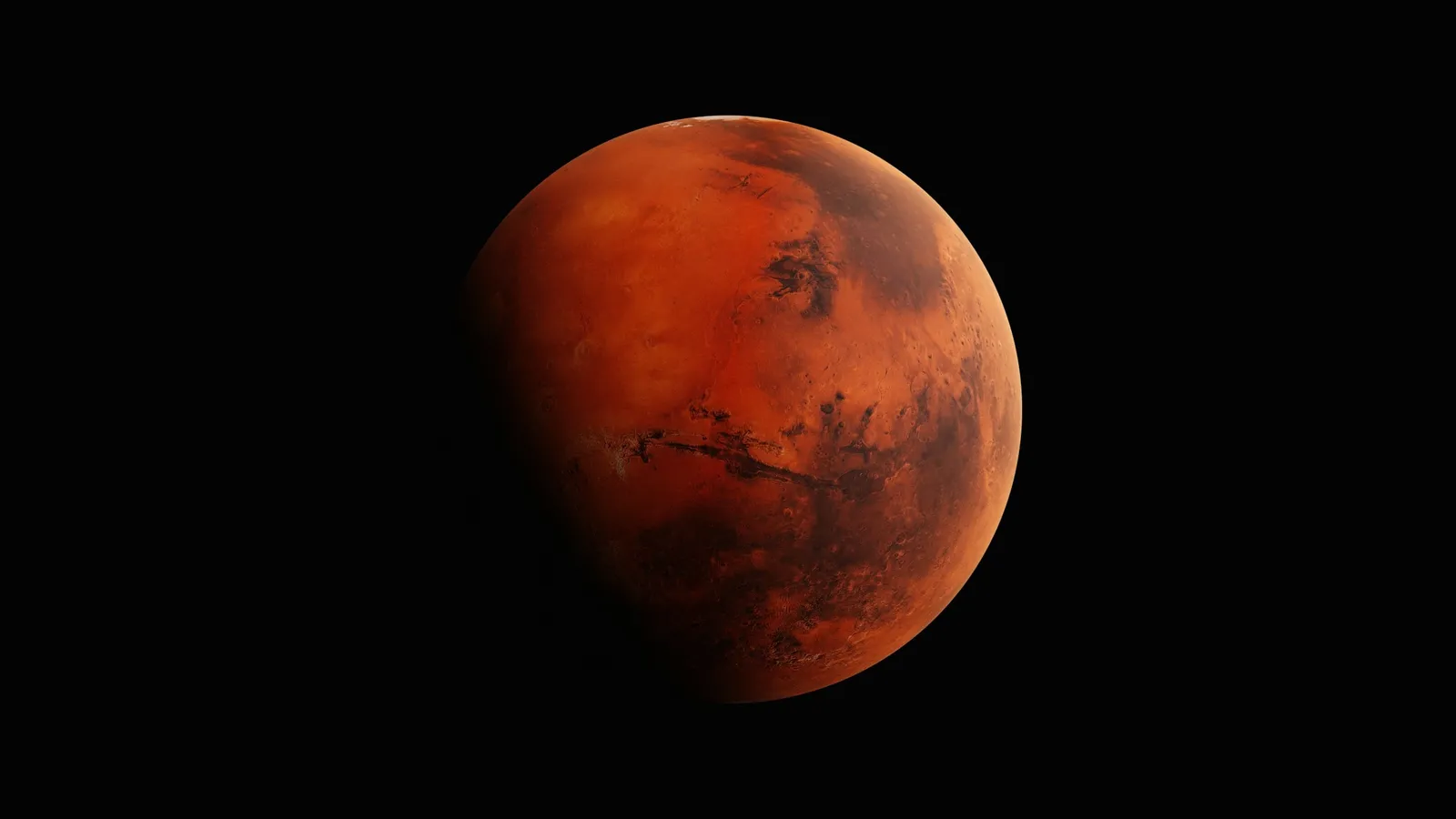
According to the MacTutor biography of Kepler from the University of St Andrews, Kepler had sent Tycho a copy of his first book, *Mysterium cosmographicum* (1596). Tycho, then working in Prague, was looking for a mathematical assistant, and Kepler got the job. Tycho set him to work on the orbit of Mars. When Tycho died in 1601, Kepler succeeded him as Imperial Mathematician and kept going.
Why was Mars so hard?
Astronomers of the time built orbits from circles, and only a few observations were needed to fix their sizes. Tycho had made a huge number of observations. MacTutor explains that this let Kepler build a possible orbit and then test it against further observations until the agreement was good enough. The calculation was immensely laborious: nearly a thousand folio sheets of arithmetic survive, and Kepler called it his "war with Mars".
To decide what counted as good enough, Kepler needed a sense of how accurate the observations were. MacTutor notes that this led to the first explicit use of the idea of observational error, an idea he may partly have learned from Tycho, who checked his instruments carefully.
How did he arrive at the first two laws?
Kepler concluded that Mars moves on an ellipse with the Sun at one focus, and that the line from the Sun to the planet sweeps out equal areas in equal times. These are now his first and second laws. He published them in *Astronomia nova* (Heidelberg, 1609) and then found that the other planets obeyed them too.
The second law means a planet moves fastest when it is closest to the Sun. Today we read it as conservation of angular momentum, because gravity points along the line to the Sun and exerts no torque.
How did he find the third law?
Kepler had searched for a rule linking orbit size to period from the start. MacTutor says the third law arrived late, while his *Harmonices mundi* (Linz, 1619) was already in press. Kepler described the moment himself. In the translation by Aiton, Duncan and Field quoted by MacTutor, he says the idea came on 8 March 1618, was rejected after a faulty calculation, and returned on 15 May, when he found it "absolutely certain and exact that the proportion between the periodic times of any two planets is precisely the sesquialterate proportion of their mean distances". Sesquialterate means a ratio raised to the power 3/2: T is proportional to a^(3/2), so T² is proportional to a³.
Worked examples for each law
The JEE (Main) 2026 syllabus lists "Kepler's law of planetary motion" in its gravitation unit, and NEET-UG 2026 uses the same wording. Use the NASA Mars fact sheet, which gives Mars a semi-major axis of 1.524 times Earth's and an eccentricity of 0.0935.
Third law. With periods in years and distances in astronomical units (AU), T² = a³ for any planet around the Sun.
a = 1.524 AU, so a³ = 1.524³ ≈ 3.540.
T = √3.540 ≈ 1.881 years.
NASA lists Mars's period as 1.881 times Earth's. The law and the data agree.
First and second laws. Find the ratio of Mars's speed at perihelion to its speed at aphelion.
Perihelion distance r_p = a(1 − e) = 1.524 × 0.9065 ≈ 1.382 AU. Aphelion r_a = a(1 + e) = 1.524 × 1.0935 ≈ 1.666 AU.
At these two points velocity is perpendicular to the radius, so angular momentum conservation gives v_p r_p = v_a r_a.
v_p / v_a = r_a / r_p = (1 + e)/(1 − e) = 1.0935 ÷ 0.9065 ≈ 1.21.
So Mars moves about 21% faster at its closest point. A common mistake is to use v_p r_p = v_a r_a at points other than perihelion and aphelion, where the velocity is not perpendicular to the radius. Another is to apply T² ∝ a³ to two bodies orbiting different central masses; the constant depends on the mass being orbited. Our guide to gravitation and satellite problems has more.
What can a student take from Kepler's way of working?
Let small errors bother you. Kepler could have stopped at a circle that was nearly right. He kept going because it was not right enough.
Know how accurate your numbers are. Deciding what counts as agreement is part of the problem. In a numerical, use the precision the data allow.
Write down your failed attempts. His 15 May success came after a rejected calculation in March. Logging wrong turns makes the next attempt faster.
Elliptical orbits are easier to understand once you have watched a planet speed up near the Sun. The Fermi Simulation Lab has interactive simulations for ideas easier to see than read. To see how Kepler's laws gave Newton a value to check, read our post on Henry Cavendish and the experiment that weighed the Earth.
Try it now: use T² = a³ to find the period of a body orbiting the Sun at 4 AU.