On this page
Whooping cough, or pertussis, is caused by the bacterium Bordetella pertussis, first described by Bordet and Gengou in 1906. The first vaccine against it that held up in a fair test came from two women working after hours in a state health laboratory in Michigan in the 1930s. Pearl Kendrick and Grace Eldering did not just make a vaccine. They designed a fair test of it, at a time when there were few accepted standards for testing vaccines in children. This post follows a historical review in Emerging Infectious Diseases, works through their trial numbers and shows how to read them.
Who were Kendrick and Eldering?
According to the review, Pearl Kendrick studied bacteriology at Columbia University and worked at the New York State health laboratories before Michigan's Bureau of Laboratories recruited her. In 1926 she was put in charge of its new branch in Grand Rapids, and she earned a Doctor of Science degree from Johns Hopkins University in 1932. Grace Eldering, from Montana, studied at the University of Montana, taught school for a year and joined the Michigan laboratory in 1928. Kendrick brought her to Grand Rapids in 1932. Eldering earned her own Johns Hopkins doctorate in 1942.
Why was whooping cough so hard to beat?
Earlier vaccines had failed. In 1931 a committee of the American Medical Association found that "the pertussis vaccines seem to have absolutely no influence" as a preventive. By the 1920s pertussis was killing about 6,000 American children a year.
How did a better cough plate help?
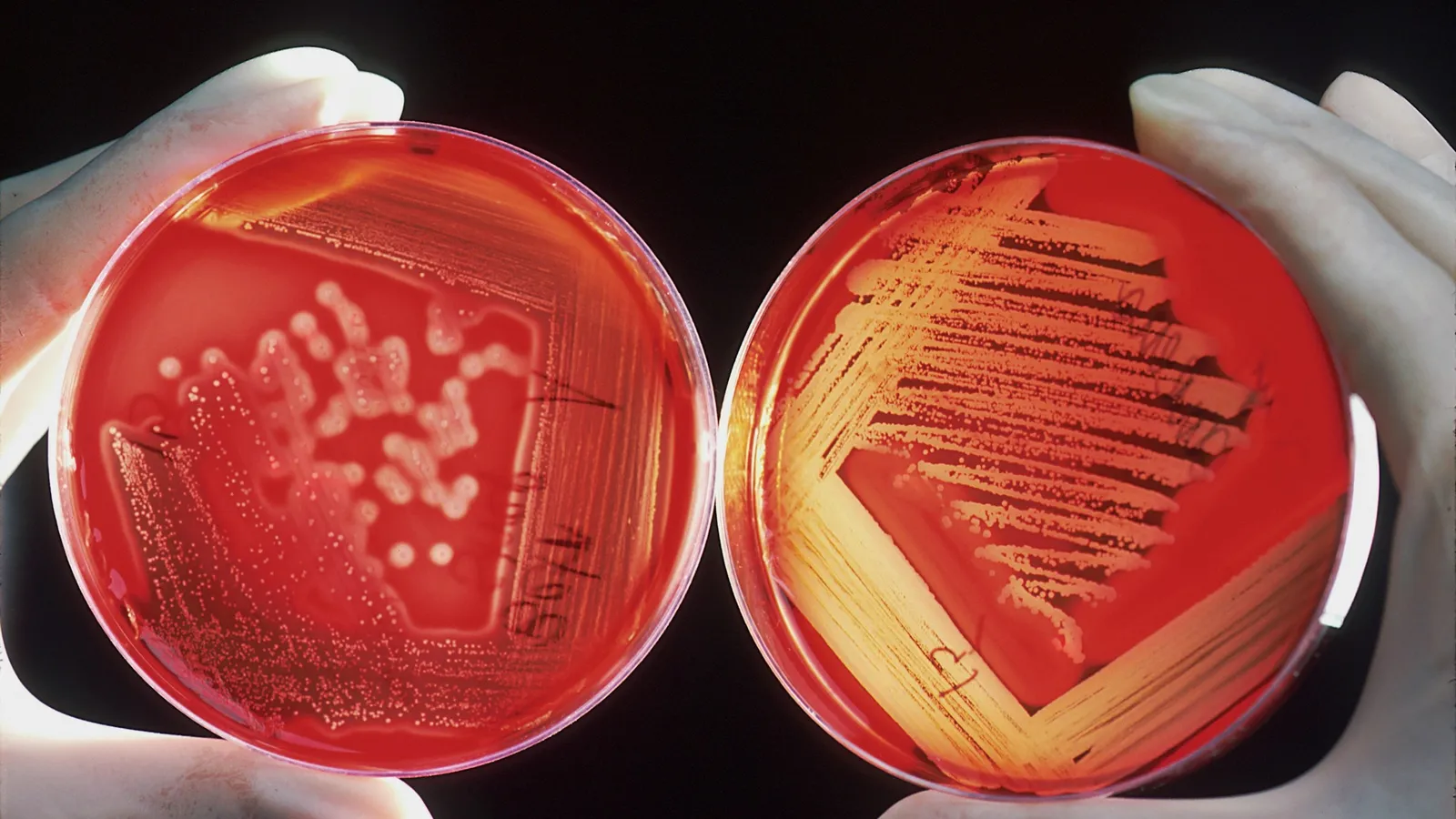
In 1932 a severe outbreak hit Grand Rapids. Kendrick and Eldering modified the standard growth medium so that B. pertussis grew faster and more heavily, and they published their cough plate results in 1934. A child coughed onto a plate, and the lab could diagnose the infection. From 1 November 1932 they offered this test to local doctors.
The plates also answered a public health question. Children were infectious in the first three weeks, most were not by week four, and after five weeks 90% posed no risk. The city based its isolation rules on these findings.
How did they design the trial?
They made a vaccine from killed bacteria and ran safety tests, including injecting it into their own arms. Many researchers then tested vaccines on orphans or children in institutions. Kendrick and Eldering worked with families instead. Using a county relief survey and nursing records, they matched each vaccinated child with an unvaccinated control of the same age, sex and district. Nurses visited both groups every three to four months, recorded exposures and took cough plates when children fell ill.
What did the numbers show? A worked example
In the 1934 to 1935 trial, 712 children were vaccinated and 880 were controls. Only 4 vaccinated children caught whooping cough, all mild cases, against 45 controls.
Attack rate, vaccinated: 4 ÷ 712 ≈ 0.0056, or 0.56%.
Attack rate, controls: 45 ÷ 880 ≈ 0.0511, or 5.11%.
Relative risk: 0.56 ÷ 5.11 ≈ 0.11.
Efficacy = 1 − relative risk = 1 − 0.11 = 0.89, or 89%.
This matches the review's figure of 89%. Common mistakes:
Comparing counts, not rates. 1 − 4/45 gives 91%, but the two groups were different sizes, so you must divide by each group's size first.
Subtracting percentages. 5.11% − 0.56% = 4.55 percentage points. That is the difference in risk, not the efficacy.
Over-trusting small numbers. Kendrick herself warned of the "danger of giving [the numbers] too much weight in the face of the relatively small number of whooping cough cases". With only 49 cases in total, a few extra cases would shift the result.
Our post on probability and repeated trials explains why small counts can mislead.
How was the result checked?
A Cleveland researcher, James Doull, reported that his own pertussis vaccine gave no protection. The American Public Health Association asked the epidemiologist Wade Hampton Frost to review Kendrick's work. Frost visited Michigan twice and, in the end, supported it. A 1938 follow-up found that three smaller doses worked as well as the original four.
Michigan began mass-producing the vaccine in 1938, and the American Academy of Pediatrics approved it for routine use in 1943. US whooping cough incidence fell from 209 cases per 100,000 people in 1934 to 51 per 100,000 by 1948.
They also helped make vaccines comparable. They developed an opacity standard to measure how many bacteria a vaccine contained. The United States adopted it in 1946 and the World Health Organization made it the international standard in 1958. Kendrick also published on combining pertussis vaccine with diphtheria toxoid in 1942, a step towards the combined shots used today.
What can a student take from their way of working?
Build the measuring tool first. The cough plate came before the vaccine.
Design the comparison before you collect data. Matched controls made the result believable.
Invite the sceptic in. Frost's review is why others trusted their numbers.
State the limits of your own result. Kendrick warned against reading too much into small counts.
If rates, ratios and percentages trip you up in data questions, the Fermi Problem Library has a step-by-step solver that explains the reasoning, so you can check each step of a calculation like the one above.
Next step: redo the efficacy calculation with 6 vaccinated cases instead of 4, and see how much the answer moves.