

On this page
Kailash Sankhala, often remembered as "The Tiger Man of India," was a pioneering biologist and conservationist. His life's work culminated in the creation of one of the world's most comprehensive wildlife conservation programmes. As the first director of Project Tiger, Sankhala played a crucial role in saving the Indian tiger from extinction by championing the protection of its natural habitats.
Who was Kailash Sankhala?
Kailash Sankhala was an Indian forest officer and wildlife manager who dedicated his career to the preservation of nature. Born in Jodhpur, Rajasthan, in 1925, he developed an early interest in the natural world. Starting at the Forest Service in 1953, he managed several major wildlife sanctuaries in Rajasthan, including Sariska, Bharatpur, Banvihar, and Ranthambore. In 1965, he became the director of the Delhi Zoological Park, where he continued to study animal behaviour in both captivity and the wild.
Sankhala's extensive field experience gave him a deep understanding of tiger ecology. In 1971, he conducted a comprehensive national survey of the tiger population in India, which provided the critical data needed for future conservation efforts. He was a passionate advocate for the animals, arguing that their survival was an indicator of the health of the entire forest ecosystem. His lifelong dedication earned him the Padma Shri in 1992 and the Rajasthan Ratan posthumously in 2013.
Why did Project Tiger start in 1973?
At the end of the 19th century, an estimated 40,000 tigers roamed the Indian subcontinent, thriving in vast, undisturbed forests. However, relentless hunting and habitat destruction caused a severe population collapse over the following decades. By the early 1970s, the Indian tiger population had dwindled to just 1,827 individuals, a critically low number that sparked national concern.
To combat this alarming decline, the Government of India launched Project Tiger on 1 April 1973, following the recommendations of a special wildlife task force. Recognising his expertise, the government appointed Kailash Sankhala to lead the initiative. The project's immediate goal was to identify and secure safe habitats where tigers could breed and thrive without human interference, while also ensuring the protection of prey species.
Sankhala helped establish the first nine tiger reserves across the country, covering a significant area of critical habitat. Over the decades, the conservation model proved successful. The network later expanded to 58 protected areas, sheltering 3,682 wild tigers as of 2022, which represents nearly 75% of the global wild tiger population.
How is a tiger reserve structured?
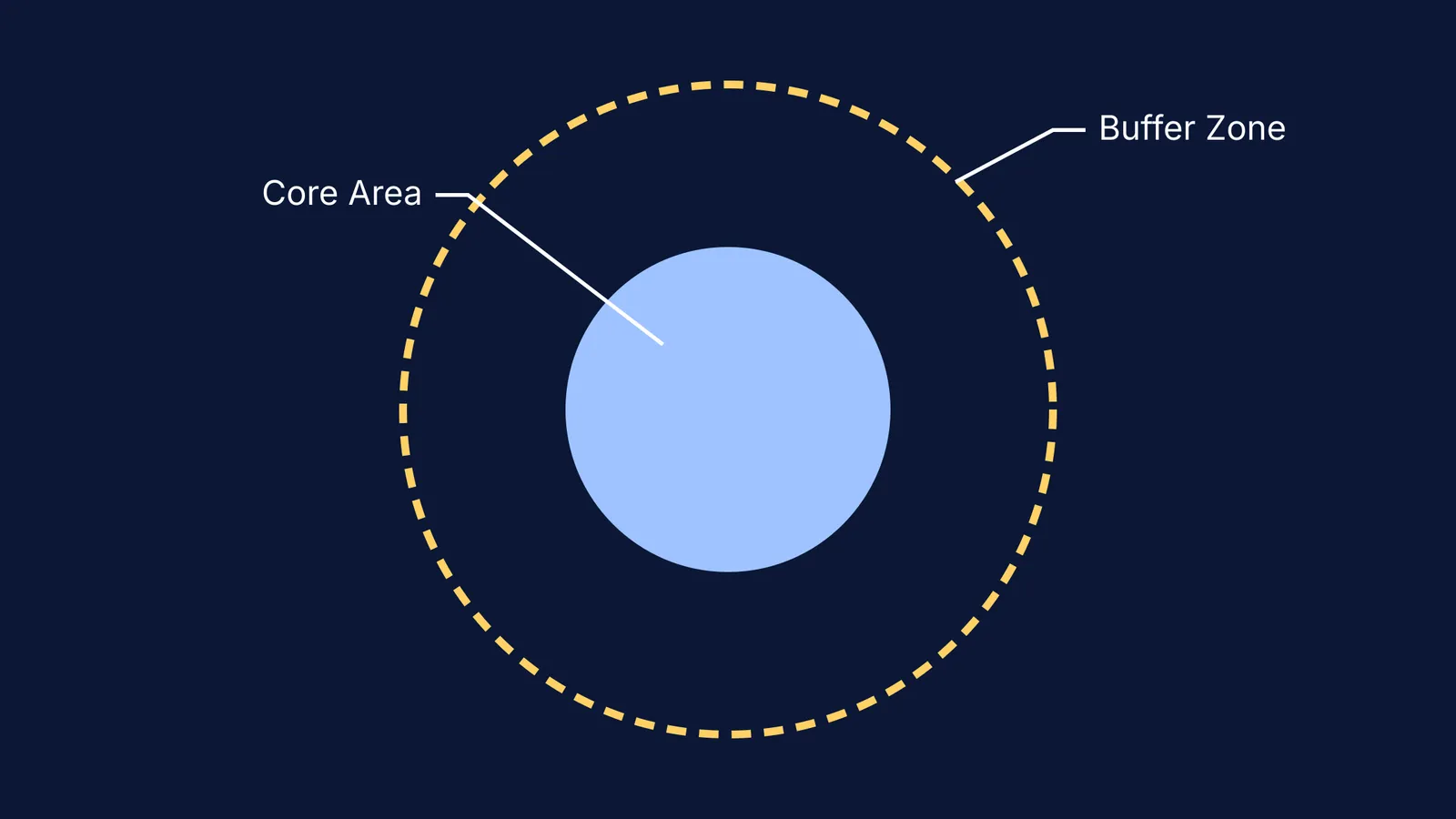
Project Tiger introduced a scientific approach to habitat management, grounded in the legal framework of the Wildlife (Protection) Act of 1972. Instead of merely fencing off a forest, Sankhala and his team designed reserves with two distinct regions to balance conservation with the reality of human populations:
Core Area: A strictly protected zone, typically a national park or wildlife sanctuary, where human activity is entirely prohibited. This gives tigers the undisturbed space they need to hunt, establish territories, and rear cubs safely.
Buffer Zone: A surrounding area of mixed forested and non-forested land. This zone allows for regulated human use, such as sustainable forestry and local community activities. It helps absorb the impact of nearby settlements, ensuring the core remains pristine while reducing human-wildlife conflict.
Protecting the apex predator requires safeguarding the entire food web, a concept related to topics like Biological magnification: how pesticides build up in an ecosystem. The health of the tigers reflects the health of the rivers, prey animals, and forests, which are as vital as the diatoms as indicators of river health. Maintaining this balance remains a challenge, as conservationists must continually address issues like poaching and deforestation.
How can students learn ecosystem ecology?
Understanding conservation requires more than memorising facts; it involves seeing how populations, habitats, and human policies interact over time. If you are studying ecology for your biology exams, Fermi's AI tutor teaches rather than answers. It holds a line of reasoning across a session, notices where a student is stuck, and decides whether to explain, ask, or show you the relationships within an ecosystem.
The Fermi Concept Library contains every concept in biology and chemistry, each with its own lesson and its place in the map. Whether you are revising the structure of a biosphere, the mechanics of food webs, or the principles of population genetics, Fermi builds a plan for the session and checks your understanding as it goes.


