On this page
Jan Swammerdam was one of the most skilled hands in the history of biology. He dissected the guts of bees under a single lens, injected wax into blood vessels and cut tissue under water so it would not collapse. He also left a lesson every student who has ever ignored an awkward reading should hear. This post covers his insect work, his frog experiments, the result he refused to accept, and what you can take from all three.
Who was Jan Swammerdam?
The Florida State University Molecular Expressions biography of Swammerdam, with the biologist and historian Matthew Cobb among its authors, gives the outline. He was born in Amsterdam in 1637, the son of a pharmacist, and trained as a doctor at the University of Leiden. He preferred research to practising medicine and was supported by his father for most of his life. Late in life he came under the influence of the religious mystic Antoinette Bourignon and set science aside for a time. He died in 1680, aged 43, from a recurrence of malaria.
His collected papers, the Bible of Nature, were published only in 1737, after the Dutch physician Herman Boerhaave finished translating them into Latin. William Locy's history Biology and Its Makers notes that this was fifty-seven years after his death, so many of his findings were credited to others.
What did Swammerdam discover about insects?
According to the FSU biography, he studied the life histories and anatomy of mayflies, butterflies, beetles, dragonflies and bees. Three results stand out:
The king bee is a queen. Naturalists had wrongly called the colony's leader the king bee. Swammerdam was the first to describe it as the queen.
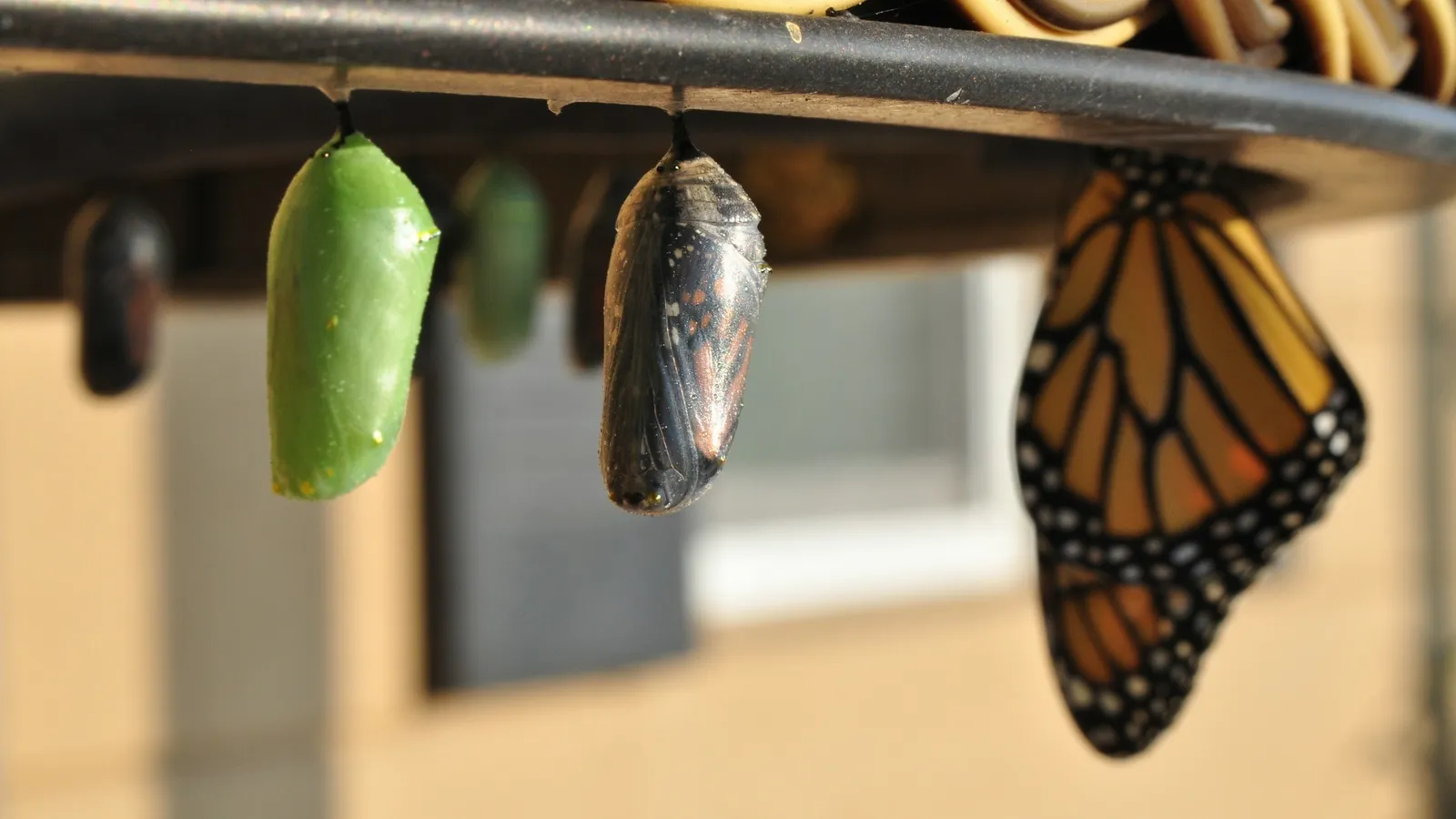
Insects develop through stages. Through delicate dissections, he concluded that insects pass through metamorphosis, a series of distinct life stages.
Classification by development. He grouped insects by their type of development. Three of the five major groups he described are still used.
His methods were as important as his findings. The same page describes him injecting wax to hold blood vessels firm, dissecting fragile structures under water and using fine glass pipettes to inflate organs. Locy quotes an early account of his routine while writing on bees: he worked outdoors from six in the morning until noon, bareheaded so as not to block the sunlight, for a whole month just to describe the intestines of bees.
What did his frog experiments test?
In the 1600s, most scholars believed nerves worked by carrying "animal spirits". The philosopher René Descartes pictured these as a fluid that flowed from the brain into the muscles and made them swell. Matthew Cobb's review in Nature Reviews Neuroscience tells how Swammerdam put this to the test.
On 8 December 1664, in Paris, he showed that stroking the cut nerves of a frog with a scalpel made the muscles contract, even with no connection to the brain. He later isolated a single thigh muscle with its nerve. When he irritated the nerve, the muscle contracted. Cobb notes that this nerve-muscle preparation became a classic, still repeated in schools.
Then he asked a sharper question. If spirits flow into a muscle, it should get bigger. He sealed a muscle in a glass tube with a drop of water in the narrow end, so any change in volume would move the drop.
What result did Swammerdam refuse to believe?
With a whole frog heart in the tube, the drop moved clearly when the heart contracted, suggesting the volume fell. With the thigh muscle, the drop barely moved. In his own words, quoted by Cobb, "the sinking of the drop is so inconsiderable, that it can scarce be perceived".
Here is the twist. The thigh muscle gave the right answer: muscles do not change volume when they contract. Cobb explains that the heart result was probably caused by air trapped in the ventricles being squeezed. But Swammerdam trusted the large effect and explained away the small one, arguing that the heart was "fitter for this experiment than any other muscle". He was right that animal spirits did not swell the muscle, and wrong about which of his own results to believe.
Common mistakes when students write about Swammerdam
Confusing him with Leeuwenhoek. Both were Dutch microscopists of the same period. Leeuwenhoek is known for microbes; Swammerdam for insect anatomy and frog nerve-muscle work. See our post on Leeuwenhoek and the first view of bacteria.
Saying his frog work failed. It disproved Descartes' swelling muscles. His error was in weighing his two results, not in the experiment itself.
Dating his discoveries by publication. Much of his work appeared in 1737, long after he did it.
What can a student learn from how Swammerdam worked?
Invent the tool you need. Wax injection, underwater dissection and glass pipettes were his answers to specific problems.
Record small effects honestly, then weigh them. He did write down the thigh result. His mistake was the weighing.
Prefer the simplest preparation. In a practical, the reading from the cleaner set-up usually deserves more trust.
Publish your work. Unpublished findings help nobody. In study terms: write your notes up clearly enough that you could use them in a month.
If you get stuck reasoning through a practical or a data question like Swammerdam's, Fermi's AI tutor notices where a student is stuck and decides whether to explain, ask a question or show a simulation.
Practice routine: find one experiment in your biology book with two results that look different, and write which set-up has fewer hidden variables and why.
Next step: look at a bee or butterfly photo with a hand lens or on your phone at full zoom, and list every structure you can name.