

On this page
The NCERT Class 12 chapter on inheritance notes that Mendel published his work on inheritance in 1865, but it remained unrecognised until 1900. In that year three botanists, working separately, arrived at the same laws and found his paper. Hugo de Vries was one of them. He also proposed a theory of evolution by sudden mutations that NCERT still describes. This post covers his life, the rediscovery, the mutation theory, and why the plant he trusted turned out to be an unusual case.
Who was Hugo de Vries?
His obituary notice in the Obituary Notices of Fellows of the Royal Society gives the outline. He was the son of a former Prime Minister of the Netherlands, studied at several German universities and was perhaps most influenced by Sachs at Würzburg. He became professor of botany at Amsterdam at the age of 30 and stayed for forty years until he retired. He died on 21 May 1935, aged eighty-seven. William Locy's 1908 history Biology and Its Makers notes that he directed the Botanical Garden in Amsterdam.
How did de Vries rediscover Mendel's laws?
The same NCERT chapter states it simply: in 1900, de Vries, Correns and von Tschermak independently rediscovered Mendel's results.
A study by Ida Stamhuis and Onno Meijer in Isis (1999) adds detail from his own research notes. They show that in 1896, without knowing Mendel's work, de Vries used dominance and recessiveness, segregation and independent assortment to explain a 75:25 ratio in the second generation of his crosses, and that he reached these laws by applying probability theory. The same study notes that he had a theory of his own, intracellular pangenesis (1889), in which different characters have separate material carriers, and that he struggled to make his theories fully consistent with Mendel's laws.
Worked example: where does 75:25 come from?
Take a cross between two plants that each carry one dominant allele A and one recessive allele a (Aa x Aa).
Each parent passes on A with probability 1/2 and a with probability 1/2.
The chance of aa is 1/2 x 1/2 = 1/4. The chance of AA is also 1/4. Aa can arise two ways (A from the mother and a from the father, or the reverse), so 1/4 + 1/4 = 1/2.
Plants showing the dominant trait are AA or Aa: 1/4 + 1/2 = 3/4. Those showing the recessive trait are aa: 1/4.
So 3/4 to 1/4 is 75:25, the same as 3:1. Out of 400 second-generation plants you would expect about 300 dominant and 100 recessive.
This is the probability reasoning Stamhuis and Meijer describe in de Vries's notes. Our guide to genetics problems for NEET has more practice.
What was the mutation theory?
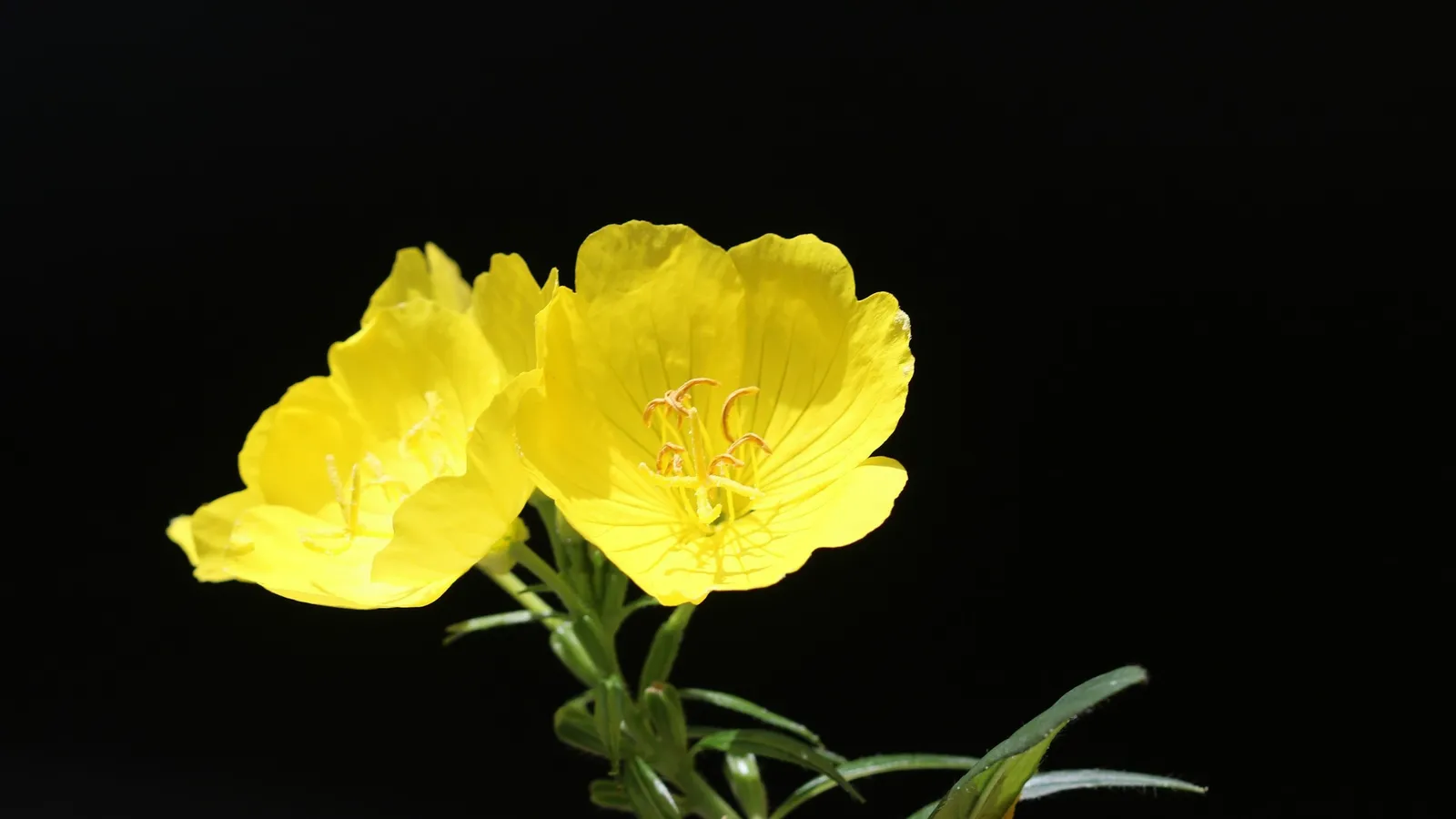
De Vries studied the evening primrose Oenothera lamarckiana. In his lectures published in English as Species and Varieties, Their Origin by Mutation, he describes finding the plant, originally from America, growing in an abandoned field near Hilversum, close to Amsterdam, where it had escaped from a park and was producing new types. He grew its offspring in pedigree cultures at the Amsterdam Botanical Garden and named some of the new forms, such as O. gigas, as new elementary species.
The NCERT Class 12 chapter on evolution summarises his view for your syllabus. He proposed mutations, large differences arising suddenly in a population, and believed that mutation, not Darwin's small heritable variations, caused evolution. Because he thought a single large mutation could create a species, NCERT says he called it saltation.
Why did the evening primrose mislead him?
A 2011 review by Masatoshi Nei and Masafumi Nozawa in Genome Biology and Evolution explains. De Vries ran his breeding experiment for 13 years. But later work showed that O. lamarckiana is a permanent heterozygote for chromosome complexes, and most of his mutants were chromosome rearrangements from this unusual genetic make-up, not the kind of change he imagined in ordinary species.
The story has a twist. The same review notes that O. gigas, larger and more vigorous than its parent, was later shown to be a tetraploid, with four sets of chromosomes. Polyploids are cut off from breeding with their parent species straight away, so de Vries had in fact seen a new species arise in a single step. Polyploidy is now known to be important in the evolution of flowering plants.
A 2013 article by Jim Endersby in Isis adds that, though now often treated as a failed theory, the mutation theory drew wide attention in the early twentieth century, from biologists and the public.
Common mistakes
Crediting the rediscovery to de Vries alone. NCERT names three scientists.
Using "mutation" only in the modern sense. De Vries used it for any sudden heritable change. Most of his primrose cases were chromosomal.
Confusing his evening primrose with Mendel's peas. Mendel used peas. De Vries's mutation theory rested on Oenothera.
When a genetics cross goes wrong, the Fermi Problem Library has a step-by-step solver that explains the reasoning rather than just printing an answer.
Practice routine: work out the expected ratio for Aa x aa, then for AaBb x AaBb, and check each against your NCERT tables.
Next step: read NCERT section 6.6 on mechanisms of evolution and write two lines comparing de Vries's mutations with Darwin's variations.


